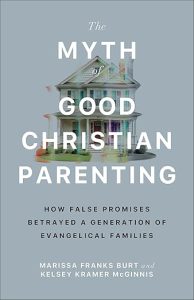
 Summary: An evaluation of Christian parenting advice books from the past fifty years.
As with many books that I end up recommending, I was initially going to skip this book until I heard an interview with the authors. I grew up on the edge of Evangelicalism. I knew people who were big into Gothard, but my family always thought it was a cult-like group. I am too old for the main purity culture movement. I did grow up listening to Dobson and MacArthur on the radio, but my parents were not big parenting advice readers. Generally, while I know many people who did suffer as children from bad parenting advice that their parents received, I did not think I really needed to read this book personally. But then I listened to the authors talk about parenting advice in a way that felt to me like anti-discernment and how it was primarily an authoritarian approach and I realized that I did need to read the book. It was on sale for less than $2 on Audible and I finished the book in just over two days.
I also overlapped Good Christian Parenting with Why I am a Protestant which had a very good discussion about the importance of affirming diversity within Christianity as part of the book. And that emphasis really made me want to lean into thinking about The Myth of Good Christian Parenting as an exploration of the range of Christian beliefs within orthodox Christianity as part of my frame of reading evaluation.
I just need to name up front that almost all of the really bad parenting advice described in this book was rooted in a theological commitment to hierarchy. While there is a range of understanding of that hierarchy, virtually all of the teaching framed parenting as a means of control of children by parents for the sake of teaching children about submission to God. That framing placed parents as a God-figure in the parent/child relationship. An additional wrinkle is that most of the parenting advice also emphasized the sinful nature of the child from either birth or conception, so that there were a number of examples of authors condemning the sin of newborn to toddler children. Voddie Bauchman’s “vipers in diapers” is just one example of framing children as intentionally attempting to manipulate adults. Or even in some cases children intentionally attempting to sexually arouse the adults around them.
That isn’t to say that bad parenting advice only comes from one corner of the Christian world, but that the loudest voices about parenting were from those who tended to lean toward a high authoritarian perspective that also tended to lean into strongly reformed theological perspective and a strongly patriarchal cultural perspective. That combination worked in partnership with the Young, Restless and Reformed movement of the 1990s-2000s to catapult a narrow slice of Christians to be nearly the only parenting advice being given to Christians.