 Summary: The Emergent (or old school liberal) stream of Christianity has a real faith, and something to teach Evangelicals.
A long time ago and in a far away place, I decided to go to seminary. I never wanted to be a pastor. But at the time, I thought I wanted to be a social worker or at least work in a church based social service program.
So I decided to get a dual masters in Social Work and Divinity. There are several places you could do that at the time. I could have stayed in my denomination of origin (American Baptist) and gone to Eastern Seminary (but then would have gone to a different school for the social work.) I could have go to Southern Seminary where my father went to seminary.
What I decided to do was go to the University of Chicago Divinity School and School of Social Work. I very intentionally decided to go to U of C because I had an undergrad degree from Wheaton College. I had experienced one of the best Evangelical colleges in the country, I had a very good background in theology and I am from a long line of pastors and was quite comfortable in my faith. I wanted to challenge my Evangelical background and be in the minority for a while.
University of Chicago was overwhelmingly Christian, mostly Protestant, but of a liberal bent. Marcus Borg would be very comfortable with many of my professors at U of C Div School. I loved my time at the Div School. It is one of the few places that I have very clearly claimed the label Evangelical. Being among a different stream of Christianity both expanded my view of the Church and made me more comfortable in my part of the Church.
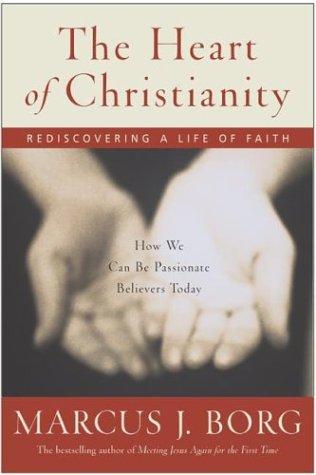
So for quite a while I have been very intentionally trying to understand what other Christians believe, how they think and how they explain their faith. The Heart of Christianity is an attempt by Borg to explain his faith. In format it is very traditional. He starts with his understanding of scripture, and works through God, Jesus Christ, Salvation, Sin, Heaven, Salvation, Spiritual Practice and Pluralism. Essentially he is doing what he doing an Emergent (his word) version of systematic theology.
What I really appreciate about this book is that he makes it very clear that liberal Christians have real faith. It is not just some type of wishy-washy universalism that has gotten rid of any belief or theological content. His belief is not the same as most Evangelicals (although in many more areas than most Evangelicals are comfortable with, there will be a good bit of agreement).
Read more
 Summary: A brief overview of the role of spiritual formation in the Christian life.