2020 Reading Report

I have stopped doing traditional ‘best of’  lists the past couple of years. Instead, I have written about what has impacted me in different areas. I also have been tracking, as part disclosure and part accountability info about the authors, I am reading. My authors were too White and too male again this year. Overall, … Read more

White Lies: Nine Ways to Expose and Resist the Racial Systems That Divide Us by Daniel Hill

Summary: An exploration of why Christians need to expose the evil of white superiority, not just attempt to increase diversity. 

As with Rediscipling the White Church I have a somewhat ambivalent approach to reading Daniel Hill. He is an excellent writer, and I really do appreciate what he writes. But I am also reminded that part of why he is needed to voice racial justice is part of his subject matter. In his first book, White Awake, his voice is needed because so many White Christians are resistant to hearing about issues around racism and White racial identity from non-White voices. And the book White Lies is needed because simple exposure to diversity does not actually root out white superiority problems (a euphemism for white supremacy as a cultural system) within the church without it directly being addressed. I am ambivalent, not because his voice is not useful (and certainly not because he isn’t a skilled writer or thinker), but because White voices like his are necessary because of the very nature of White belief in the superiority of White culture, which requires White voices to condemn White superiority for White people to be able to hear the problem.

I think it is important to use clear language and say that no one within the United States culture is not impacted by racism. I, as an individual, have feelings of White superiority. While I want to work against those feelings and to work to make sure those are never translated into actions, it is why I regularly point back to George Yancy’s language, “the best that I can be is an anti-racist racist”, and as a male, “an anti-sexist sexist.” And as a Christian, an anti-sin sinner. Because we are not solely individuals, but within a culture and community, regardless of my own attitudes, biases, thoughts, and actions, I cannot control how others respond to me. When I, as a stay-at-home Dad, take my kids to the grocery store (in pre-covid times), the response to me as a parent is different than the average response to a stay-at-home mother who is doing the same thing. I am routinely praised for being a good Dad for doing simple tasks that every mother also does without praise. When I walk around a store, the lack of undue attention because I am a middle-aged White male is not a result of anything I have done, but because of cultural assumptions and realities. But my lack of desire to be racist or sexist has nothing to do with the reality that I still receive benefits whether I want them or not.

Read more

St. Ignatius Loyola and the Remarkable History of the First Jesuits by John O’Malley

Summary: A five-hour course introducing the Jesuits.

Part of what I keep returning to with my study of Ignatian Spiritual Direction is my need to fill in the holes in my understanding of some of the basics. For instance, “who are the Jesuits, and what is their history ?” I have had John O’Malley’s longer The First Jesuits and his shorter Jesuits: A History from Ignatius to the Present recommended to me. But neither of those was available on audiobook and I needed something to listen to as I was doing some busy work, so I picked up this audiobook lecture course.

At five hours it gives an overview, but it is just an overview. O’Malley is a historian and professor at Georgetown, but he is also a Jesuit. It is not that I don’t trust his opinion, but that I need to get some history from non-Jesuits as well. I have some introduction to the spiritual perspectives of Jesuits from James Martin, but I really want more history to place them in context and to see why they seem to be so loved and hated depending on who you ask.

I have read Ignatius’ autobiography and am familiar with his spiritual exercises, but this still filled in a lot of holes (and opened up plenty of awareness of holes I was previously unaware of and still need to fill.) The movement toward audiobook lectures as a whole is good. But like everything, the quality depends on who is doing the lecturing. This was neither the best nor the worst I have heard. At five hours, I think it was probably too short. But I was glad to pick it up based on the price and I will also pick up one or both of O’Malley’s books on the Jesuits relatively soon.

Read more

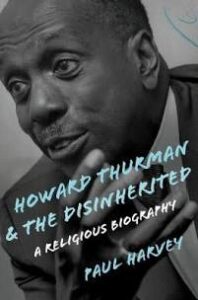
Howard Thurman and the Disinherited: A Religious Biography by Paul Harvey

Howard Thurman and the Disinherited: A Religious Biography by Paul Harvey cover imageTakeaway: Amazingly, there has not been a good biography of Thurman in so long.

This is the third book by or about Howard Thurman I have read this year, and I have started re-reading the fourth. Howard Thurman is not as well known as I would like. But he was an influential mentor, teacher, and pastor throughout the 20th century. Thurman was born and spent his childhood in Daytona Beach. (He was less than two weeks older than CS Lewis but lived nearly 20 years longer.) Because there was no high school in Daytona Beach that permitted Black students, he was forced to move away from Daytona to go to high school. (There were only three high schools for Black students in the whole state of Flordia.) He then went to college at Morehouse and Crozer Divinity School (the latter two of which Martin Luther King, Jr also went to a generation later.) He graduated as valedictorian at both.

He served several years as a pastor in Oberlin, Ohio, before returning to teach at Morehouse (and Spellman) and work as its chaplain. Four years later, he became Dean of the Chapel at Howard University, where he served for 12 years. In 1944, he became pastor of one of the first intentionally interracial churches in the US, Church for the Fellowship of All Peoples, in San Francisco. He served as pastor there for nine years before becoming the Dean of Marsh Chapel at Boston University, where he served until his retirement in 1965. He moved back to San Francisco, working as a writer, speaker, and mentor until he passed away in 1981.

As much as his work was groundbreaking and important on its own, Paul Harvey shows how Thurman was continually frustrated with his inability to pastor and lead churches and the university system’s religious education as he wished. He was a mystic and thought deeply about what I would consider the sociology of religion.

Howard Thurman is best known for three things. In 1935, he, his wife, and another couple went on a tour of India. The tour brought four Black Americans to India to interact with and learn about the caste system and non-violent resistance. The group were the first African Americans to meet Gandhi. Thurman’s reports about non-violent resistance inspired the Civil Rights movement and led to several others visiting Gandhi.

The second related thing that Thurman is well known for is his relationship with Martin Luther King Jr. Thurman was at Morehouse at the same time as Martin Luther King Sr., and Sue Bailey Thurman, Thurman’s second wife, was a college roommate of Alberta Williams King, MLK Jr’s mother. Despite that family relationship and the fact that there was a year overlap when MLK Jr and Thurman were both at Boston University, it appears that they only spent two extended days together. One day was at Thurman’s house watching baseball while King was a student. And a second day was about a decade later when King was in the hospital recovering after being stabbed. Despite a fairly regular correspondence, they never did spend extended time together beyond that. Thurman gave one of the eulogies at MLK Jr’s funeral.

Read more

Faces at the Bottom of the Well: The Permanence of Racism by Derrick Bell

Faces at the Bottom of the Well: The Permanence of Racism book coverSummary: A classic book by one of the originators of the Critical Race Theory movement. 

A few weeks ago, I presented an intro to Critical Race Theory to my Be the Bridge group. The presentation is available here. While I created it with the intention of it having many links to articles and podcasts for further investigation, it was designed to be in addition to my audible presentation. It is of only mixed value without any audio. One of the group’s co-leaders suggested that I read Faces at the Bottom of the Well because I had not read any longer works by Derrick Bell, only a couple of articles.

I must say that this is unlike any other book on Critical Race Theory I have read. Faces at the Bottom of the Well is a mix of fictional dialogue, like Plato’s dialogues, and parable-like short stories. The short stories ran from simple discussion or working out of policy ideas to the final short story Space Traders, a sci-fi exploration of how much the country values its Black citizens (and why).

One of the common critiques of Critical Race Theory is that it is oriented toward viewing humanity as depraved. I always find this an odd critique from Christians. Traditional reformed perspectives of Christianity view all people as depraved. But the misunderstanding, I think, comes at how the depravity works. In CRT, the main point is that racism is not centered around individual animus against people of a different racial group, but systems that lock the disparity in. Those systems and how racial hierarchy is locked into those give Faces at the Bottom of the Well the subtitle, The Permanence of Racism.

Read more

The Discernment of Spirits: An Ignatian Guide for Everyday Living by Timothy Gallagher

Summary: An overview of the first 14 ‘rules’ of discernment. 

Regular readers will know that I am working on a training program to become a spiritual director. I intentionally choose a Catholic program because while the Evangelical and broader Protestant world has been rediscovering Spiritual Direction over the past 10 to 20 years, the Catholic stream of Christianity has never lost access to this discipleship tool. Ignatius (late 15th and early 16th century) wrote the Spiritual Exercises to guide spiritual directors to give a 30-day retreat.

That guide included two sets of ‘rules’ for discernment. These rules (guides) to help people in their discernment are split into ‘first’ and ‘second’ week rules, or the types of rules that were most helpful for people early in their retreat or people later in their retreat. You can roughly think of these as a type of spiritual maturity. However, Ignatius would not have assumed straight-line growth (in other words, once you are in the second week, you will not always be in the second week.)

Gallagher only talks about the first set of 14 rules in this book. It took a while for me to start to make sense of the rules of discernment. I started by listening to the book, which gave me an overview. I then read the book a second time, mostly in print, but with a little bit of listening. But just as important is that toward the end of my second reading. I downloaded a PDF of the rules and made it a part of my morning reading. For a week, I read them every morning and highlighted or made notes about how they related to one another or rewrote some of them in my own language. I am far from an expert and do not think of them as the ‘be all, end all’ of discernment. But the process of getting them deeper into my brain by reading them regularly (I think I still need to probably read them about once a week for the next couple of months). Thinking about how they relate to one another and trying to use them in my own life does matter.

Read more

Misreading Scripture with Individualist Eyes: Patronage, Honor, and Shame in the Biblical World

Summary: An exploration of individualist culture (like the modern US) and collectivist cultures (like the biblical era) and how that leads us to misread scripture and misunderstand biblical concepts.

There is no way for me to adequately capture Misreading Scripture with Individualist Eyes in a simple review. There is no question it is among the best books I have read this year. I looked back at the pre-release PDF copy that I read, and I made notes or highlights on over 100 pages of a 300-page book. I also have recommended the book dozens of times since I started it.

Misreading Scripture with Individualist Eyes is a follow-up book to Misreading Scripture with Western Eyes, which I also recommend, and have read twice. Both books are pointing out how our presuppositions and the (often unwritten) assumptions of the authors and original readers impact how we understand scripture. While the Western Eyes book looked at 9 areas briefly, Individualist Eyes spends more time focusing just on three inter-related concepts, Individualist vs. Collectivist cultures, honor/shame vs guilt/innocence, and patronage.

One of the problems of reading scripture is how we have been shaped to understand the culture of the  Ancient Near East by modern authors. It is common to hear that the Greek and Roman world did not value life or participate in charity. But Individualist Eyes complicates that picture because patronage, which is a type of community care, and charity, was common. Collectivist cultures do care for their community, but patronage systems thrive when there is a large wealth disparity and a low level of governance. The wealthy use their wealth for others to illustrate virtue. Those who are helped give gratitude, loyalty, and service to the patron. The Father and Jesus are both compared to patrons. Jesus’ comment, ‘if you love me you will follow my commands’ was a reference to a requirement for his patronage. Jesus feeding people was likened to patronage in the benefits it gave the people.

Where Jesus and Paul and other early Christians were radical was not in care for the poor and disenfranchised, it was in removing the boundaries between who you cared for. Patrons would care for the poor and desperate of their own family, social group, or ethnic or religious community. But the early Christians put social obligations to care for others as a family across those boundaries. NT Wright’s biography of Paul talks well about how the early church crossed boundaries. In addition, our modern sensibilities emphasize the importance of ‘no-strings’ gifts or charity. But communal cultures view the strings as part of the reason for gifts or charity. Those strings bind people together in relationships. There can be a misuse of that binding, and so Proverbs and other places give warnings at times, but part of covenant thinking, expressed clearly in the Old Testament and the New is that there is an ‘if…then…’ thinking in how our relationship with God works, a patronage relationship.

At the same time, Jesus (and later the early Christians) redefined the reciprocity of relationships. In Matt 5 when Jesus if someone wants to sue you for your shirt, give them your coat as well. I have heard that explained as a form of shame, which could be true, but it was more likely to be about trying to turn an “adversary into a friend.” (p 82)

Our cultural toolbox has limitations. In Western Christianity, there is an emphasis on sin and guilt. The Holy Spirit does use guilt to produce repentance, which should produce change. But many modern “Asian cultures don’t even have a word for guilt.” (p130) Instead, collectivist cultures tend to use shame as a boundary for appropriate behavior in order to draw people into the right relationship with the group. On the other side, honor functions as one of the tools to reinforce a group’s values and identity, also creating inclusionary boundaries.

One of the strengths of Misreading Scripture with Individualist Eyes is that it not just illustrates the concepts, but then uses those concepts in scriptural interpretation, highlighting areas where we modern individualists misread scripture. It is common that we ‘honor’ David for being a good shot in killing Goliath. But ancients would have honored David for trust God to fight for him. “We are not supposed to say ‘David killed Goliath.’ We are supposed to say ‘God killed Goliath.'” (p 149). Or in 1 Cor 13:4 and many other places:

Paul is indicating his achieved honor. In my individualist culture, boasting has negative overtones. “Don’t boast,” my grandmother warned. “Boasting is wrong.” That’s our values at work. So we quote Paul when he says love does not boast (1 Cor 13:4)…We fill in the gaps about why they are condemned: they are condemned for boasting, because boasting is wrong. Yet, if we look closely at these verses, Paul is not actually condemning boasting but boasting for the wrong reasons…Boasting in Paul’s culture…was to indicate achieved honor. Furthermore, since honor is collective, everyone else in Paul’s group also benefited from his boasting. For individualists, boasting is a way to put yourself ahead of your peers. For collectivists, boasting is a way to put you and all of your peers (group) ahead. (p 150-151)

Read more

The Horse and His Boy by CS Lewis

Summary: The only one of the Narian books that is primarily focused on the people of the world where the country of Narnia is located. 

Earlier in the pandemic, I had grand plans of reading to my children chapter books of my childhood every day. We read The Lion, The Witch, and the Wardrobe and a couple of other books. But the reading came to a stop with The Horse and His Boy. My children never engaged well with the story. They were becoming bored with nightly reading. And I was losing my motivation to read while trying to manage my work from home job, managing virtual schooling of what was then a Pre-K and Kindergarten student, and trying to keep the house somewhat organized.

We finished about fifty pages last spring. Last Friday night, as the chaos of the election ensued, put down my phone and picked up my kindle, and read the last 75 pages in a single sitting. The Narnia books really are short. So many children’s books that I think of as fairly long can be read in an hour or two and really only have a couple of main plot points.

For the Horse and His Boy, the story is basically six scenes. 1) Background and introduction to Shasta (the boy). 2) The escape of the horse (Bree) and Shasta from their enslavement. 3) Finding and getting to know Hwin (another talking Horse) and Aravis (the girl). 4) Getting through the big city and the two side threads happen during that task. 5) The race through the desert and to tell the King of the secret attack. 6) Shata’s introduction to the other Narnian animals and creatures and the battle. And then there is a short conclusion.

Read more

Armchair Mystic: How Contemplative Prayer Can Lead You Closer to God by Mark Thibodeaux

Summary: An easy to read, story, and suggested exercise-oriented introduction to contemplative prayer. 

Again, as I tend to do, I read a book that I had for a class in conversation with another book. I was assigned Armchair Mystic: How Contemplative Prayer Can Lead You Closer to God by Mark Thibodeaux. And I read it in conversation with How to Pray by Pete Greig. Mark Thibodeaux is a Jesuit parish priest in New Orleans. The version I read was the 20th-anniversary edition, and he wrote the book based on the graduate school research into contemplative prayer. However, it is oriented toward a non-technical approach toward prayer.

Both books are very story heavy and use many illustrations to talk about prayer. In both cases, they are talking about various types of prayer, and they both agree that the main priority of prayer is a relationship with God. Prayer is often challenging to talk about, not just because it is mystical, but because prayer is experiential more than theoretical. But prayer, as much as it is experiential, tends to be talked about in theological terms. And in many cases, it seems to me that we frame our experiences in regard to the theology so that even if the experience of prayer is similar, the theological perspective on that prayer may be very different.

One of the places where there is tension is the role of our work in prayer and God’s work in prayer. Both Greig and Thibodeaux emphasize that prayer is God’s work. It also talks about the importance of making prayer a habit and something we do daily, even if for a short period. We are transformed through prayer, not through occasional but extended periods of prayer, but with consistent daily prayer over years. I want to affirm that prayer is God’s work, but I think that there are points when this is overemphasized because we do have a role.

Once, at a youth Mass, I noticed someone wearing a T-shirt that said, “œI’m not a saint yet, but I’m working on it.” What a contradiction in terms! The saints don’t work at being saints. The saints are those who give up! They are the ones who admit and accept their failure to be holy, and allow God to do holy things within them. They do not “œachieve” sainthood; they receive it as a free gift from God. Like Archbishop Romero, they say to God, “œI can’t. You must.” Like Saint Paul, they joyfully proclaim, “œI will boast all the more gladly of my weaknesses, so that the power of Christ may dwell in me” (2 Corinthians 12: 9).

Thibodeaux is right to say that sainthood is a gift from God. But as Paul says in 1 Cor 9:24-27, we have a role. Paul uses sports training metaphors to suggest that there are things that we should be doing to ‘not run like someone running aimlessly.’ I do not want to use too strong of language here because Thibodeaux is countering a real problem: trying to manipulate or achieve a type of status that is not centered on a relationship with God.

Read more

How To Pray: A Simple Guide for Normal People by Pete Greig

How to Pray: A Simple Guide for Normal People by Pete Greig Book ImageSummary: Good intro to prayer using the acronym PRAY: Pause, Rejoice, Ask, Yield.

Pete Greig is the founder of the 24/7 prayer movement. As a movement that has been around for over 20 years and replicated all around the world. In an interview with the Renovaré Book Club, Greig said that he finally feels capable of writing this type of book after writing several previous books on disappointment with God, unanswered prayer, and facing his wife’s cancer.

I have had both positive and negative interactions with forms of the 24/7 prayer movement. Aspects take God’s power seriously, and devotion and parts seem to focus on thinking about prayer in ways that seem more akin to magic. There also elements of the 24/17 movement that dabble in Dominanist theology and are more like Christian Nationalists than I am comfortable with.

That being said, I did not see the negative aspects of 24/7 prayer in this book, although I would not have phrased some parts of prayer as he did. I am a real believer in the importance and power of prayer, even if I am reluctant around many abuses of prayer. The point of prayer for me is a relationship with God. To focus on power of prayer places the result of a relationship before the relationship. It is not the same, but it feels related to sex outside of marriage. Sex is designed for marriage as a bonding agent and procreation. But sex outside of marriage changes the purpose and instrumentalizes sex to distort the relationship over the long term.

Read more