
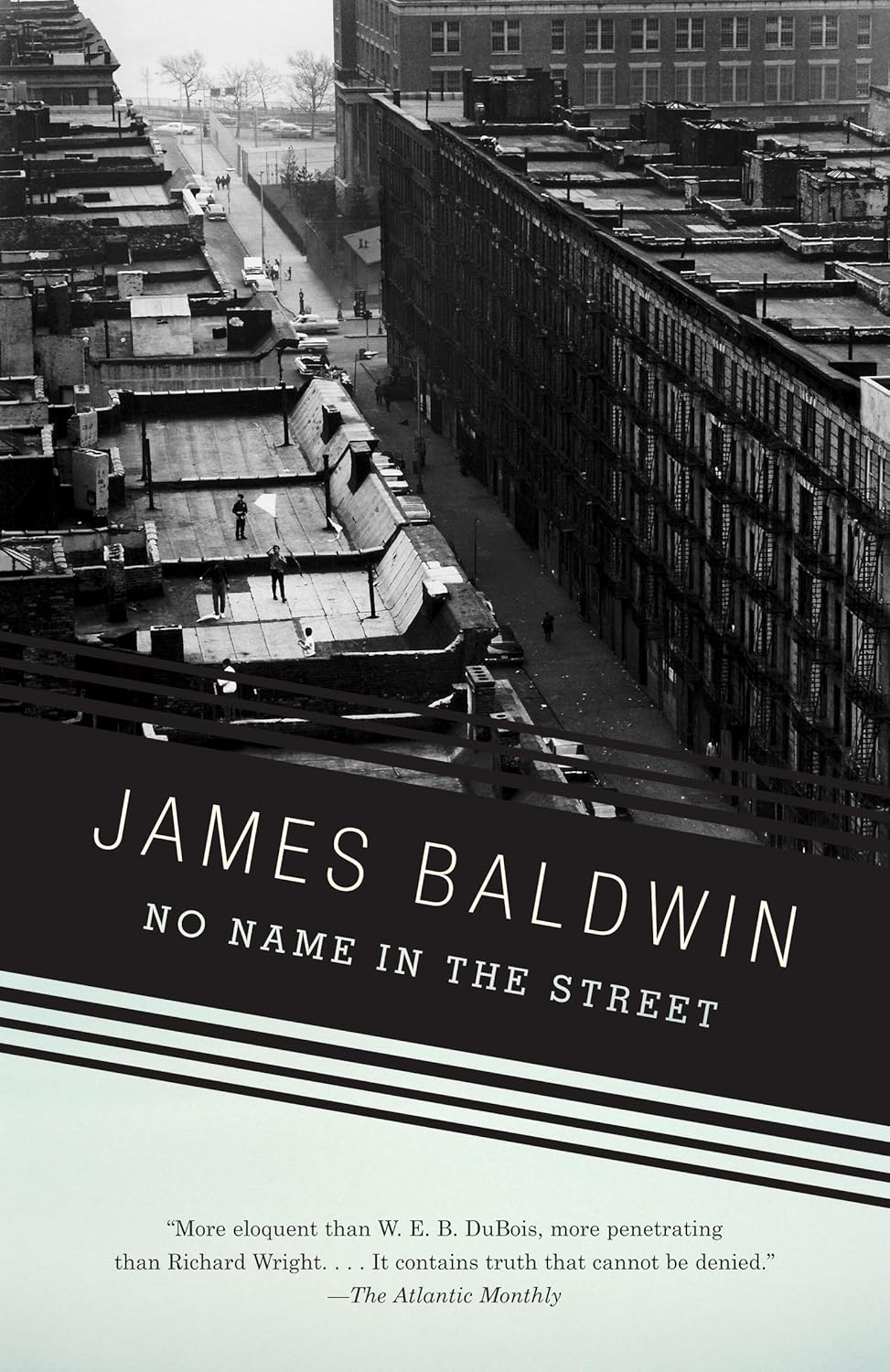
 Summary: Memoir and social criticism, mostly focusing on 1963 to 1969, but with excursions to his childhood. Lots of reflection on the deaths of MLK, Malcolm X, Huey Newton, Eldridge Cleaver, and others.
I picked up No Name in the Street because it was so heavily referenced in Eddie Glaude’s recent book Begin Again. No Name in the Street is mostly social commentary and memoir. Like The Fire Next Time, it is two long essays, with no real breaks. I plan to pick up a Baldwin biography next to get some distance and a clearer life picture.
I am continually mesmerized by Baldwin’s writing. I do not think that it too strong of a description. Baldwin draws in the reader and writes with such passion and clarity. Reading Baldwin can set my mind spinning. So much of his writing feels so very current. But at the same time, he was just a bit older than MLK and Malcolm X and about 10-15 years older than younger Civil Right Era leaders like Stokley Carmichael (Kwame Ture) and John Lewis. Baldwin writes in a way that seems very current, but about history that he lived through. Especially in No Name in the Street, when he was writing about his (still recent) reactions to the large number of Civil Rights Era leaders’ deaths, it gives a weight to this book that I found hard. I put it down several times because as important as the words are, Baldwin is a weighty writer.


 Summary: Exploration of how reading in the diverse Black Church Tradition works in several practical examples.
