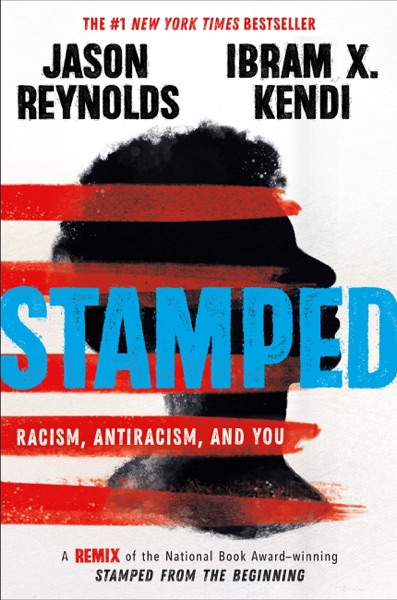
Democracy in Black: How Race Still Enslaves the American Soul by Eddie Glaude Jr

Democracy in Black: How Race Still Enslaves the American Soul by Eddie Glaude JrSummary: Democracy in Black addresses the ‘values gap’ between the claimed idealism of equity and democracy and the reality of history.

One of the problems with many White people in thinking about issues of race is that Black and other racial groups are still “˜other’. That “˜other’-ness is otherness in part because of the assumption of monolithic thinking. As with every topic, the more you know about an issue, the more nuance that you can see. The more comprehensive your approach to an item, the more variance within the subject that you can identify.

If you discuss Christianity, you have to ask what about Christianity is universal and what is particular to a subgroup. Catholic and Southern Baptist responses to one issue may be virtually identical, but nearly unrecognizably different in another. The very nature of worship and what the centerpiece of worship service of oriented around is different between Southern Baptist and Catholics, but they do still both worship the same God.

Democracy in Black is a political philosophy of societal change. Glaude is the Chair of the African American Studies Department at Princeton. He is the current president of the American Academy of Religion. His Ph.D. is in religious studies, and this is a book informed by Christianity. However, it is more focused on the methods and theory of cultural interaction and politics. In some ways, I think this is probably a book written a couple of years too early. It is rooted in a discussion of the role of race in the Obama era, and that is a critical discussion. But it does not fully engage with the racial backlash that gave rise to Trump.

Glaude wants to talk about values more than racism. It is not that racism is not shaping our values, but that the gap in our values is more extensive than mere racism, at least as many conceive of the meaning of racism.

“We talk about the achievement gap in education or the wealth gap between white Americans and other groups, but the value gap reflects something more basic: that no matter our stated principles or how much progress we think we’ve made, white people are valued more than others in this country, and that fact continues to shape the life chances of millions of Americans. The value gap is in our national DNA.”

Merely discussing racial gaps in wealth, education, health, or other areas often reveals how we think about race. There are those that continue to deny that actual disparities exist. Some admit the variations but place most of the blame on individuals. Others suggest that racial differences are rooted in history, culture, systems, resources, or some mix of many different causes. But Glaude, while not glossing over the complexity, wants to ensure that we see that these disparities are not abnormal, but “˜who we are’.

Read more

Blessed Broken Given: How Your Story Becomes Sacred in the Hands of Jesus by Glenn Packiam

Blessed Broken Given: How Your Story Becomes Sacred in the Hands of JesusSummary: A book that attempts to tell the story of how Christ uses the common.

Blessed Broken Given has bread as the central metaphor of the book. Mostly that bread is directly referencing eucharistic bread. Occasionally it is more mundane, but because I have followed Glenn Packiam for years on twitter and read a couple other of his books, I know that even when he is directly referencing more mundane bread, he is still keeping the eucharistic bread in the frame. It is one of the tensions that I think Packiam’s ministry holds well. Glenn Packiam is the pastor of a local church that is part of a multi-site non-denominational mega-church. He is also an ordained Anglican clergy. He is high-church theologically in a low church setting. If I were local to him, I think I would want to be a member of his church. It is not distant from my theological position, while I also attend a multi-site non-denominational mega-church that I am not always in theological alignment with.

Blessed Broken Given is a book fo theological wisdom about what it means to be a Christian. It tells stories to teach as Packiam circles around his point from a couple of different directions. In a late chapter, where he starts talking about what it means to live in a Post-Christian society, one which no longer embraces Christianity as a central organizing metaphor, but one that also has not found a way to express itself outside of being no longer Christian, he has the following quote:

“This is the generation that wants justice but not any sense righteousness. We hunger for community but have no taste for the Cross. We want the goods of the good news without the Christ of the gospel. We want the life of the kingdom without the claims of the King. Maybe this is a reaction born of deep disappointment.”

Read more

The Second Founding: How the Civil War and Reconstruction Remade the Constitution by Eric Foner

Summary: A historical look at the 13th, 14th and 15th amendments in the context of reconstruction history.

I am a big fan of Reconstruction: America’s Unfinished Revolution 1863-1877 by Eric Foner. I have yet to read his biography of Lincoln or his book on the Underground Railroad, but those are both on my list to get to eventually.

The Second Founding is mainly looking at the history around the Reconstruction Constitutional Amendments, the 13th, 14th, and 15th. The Second Founding, in some ways, is a book-length exploration of what Akhil Reed Amar did in a single chapter in his America’s Constitution: A Biography.

The real difference is the greater space given to the historical context in Foner’s Second Founding. There is a theme throughout Foner’s work of the reconstruction being a second founding, and he views that broadly. The way he conceives of the second founding is the expansion of what it means to be a citizen and who is allowed to be citizens so that the promises of liberty and freedom that are implicit in the founding of the US expand gradually, starting in reconstruction to include more and more people. Foner suggests that the implications of the reconstruction amendments are still being felt today (as with the Obergefell case).

But whatever its chronological definition, Reconstruction can also be understood as a historical process without a fixed end point, the process by which the United States tried to come to terms with the momentous results of the Civil War, especially the destruction of the institution of slavery. One might almost say that we are still trying to work out the consequences of the abolition of American slavery. In that sense, Reconstruction never ended.

Read more

White Flight: Atlanta and the Making of Modern Conservatism by Kevin Cruse

Summary: “White Atlantans made clear when faced with the threat of desegregation they would abandon the public space, no matter how prized, rather than see it integrated.”

Kevin Kruse has become a ‘twitter famous’ historian. He has become known for his long detailed threads, with lots of documentation, rebutting Dinesh D’Souza. If you are on twitter and do not follow him, he is a worthy twitter follow. Earlier this year I read his most recent book, Fault Lines: A History of the United States Since 1974.

Although I live just outside of Atlanta, and my wife’s family has lived in the Atlanta area for generations, I do not know well the history of Atlanta. Local accounts like this are essential to gain an understanding of modern realities. For instance, even this year, there has been much discussion about public transportation and Gwinnett County narrowly voted against extending public transportation from Atlanta into the suburbs. Historical context is necessary to understand the current events fully. (Blood at the Root is another local history about an earlier era that also still has modern implications.)

White Flight is a detailed local history from the early 1940s through the mid-1960s with briefer excursions into the 1990s. Part of the thesis of the book is that the modern conservative movement, especially the libertarian wing of that movement was influenced by the individualism that arose in white flight. My oversimplification of Kruse’s argument is that before desegregation White southerners were not necessarily pro-tax, but were more supportive of public spaces, parks and common good types of activities when those spaces were exclusively White. But as desegregation became required for all public areas, Whites largely abandoned public spaces as those spaces became integrated. White flight created a kind of individualism and self-sufficiency because the home of the individual could not be required to be integrated. And at the same time, support for public good spending decreased because Whites had a decreasing interest in shared common good spending and space (including schools).

Because I do not know the local history well, I literally gasped when I heard about KKK counter-protests to the protests against Rich’s Department stores. As documented earlier in the book, Atlanta had a history of integration of public spaces being the result of behind the scenes negotiations and not public protests. Part of the behind the scenes talks was the coalition of political and business leaders that wanted to avoid financial disruption. Black religious and political leaders of Martin Luther King Sr’s era were willing to allow for slower and partial victories. After Martin Luther King Jr returned to Atlanta after the Montgomery Bus Boycott, the boycotts against Rich’s Department store started. Rich and other business leaders had been supportive of the integration of public schools and public transportation but were opposed to requiring integration in their stores.

Read more

A Better Man by Louise Penny (Chief Inspector Gamache #15)

A Better Man by Louise Penny (Chief Inspector Gamache #15)Setup: After his suspension, Gamache returns to head up homicide, overlapping briefly with Jean-Guy Beauvoir before Beauvoir leaves the Sûreté to take a job in Paris. 

A Better Man is the fifteenth book in a remarkably consistent mystery series. It is a rare series that keeps me engaged over 15 books. I cannot think of another series I have read this far in since I was a teen.

That being said, the beginning I was ready almost to give up. It is hard to move on from the last several books. They have been so big, so consuming in scope that I think it was hard to reset this book to mostly be about a single missing person/murder.

One of the problems of mystery series like this one is that they are not only about the mysteries. If the books are only about the mystery, then it doesn’t matter what the characters are doing, their personal lives, their growth or decline, their trauma or success. However, a series like this, which is more about the ongoing characters than the particulars of the particular murder have to deal with characters, which have arcs and climaxes and depths.

The Chief Inspector Gamache series has had a remarkable number of story arcs and continued. What worked in this particular book is the ongoing reflection on what it means to serve the greater good. The several previous books Gamache was the head of the whole police force and as such had an enormous amount of power, which he used to fight corruption, organized crime and the poor uses of power by other officials. But to do so, Gamache had to use methods that were themselves abuses of power. Gamache made those choices because he trusted his integrity, but Gamache in this book is somewhat humbled. Others are attempting to use their power for the greater good, but not every theoretical greater good is an actual greater good.

Read more

Becoming an Ordinary Mystic: Spirituality for the Rest of Us by Albert Haase

Summary: Haase attempts to show us that we are all just ordinary mystics. 

As I said in my last post, I intentionally read Becoming an Ordinary Mystic in conversation with Finding God in All Things. Both are focused on spiritual formation by experienced Catholic spiritual directors. Both are written as mini-retreats for readers to receive wisdom and spiritual learning from the spiritual disciplines. Both are elders who write after a lifetime of Christian service.

Becoming an Ordinary Mystic was published just a couple of weeks ago. It is very clearly designed for readers to take seriously spiritual formation. Each chapter has questions and exercises to reflect on the chapter’s content. It was rare that I read more than one chapter at a time because I needed the time to process it, and even then, I did not spend enough time processing it before moving on.

The spiritual life is not to be taken lightly, but Haase is here to assure us that we should not take ourselves too seriously as we seek God. Haase frequently takes a real-life person as an example in most chapters to think about how we must re-orient ourselves toward God. Whether it be a misunderstanding of God’s affection toward us, our assumption that God loves us for what we do for God, or distortions in how we understand spiritual disciplines, Haase gently prods us toward greater reliance on God and less reliance on our own strength, while at the same time prodding us toward taking seriously our role.

Read more

Finding God in All Things by William Barry

Summary: A companion to the Ignatian Spiritual Exercises.

Finding God in All Things was an assigned book in my Introduction to Spiritual Direction class. Barry is a noted author on spiritual direction, and this is not the first of his books that I have read. In Finding God in All Things, Barry uses the Ignatian spiritual exercises to model spiritual formation.

I paired Finding God in All Things with Becoming an Ordinary Mystic. The two books, both written by Catholic specialists in spiritual direction, were a helpful pairing. Barry is a Jesuit, and Albert Haase is a Franciscan. Finding God in All Things was published a couple of weeks ago by Intervarsity Press, and Finding God in All Things was published nearly 30 years ago by Ave Maria Press. Neither were spiritually fluffy books. In both cases, I found it hard to read more than a chapter at a time because they were pushing readers toward spiritual reflection.

What I continue to wrestle with is the focus on discernment in Ignatian spirituality. Ignatius assumes that someone who is seeking God will find God. And that God will use all available avenues for that. Imagination, coincidence, feelings, stories, etc., are all methods that God can and will apply to draw us toward him. Theoretically, I am all for this. I believe God has used feelings, emotions, stories, and coincidence to pull me toward him and show me areas of service or people he desires me to pursue. The fact that this is true personally is not the issue; I struggle with the explanation of them.

Traditionally, Protestants have been more focused on the Bible; “Do not tell me something that cannot be explicitly shown in the Bible.” That, of course, is in itself a problem, but while I see the issue of over-reliance on proof-texting of scripture, the Ignatian methods feel, at times, way too loose. Ignatius was very conscious of the possibility of being misled. I think many Protestants who would be opposed to Ignatius’ focus on discerning God would do well to pay as much attention to “the enemy” as Ignatius does.

Read more

Doctrine and Race: African American Evangelicals and Fundamentalism between the Wars by Mary Beth Swetnam Mathews

Summary: Traditional Black denominations in the early 20th century were neither fundamentalist nor modernist. They were traditional Christians that upheld conservative theological values, but also believed in social justice, especially in regard to racism. 

I have never done this before. But I do not think I can really do better in posting about Doctrine and Race than to extensively quote the book itself. I made 28 highlights and a couple of notes and you can see all of them and the exact location of each on my goodreads page.

I limited my quotes to just 11. I did bold areas which I think are important.

Indeed, virtually all white Protestants, whether they supported fundamentalism, opposed it, or ignored it, assumed that white Protestant thought was normative and superior, so in that respect, fundamentalists were no different than non-fundamentalist whites.

Religious life in America was segregated and racially coded. Moreover, our understanding of the distribution of the formative books””The Fundamentals””needs an asterisk. While the current narrative holds that oil baron Lyman Stewart financed their distribution to all American ministers and missionaries, black Baptists and Methodists appear not to have received them. The adjective “white” should precede “American” in our telling of the Fundamentals creation story.

For white fundamentalists, and white Protestants in general in the United States, Protestant Christianity was the chief weapon available to civilize the various races. Such a trusting belief in the positive power of Protestantism was not confined to conservative evangelicals or fundamentalists. Josiah Strong’s Our Country, published in 1886, lauded the civilizing effects of “true spiritual Christianity.” Indeed, for many white Protestants in the United States, the benefits of converting various immigrants and minorities to Protestant Christianity were myriad and far-reaching. Black, Jew, Roman Catholic””all could improve themselves through religion, and all required it to be considered “American.”

Read more

On the Come Up by Angie Thomas

On the Come Up by [Thomas, Angie]Summary: Bri, a 16-year-old high school sophomore, wins her first rap battle, but that does not solve any of the problems at school or home. 

On the Come Up is Angie Thomas’ second book, following the massive success of The Hate U Give. While it took me a little while to get into the book, I think On the Come Up is a better book. It works particularly well as an audiobook. The narration is well done, but the lyric sections of the songs and all of Bri’s internal rhyming makes the audiobook the more natural option for the book.

Bri is a 16-year-old. Her father was an up and coming rapper, who was killed when Bri was little. She remembers him more through the stories her family tells her than her personal memories. The tragedy of her father’s death was compounded by her mother’s depression that eventually led to a severe drug addiction. For years, Bri and her older brother lived with her grandparents, and her brother was her primary caregiver.

On the Come Up is a story of how hard work is not always enough. Bri’s mother kicked her drug habit, and after a long legal fight with her in-laws won custody of her children. She has worked hard as a preschool teacher while going to college part-time to be a social worker. Bri’s brother also did everything right. He graduated with honors from college, but the best job he can find in the area is at a pizza place. When Bri’s mother loses her job because of a lack of funding for the preschool, they move from struggling to desperate.

Compounding the problem, Bri is a student at an arts high school in Manhattan. The students from her neighborhood know they are there as diversity and they are also frequently harassed by school security and teachers. Near the start of the book, Bri is violently taken down and handcuffed by school security, which also cascades into several events throughout the book.

Read more

May They All Be One: Origins and Life of the Focolare Movement by Chiara Lubich

May They All Be One: Origins and Life of the Focolare Movement by [Lubich, Chiara]Summary: Short biography of the Focolare Movement by one of its founders.
A friend recommended this short audiobook/kindle book to me a couple of days ago. I am a part of a private facebook group for “˜The Initiative and friends with John Armstrong, who is the founder. The Initiative is a group that is seeking to draw together Christians of all streams together in Christian unity. Chiara Lubich and the Focolare Movement have signficantly influenced the Initiative. I have been broadly aware of the Focolare movement, but I have not explored previously.

May They All Be One is not a new book; it was initially published in 1977. But it was only last month that an audiobook version was only released last month. Both the Kindle and audiobook versions are under $5 and are short. The audiobook is just over 2 hours, and the kindle edition is the equivalent of under 100 pages.

This is a very brief overview. I appreciate the introduction and the idealism and devotion that was communicated here. The book is simple, the writing clear and unvarnished. Chiara Lubich has written several books, 30 different ones if Goodreads is accurate. So I probably need to read more.

The Focolare Movement was started by young women in Italy during World War II. They knew they could die at any time. Lubich convinced her friends that if they died, they would want their gravestone inscriptions to say, “And we have believed in love”. Their goal was to serve all around them by seeking unity. Focolare was a peace movement, but it was not only a peace movement. They advocated for human rights and the poor. They desired international institutions of peace as well as local institutions that worked for the common good.

Read more