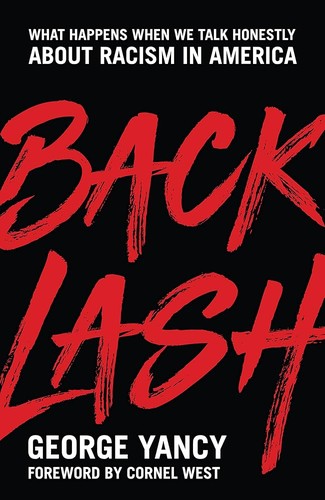
My Life, My Love, My Legacy by Coretta Scott King with Barbara Reynolds

Summary: A strong woman who was Mrs King, but also Coretta.

There were two main reasons I picked up this memoir. First, I read/heard/saw somewhere an excerpt of My Life, My Love, My Legacy that included a section about Martin Luther King Jr not allowing Coretta to meet JFK after the March on Washington. A march that did not include any women in significant roles other than music during the program. I cannot remember what pointed this out to me, but that was why I picked up the book in the first place.

The second reason that moved the book up on my reading list is because because I was told that My Life, My Love, My Legacy directly addresses the rumors of Martin Luther King, Jr’s womanizing and affairs. Part of how she addresses this is by building the case, that is well documented outside of this book, that J Edgar Hoover was attempting to smear King, that he tapped personal and private phones and attempted to discredit King to both political leaders like JFK and to the public. She says that JFK personally took MLK on a walk outside the White House in the gardens so that he could warn MLK about Hoover. (RFK separately also warned MLK about Hoover.) Coretta believed that warning MLK outside was to prevent Hoover from hearing about the warning from bugs in the White House. Also there were several other sources in press and law enforcement that warned MLK and those around him that he was going to be specifically targeted using affairs as a way to discredit him. Coretta says that these warnings were all before there was any hint of affairs in the press. (Biography of Hoover, primarily focusing on his connections to the development of Christian Nationalism.)

Read more

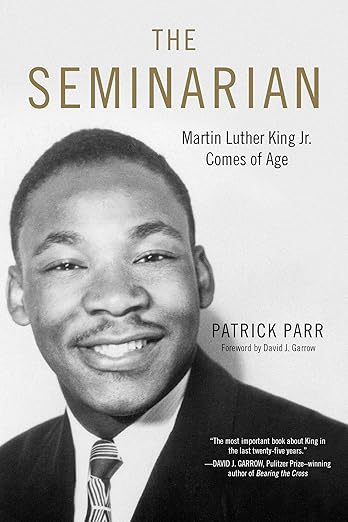
Bonhoeffer and King: Their Legacies and Import for Christian Social Thought


Summary: King and Bonhoeffer both were killed at 39 after lives known for pushing the church toward greater ethical behavior. Their thinking, lives, and action overlap and diverge, but they continue to impact Christian social ethics over 50 years after their deaths.

Bonhoeffer and King: Their Legacies and Import for Christian Social Thought is book of essays from 19 different authors. I have read four biographies of Bonhoeffer as well as several other books by or about him. I have also read a number of books about King and his work, but Bonhoeffer and King gave me a number of new ways of looking at their work and lots of new insights into their theology and praxis. Part of what is important about this book is strives to be honest to their weaknesses and limitations. We are all limited, both by our natural created gifts and limitations and by our sin. But for people that are considered saints as many consider Bonhoeffer and King, part of that sainthood is a sanitizing and narrowing of their legacy. Many want to cite King for his work against segregation, but want to ignore his work around poverty, or militarization.

Because there are 18 chapters and a conclusion by Willis Jenkins (the editor) there are a number of different perspectives here, but for the most part there is no real question about social justice as a conceptual (or Christian) good. The authors prod and compare and highlight differences in perspective, life experience, theology, geography and social situation, but the assumption of the authors (which I agree with) is that for any weakness they had, the role of the church is to work toward justice and both Bonhoeffer and King were attempting that.

I made 21 highlights in my book (publicly available on my goodreads review). That it too many to comments about. And a book like this really has too much to comment about anyway. I want to highlight three themes that were touched on by a number of the chapters. First, while not everyone is aware, Bonhoeffer’s work was significantly impacted by his time worshiping and working in the black church while he studied at Union Seminary in NYC. That shared understanding of the church of the oppressed was frequently mentioned by authors here. For King scholars, the black church background is understood, but for Bonhoeffer scholars it is something that is often noted, but not necessarily given the significance that Bonhoeffer gave it to his own theological maturity.

Read more

The Enchanted by KB Hoyle (Gateway Chronicle #4)

Summary: On the fourth return to Alitheia, Darcy realizes she has fallen in love with Prince (soon to be King) Tellius. But each of their own desires to protect the other keeps them apart.

The Gateway Chronicles has reminded me of the advantages of waiting until a series is done before starting it. That is not particularly helpful for the authors and publishers who need the sales to keep the series going. But for the reader, not needing to wait a year between books is really nice. The Gateway Chronicles are being re-released this summer by the author independently after the rights reverted back to her. KB Hoyle has lightly edited and rereleased the books about every two weeks this summer.

The Enchanted is the fourth (of six) in the series and my favorite so far. I have commented in a number of other reviews that I read for characters more than action and The Enchanted, while still having action, is much more about character development and relationships than action. The characters are older now and the maturity shows, although they are still teenagers.

In earlier books, characters often thought about themselves first and made bad decisions because of it. In The Enchanted, the bad decisions are primarily about trying to protect others. The reader can see why the bad decisions are made, because we can read international motivations, but the other characters are still hurt by what they view as (and sometimes is) betrayal.

Read more

A Light So Lovely: The Spiritual Legacy of Madeleine L’Engle by Sarah Arthur

A Light So Lovely: The Spiritual Legacy of Madeleine L'Engle by Sarah ArthurTakeaway: People are complicated.

Over the past several years since I have started thinking more about how to spiritual formation works, I have been intentionally reading memoirs or biographies of people with the express purpose of mining spiritual wisdom.

Among the most helpful books last year was a quartet of memoirs from Madeleine L’Engle that I was completely unaware of before picking them up. That set of memoirs left me wanting more, but there is not that many options. Her granddaughters have a children biography of L’Engle and there is a 2012 book of reflections by a number of authors about L’Engle, but A Light So Lovely is as close to a biography of L’Engle as I have found.

A Light So Lovely is not a straight biography. It is “˜the spiritual legacy’ of L’Engle. I have read several “˜spiritual biographies’ (CS Lewis, Flannery O’Connor) and it feels like it is more in that genre. A Light So Lovely has a rough sketch of her life, but most of the focus is on her influence on others. The chapters are titled and focus on tensions in L’Engle’s life, a both/and focus instead of an either/or focus. L’Engle wanted to draw the sacred and the secular together, she wanted to see faith and science as different, but both as ways to see God. She wanted religion and art to support one another.

Along the way Arthur complicates the picture that L’Engle draws of herself in her Crosswick Journal memoirs. Her marriage was a fairly close one, but Hugh and their relationship was idealized in the Two Part Invention and one quote suggests that her vision of their marriage was in part ‘an invention’. There is a good exploration of L’Engle’s tendency to fictionalize reality as she says she is doing in places in the Circle of Quiet, but also does in other places without saying so.

Read more

On the Incarnation by Athanasius with introduction by CS Lewis

On the Incarnation by Athanasius with introduction by CS LewisTakeaway: The intro by CS Lewis is worth the cost of the book. But the rest proves his point.

CS Lewis is known for advocating the reading of old books. And while he put that in print in a couple of places. The best known of these is his introduction to Athanasius’ On the Incarnation.

He advocates not only the reading of old books, which he advocates not because they are better, but because they have a different set up biases and blind spots. And when I read Athanasius I did run up against some of those blind spots, like this quote:

Even children hasten thus to die, and not men only, but women train themselves by bodily discipline to meet it. So weak has death become that even women, who used to be taken in by it, mock at it now as a dead thing robbed of all its strength. (my emphasis, On the Incarnation, Location 731 in Kindle)

But most of what is here is clear presentation of ancient understanding of the importance of Christ’s bodily incarnation, his life on earth and his physical death and physical resurrection. I would not support every positions, nor would I support every position of any modern author either. But there really is something important to reading directly.

I am going to have a long quote from Lewis’ introduction to On the Incarnation. One that is emphasizing a different point than old having different biases.

There is a strange idea abroad that in every subject the ancient books should be read only by the professionals, and that the amateur should content himself with the modern books. Thus I have found as a tutor in English Literature that if the average student wants to find out something about Platonism, the very last thing he thinks of doing is to take a translation of Plato off the library shelf and read the Symposium. He would rather read some dreary modern book ten times as long, all about “œisms” and influences and only once in twelve pages telling him what Plato actually said. The error is rather an amiable one, for it springs from humility. The student is half afraid to meet one of the great philosophers face to face. He feels himself inadequate and thinks he will not understand him. But if he only knew, the great man, just because of his greatness, is much more intelligible than his modern commentator. The simplest student will be able to understand, if not all, yet a very great deal of what Plato said; but hardly anyone can understand some modern books on Platonism. It has always therefore been one of my main endeavours as a teacher to persuade the young that first-hand knowledge is not only more worth acquiring than second-hand knowledge, but is usually much easier and more delightful to acquire. This mistaken preference for the modern books and this shyness of the old ones is nowhere more rampant than in theology. Wherever you find a little study circle of Christian laity you can be almost certain that they are studying not St. Luke or St. Paul””or St. Augustine or Thomas Aquinas or Hooker or Butler, but M. Berdyaev or M. Maritain or M. Niebuhr or Miss Sayers or even myself. (On the Incarnation Location 32 in Kindle)

Read more

Akata Witch by Nnedi Okorafor (Akata Witch #1)

Summary: An outcast finds out yet another reason for her to be outcast.

Akata Witch is the fourth book by Nnedi Okorafor that I have read in about 18 months and I will keep reading Okorafor’s books. I started Akata Witch immediately after finishing The White Thread, the third book in the contemporary young adult fantasy series Gateway Chronicles. The two  are very different settings, characters and styles, but both worth reading.

Nnedi Okorafor is a writing professor at University of Buffalo. She is exactly one year younger than I am. Her parents came to the US from Nigeria for school. Okorafor was born in the US but moved back and forth between Nigeria and the US as a child and teen. According to Wikipedia, Okorafor was diagnosed with scoliosis at 13 and at 19, due to a rare complication, was temporarily paralyzed from the waist down. It was during this time of paralysis that she started writing. She eventually went on to get a Masters in Journalism and a Masters and PhD in English Literature.

Okorafor and several others, primarily women authors, have become known for writing science fiction and fantasy from a distinctly African or Caribbean perspective. I have not read widely in this area yet, but American Street and Akata Witch certainly are examples of Magical Realism in modern Fantasy and come from a distinctly non-US/European cultural perspective.

Read more

The White Thread by KB Hoyle (Gateway Chronicles #3)

The White Thread by KB Hoyle (Gateway Chronicles #3)Summary: The last book ended in tragedy. Now Darcy, and the others want to fix their error.

The problem with reviewing a series is that the longer into the series, the harder it is to discuss the book without giving away important plot points from earlier books that are essential to the describing the story for the later books.

I am going to still be vague here, but I may give up on that by the next book. My short version review is that I have very much enjoyed this series so far and I stayed up until 2 AM earlier this week to finish up The White Thread.

KB Hoyle continues to play with young adult fantasy conventions and leave a ton of references to other books for the readers that are probably a bit older and more widely read. The White Thread is ultimately a quest book like most fantasy stories. But in that quest there is a clear reference to the third Narnia book as well as the Odyssey and other quests. As some point I want to ask the author if she is dropping in these references intentionally to lead the reader somewhere or if she is writing the story and some of the reference sneak in initially and she just goes with it. I would guess that these are pretty intentional. But I have read plenty of interviews with authors that have suggested that many of the references that others read into their books were not put there by them. (In response to this review, KB Hoyle and I had a good conversation about references and allusions in writing. I am adding a paragraph at the end of the review because of that conversation.)

At the end of The Oracle, Darcy was forced to pay a price for the answer to her question, that price was significant. She spent the whole year at home trying to figure out how she might solve the problem. But there are two other problems that develop at home. First at the end of the Oracle, the boy at camp that knows about the magical world, but is not with The Six because he appears to be a supporter of the evil ruler disappears. Darcy gains a new level of empathy for him because she observes his father beating him.

Read more

The Oracle by KB Hoyle (Gateway Chronicles #2)

Summary: Does the prophecy (which says that the six will overcome the evil) really mean what it seems to mean.

Young Adult fantasy is a popular category for both adults and teens/pre-teens. It is common to ridicule it, but there is something comforting about YA Fantasy. As I have thought about it previously, and written before, part of what is different the last couple decades in the Fantasy world is that clear separation between good and evil is no long popular. It is not that older fantasy writers like Tolkien or Lewis made all of their characters one dimensional or perfect, but that even in showing the weaknesses of Edmund in the Lion, Witch, and the Wardrobe or Gandalf in the Lord of the Rings, there was a sense of the weaknesses and wrongness of decisions were character defects and things to be overcome or repented for or at the least, part of the reason for the necessity of a balanced group.

Much, but not all, of modern adult oriented fantasy like Lev Grossman’s Magician series or VE Schwab’s A Darker Shade of Magic have blurred the lines between good and evil. There are good reasons for that, you need conflict, and you have to push boundaries in genre fiction because even though conventions exist, flaunting them is one way to get noticed. YA fiction then tends to be one of the places that adults can return to for a clearer sense what it means to fight evil.

In the second book of the Gateway Chronicles, the six return to the fantasy world of Alitheia. Evil was pushed back at the end of the last book, but not defeated. The six are all excited to return, but Darcy, the main protagonist, is uncomfortable with the prophecy that has foretold her marriage to Prince Tellius. Tellius is just as uncomfortable with the idea and Darcy starts to understand how knowing of the prophecy from birth has impacted Tellius’ life.

Read more

How (Not) To Be Secular: Reading Charles Taylor by James KA Smith

How (Not) To Be Secular: Reading Charles Taylor by James KA SmithTakeaway: Skip the audio and do this book in print.

Four years ago, I was very favorable toward How (Not) to Be Secular, since then I have read a number of books that have interacted with Charles Taylor, although none of them have attempted what Jamie Smith has attempted here. In How (Not) To Be Secular, Smith is attempting to summarize Charles Taylor’s A Secular Age while at the same time critiquing some of A Secular Age’s weak points. Other very helpful books have talked about broad ideas or using A Secular Age as a jumping off point. In some ways, it is easier to understand Taylor if you do not have to take the full range of ideas and the full development of Taylor’s argument.

After four years and a number of books about Taylor, I have decided that this fall I need to start reading Charles Taylor directly. I have a couple reasons for that, but primarily what I am interested in is Taylor’s work on how we create identity differently in our current world and how faith works in created identity. I am going to be reading Taylor with a strong eye toward how minority (both racial and other) identity works in his system of understanding the world around us.

Charles Taylor is intimidating, and not just because of the page lengths. Too many people that I know, and respect as smarter than I, have talked about how difficult Taylor can be to understand. I picked up How (Not) to Be Secular as a preparation. I tend to change formats with second readings. And because the audiobook of How (Not) to Be Secular was released recently, I picked up the audiobook.

Audiobook is not a format that works well with this book. The narration was fine. But this is a book that is constantly referencing something else, whether Taylor or another author or subject and the constant reference without the visual cues of what is being referenced make comprehension difficult. Also the constant references to pages of A Secular Age, which make sense in print, do not make the same type of sense in audio. There were paragraphs that referenced specific pages number 4 or 5 or maybe even more times, which made the ability to follow the point difficult.

Read more

The Lord and His Prayer by NT Wright

The Lord and His Prayer by NT WrightTakeaway: We are actually supposed to be praying the Lord’s Prayer.

I grew up reciting the Lord’s Prayer as part of worship. I have no idea when I memorized it, but it was probably when I was very young. About 10 years ago a friend published a book about the Lord’s Prayer (Living Prayer: The Lord’s Prayer Alive in You) that changed my approach to the Lord’s Prayer.

Since that time I regularly pray the Lord’s prayer, both simply and straight through and as a guide, expanding each line as a prayer prompt.

I have read a few books on the Lord’s Prayer since then, but most I thought were not particularly helpful. NT Wright’s The Lord and His Prayer is not new (written in 1995) and while there are a couple of editions of it that are slightly different all are less than 100 pages. I listened to the audiobook (2 hours) during a round trip to a meeting last night. As with many books on prayer, I should probably reread it again in print.

The format of The Lord and His Prayer is exactly like Ben Myers’ excellent book on the Apostles’ Creed, a line by line exploration. NT Wright is both a scholar and a pastor. And what I really appreciate about his writing is that he is always pastoral in tone. He is writing about the Lord’s Prayer because he thinks it is an important part of our lives as Christians. He wants us to understand what we are praying and the context of historic Christianity that has used the prayer historically as well as the historic 1st century culture when the prayer was originally taught. 

Read more