Little, Big by John Crowley

Ultimately, I have no idea what this book is about. It involves a multi-generational family, many of whom live in a large and mysterious house in what I think is rural New England somewhere in the 20th century.There is an unspoken and unconscious awareness that they live in the presence in faeries, and there is … Read more

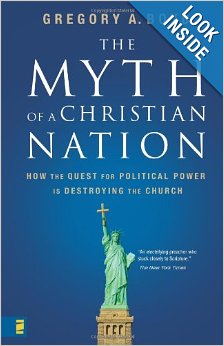
The Myth of a Christian Nation by Gregory A Boyd

The Myth of a Christian Nation: How the Quest for Political Power Is Destroying the ChurchThere are lot of books out there about how Christians should (or should not) engage in politics, but I’ve had three popular-level works on my to-read list because they pretty well cover the landscape: Jim Wallis’ God’s Politics , Wayne Grudem’s Politics – According to the Bible , and this one by Greg Boyd.

Doug Wilson blogged through Boyd’s book a few years ago. I read his posts immediately after Boyd’s chapters, and his commentary was extremely helpful (http://dougwils.com/tag/c125-greg-boy…; the posts are in reverse order). Wilson ably criticizes Boyd’s theology of political engagement, and calls it out for being a jumble of incoherence and inconsistency.

Read more

Ender’s Game by Orson Scott Card (Book and Movie Review)

Ender's Game by Orson Scott Card

(Updated with movie review at the bottom of the post.)

With Ender’s Game, which was published in 1985, Orson Scott Card was successfully able to make guesses as to what the future will hold, at least technologically. He described interactive desks (iPads), internet blogs, and holographic simulations. It was definitely fun to see that many of his predictions of the future have already come to pass.

While this novel was filled with quite a bit of action, it was mainly about relationships. I can’t even really argue that it is a coming-of-age novel because the kids in this novel are forced to act like adults. The relationships varied from brother-brother, brother-sister, parent-son, teacher-student, student-student, and enemy-enemy, to name a few. I like how the author used these relationships to explain and affect the actions and motivations of Ender. I found it intriguing that because the main characters were children that the adults in the novel were adept at using these relationships to manipulate the young boys and girls.

Read more

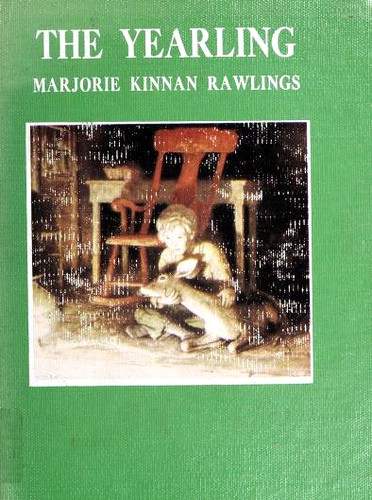
The Yearling by Majorie Kinnan Rawlings

The Yearling by Marjorie Kinnan RawlingsThe Yearling was required summer reading my 7th grade year, and I likely would have hated it had I been forced to read it then (I started attending that school in 8th grade). But reading it now, in my late twenties, I loved it. A coming of age story, it follows the subsistence existence of the Baxter family in the 19th century Florida backwoods–particularly that of Jody, the only survivor of his mother’s many difficult pregnancies. The Baxters struggle through various trials: flooding that destroys much of their crop harvest and decimates the local animal population; strained relations with the Foresters, the rough and uncouth family nearest to their homestead; and an ongoing battle with a stealthy and cunning bear they’ve dubbed “Old Slewfoot.”

Read more

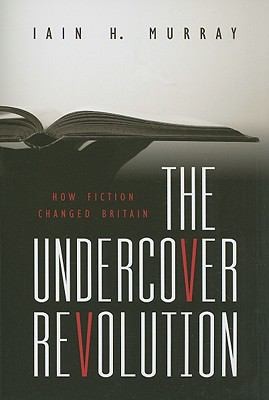
The Undercover Revolution: How Fiction Changed Britain by Iain Murray

The Undercover Revolution Iain H. Murray’s book, The Undercover Revolution: How Fiction Changed Britain, has a fascinating premise–that the sharp uptick in the popularity of novels in the 19th and 20th centuries, particularly novels written by secularists both ambivalent and hostile toward Christianity and her moral and social norms, was the catalyst for the massive cultural shifts that British culture (and Western culture at large) underwent during that time. In other words, Murray argues that it was the subtle, worldview-shaping power of stories–not science or rational inquiry, per se–that shaped and defined the religious and sexual mores of modern society.

It’s an unexpected argument, although it seems reasonable and intuitive once considered. But I remain unconvinced–not because I think Murray is wrong, but because he doesn’t really explain why or how the fiction and authors he reviews directly support his thesis. This is an extremely short book, almost a pamphlet, and can be read in one sitting. Murray provides a some brief biographical info and analysis of Robert Louis Stevenson and Thomas Hardy, and to an even lesser extent Bertrand Russell, H.G. Wells and George Bernard Shaw. He shows that their personal lives directly rebutted their public statements about religion, morality and and human sexuality. Despite proclaiming that one can be happy without monogamy (or marriage at all, for that matter), satisfied by “free love,” and fulfilled by agnostic or atheistic philosophy, their lives were absolute wrecks and utterly failed to vindicate their worldviews.

Read more

Wayfaring: Essays Pleasant and Unpleasant by Alan Jacobs

Wayfaring: Essays Pleasant and Unpleasant The essay, in which a writer has ample space–but not too much–to meander across seemingly unrelated topics before eventually drawing them together with whatever connection initially struck him, is a wonderful medium full of rich opportunity for reflection. Alan Jacobs is one of my favorite writers, and he is at his best when writing essays. Jacobs is the kind of writer and thinker who always makes me feel smarter, more contemplative, and broader-minded than I was before I picked him up. He does this as a professional academic, but without sounding like one. His tastes range from the modern “penny dreadful” to the high forms of ancient literature–and, to his credit, unabashedly so. His thoughts are as profound as they are genuine and unpretentious. And this collection was glorious.

Read more

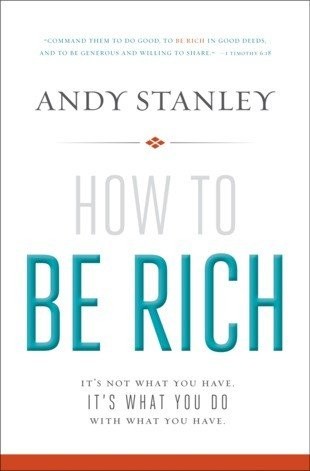
How to Be Rich: It’s Not What You Have. It’s What You Do With What You Have. by Andy Stanley

How to Be Rich: It's Not What You Have. It's What You Do With What You Have. by Andy StanleyThis is not a book about economics, and there are no tips inside on how to get rich. Instead, Andy Stanley is focused on how we modern Americans need to live once we recognize that we already are fabulously wealthy compared to the rest of the modern and historical world. Few if any would deny this if pressed, yet everybody has pretty much the same definition of what it means to be rich: about twice what one earns currently. It’s always relative. As Stanley writes, “œRich is a moving target.”

Stanley points out two major weaknesses that our money makes us susceptible to: arrogance, and to become our source of hope. To combat them, he argues for a lifestyle of generosity that is both intentional (planned) and sacrificial (more than just the extra cash left over once we’ve met our consumeristic “œneeds”).

“œTo keep from becoming arrogant”¦to keep your hope from migrating”¦ and to sidestep the assumption that everything is for your consumption, you are to pursue a life of generosity. It’s not just a good thing to do. It’s not some tip for how to be a good person. It’s a preventative for the side effects of wealth.” (71)

Read more

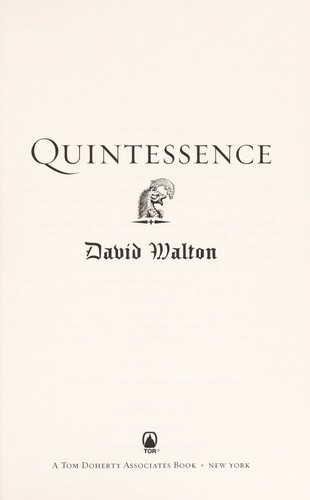
Quintessence by David Walton

Quintessence by David WaltonIn an alternate version of the sixteenth century the world is flat, its outer edges still unexplored. An ambitious alchemist, a boundary-pushing doctor and his daughter, a ship-load of Protestant refugees, and some stowaway mythical creatures set sail for the legendary island of Horizon on the outer rim of the earth. Some are looking for treasure, others for religious freedom, and still others for immortality. They are pursued by a Roman Catholic inquisitor (persecutor) and representatives from the British crown who want to ensure the treasure returns to England.

Read more

Whodunnit? – Murder in Mystery Manor and Murder on Mystery Island

Free: Whodunnit? Murder on Mystery Island | Anthony E. ZuikerThe Whodunnit? book series is based on the television series of the same name.  The television series is an actual competition where 10 or so individuals are brought to a mansion in order to essentially be the last man standing.  One of the contestants is actually the killer, who in each episode kills off one of the contestants who had performed poorly in figuring out how the previous murder had been committed. The remaining contestants examine various parts of the mansion, solve riddles, and team up with other contestants in order to gain the most knowledge about how the murder went down.  They state their case to an empty room and the contestant who does the best job is recognized along with the two or three who do the worst job.  Eventually there are 3 contestants left and there is only one contestant remaining in the room with the killer. Also, important to note is that there is a butler, Giles, who speaks for the killer and relays his/her messages to the contestants explaining that he too is a “œprisoner’ at the mansion and must do the killer’s bidding or else.

Free: Whodunnit?: Murder in Mystery Manor | Anthony ZuikerMy opinion on the television series is that it was definitely a fun and entertaining way to spend our weekends in the summer. When I saw the first episode, I told my husband that I had just seen one of the cheesiest murder mystery television shows.  The cheese and the humor was what kept us watching each week.  Chris had a pretty good idea who the killer was from the very beginning due research he had done on the Internet about the contestants and, to be honest, it didn’t really matter to me who the killer was.  I just liked watching each week to see what crazy, funny thing was going to happen or what silly thing was going to be said by one of the contestants.  We had some issues with the show: it was never explained how the killer snuck away from the group to commit the crimes or was able to do so undetected (and there were some blaring contradictions), the killer’s motive was never really explained, and it was not said how and why the butlers and maids came to be there and were being held captive by the killer.

Read more