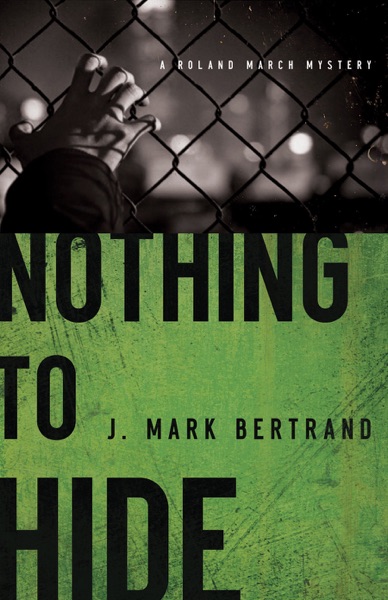
 Roland March used to be a rising star as a homicide detective, but after a family tragedy knocked the wind out of him, so to speak, he’s lost the respect of his colleagues and been relegated to working the bottom of the barrel cases in his department. Until, that is, he sees some evidence at a crime scene that nobody else catches. Grafted into the investigation, March’s instincts lead him to connect two seemingly unrelated cases—a drug-related murder/kidnapping in the hood and a high-profile missing person case involving the daughter of a megachurch pastor. March and his new partner continue to dig, and he eventually uncovers evidence of internal corruption by his arch-nemesis in another department.
 All Old Users
Ebooks vs. Physical Books vs. Used Books – The Changing Book Market
This is a guest post from Sylvia Nankivell one of the owners of http://www.usedbooksearch.net, a price comparison site for used books
I have always been a good reader and I am working at becoming a good writer. I began by reading or memorizing my favorite story. Now my mind reads and stores text a lot easier. I want to find out what happens next. I don’t want to skip from the beginning to the end of a story. I want to enjoy the journey that the author has created. The curtain slowly opens and reveals the plot, characters or factual reasoning. I like the feel of a used book, with the slightly rough paper and the dog-eared pages. It holds the memory of the reader before me. The crease in the cover or the spine is part of the tale with its unique wear-and-tear. Used books are decorative and entertaining. Visitors to my cabin home will look at the books with a sideways glance to read the titles. The price of a used book is usually low and shipping can be free if you buy more books at one time. But I don’t always have room to store a used book, and over the years the pages can become yellow or worn.
The Rule of Four by Ian Caldwell and Dustin Thomason
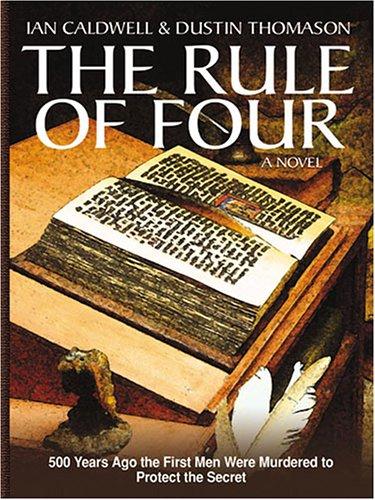 Summary: An intellectually satisfying novel about four college students on the verge of solving the mystery of a well-known but inscrutable renaissance document whose exegesis threatens to upend modern scholarship. Basically, The DaVinci Code without all the heresy.
The Hypnerotomachia Poliphili, published in Venice anonymously in 1499, is an ambitious piece of literature. On the surface it appears to be a love story, told using multiple languages (some made up), including the occasional Egyptian hieroglyph. But scholars have long suspected that within the text lies another meaning, if only the code can be discovered and solved. Indeed, the first letters of each chapter combine to form an acrostic. The novel has resisted almost all attempts at full interpretation over the centuries–until now. And the truth is staggering.
Evangellyfish by Douglas Wilson
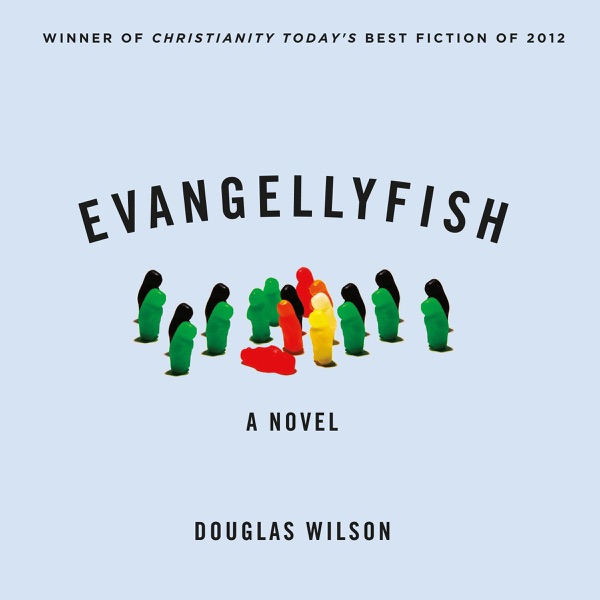 Chad Lester is an extremely successful megachurch pastor who secretly sleeps with as many women as he can (literally) get his hands on. Most of the church leadership knows (or has participated!), but life keeps humming merrily along with all the indiscretions, to quote Alanis Morissette, under rug swept. That is, until Chad gets accused of probably the one thing of which he’s totally blameless–a tryst with an underage male. The accusation is the first snowflake of an ever-growing snowball of revelation in which almost all parties (including the guilty, the victims, the ambulance chasers, and the news media) end up with something unexpected. Wodehouse’s influence is unmistakable.
The Truth About Organic Foods by Alex Avery

According to Alex Avery, it is scientifically proven that organic foods are not safer than non-organic. Organic food is not more nutritious, overall. Non-organic milk has almost zero chance of containing hormones and is by far the safest food item on the market today. Even if hormones made it into the milk supply, the are the exact same hormones that humans have, and the levels in milk would be so low as to pose no risk whatsoever. The pesticides that organic farmers use (yes, they do use them–and often shield that fact with euphemisms) are less powerful and less efficient than modern non-organic pesticides, which means that they are applied much more frequently and crop yields are often lower.
These are just a few of the claims Avery makes. I am an equal opportunity skeptic, which is why this book appealed to me. I like things that challenge the conventional wisdom. I recognize that I have no easy way to confirm much of what Avery writes; he cites a LOT of studies from a variety of research bodies (collegiate science departments, the FDA, European research bodies, etc), but I don’t have the expertise to know if (or how much) he’s spinning. Sometimes the biased tone gets a bit obnoxious, but that doesn’t (necessarily) mean he’s not telling the truth.
Planet Narnia: The Seven heavens in the Imagination of CS Lewis
 Despite being modern classics beloved by children, laymen adults, and critics alike, the Chronicles of Narnia are admittedly somewhat of a literary hodge-podge. Or so most believed. Many have attempted to build a comprehensive interpretive framework for them, but none have received wide acceptance. Michael Ward, Oxford scholar and C.S. Lewis aficionado, presents his own framework, arguing that the classic Ptolemaic solar system (not the modern Copernican) holds the key to understanding the series. Ward’s research of the Chronicles and its author is impressively extensive. He shows how Lewis was steeped in the cosmological mythology of medieval literature, and he illustrates the heavy influence wielded by a particular planet throughout each book.
Unbroken: A World War II Story Laura Hillenbrand (Andy’s Review)
 My brother in law was in town for Thanksgiving, and he had a copy of Unbroken with him. As soon as I saw the book cover, I wondered to myself why I had not yet read it. I had heard great things about the book. I knew that it was a story about WWII and was based in the Pacific. I knew that the author was praised for the book. That was where my knowledge of the book ended. At one point in time, it was on my must read list, but for whatever reason, I had never picked it up.
I asked my wife pick up the book for me at the library You see, we’re a homeschool family… she’s there ALL the time 🙂 I started reading it, and found it very difficult to put down.
This is Who I Am: Our Beauty in All Shapes and Sizes by Rosanne Olson
Bookwi.se note: I inadvertently pulled the wrong review off of Goodreads and posted it last week. This is actually Teressa Sinnett’s review. I apologize for the mistake. I come from a conservative background, meaning; naked bodies were equated with seductive intent. This book enabled me to see that nakedness has many faces, one of which … Read more
The Search For God And Guinness by Stephen Mansfield
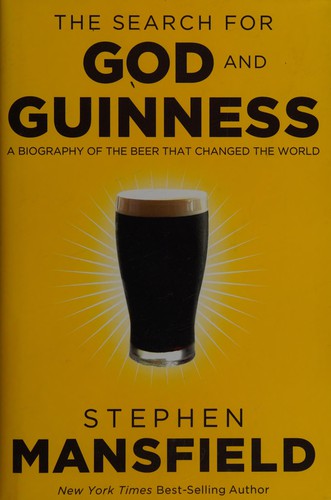 Summary: A fascinating history, but the writing was sophomoric.
Searching for God and Guinness is a “biography” of beer’s role in history and culture through the lens of one of the most famous brands and the family behind it. In simple and readable prose, Stephen Mansfield traces the arc of beer–specifically its origins as a moral and healthy alternative to the hard liquors that destroyed men and marriages, the economic and social development of the Guinness family, and especially the latter’s incredible impact on the justice issues of the day.
Casual Vacancy by JK Rowling
 I started The Casual Vacancy with eyes wide open to the fact that this was no Harry Potter novel–and yet, even though I wasn’t offended by the much more adult tone (and content!) that Rowling establishes right out of the gate, I was a little surprised by it. No matter how prepared you are, it’s just weird to hear the f-bomb dropped by one of Hermione Granger’s literary cousins. What didn’t surprise me at all, though, having read and loved multiple analyses of them, was Rowling’s masterful plotting and the literary alchemy she weaves to engage the reader and drive the story. Indeed, that is what merited my 4 stars for the book.
Pagford is a small town that seems idyllic on the surface, but underneath the veneer of folksy charm the place is roiling with class warfare, sexual tension, violence, back-stabbing and duplicity. Rowling’s characters are broken, wounded, cynical, crass, self-centered, petty, and strangely sympathetic. The reader gets a first-person perspective from everyone as each maneuvers around the other, reading (and often misreading) the circumstances from a unique and limited vantage point–to hilarious but often tragic effects.