
Takeaway: Statistics are important. And if you are a Christian that believes in truth, you need to be even more careful with numbers.
I like numbers. My day job is being a nanny stay at home Dad, but my part time consulting job is evaluating an after school program. I track grades, school attendance, program attendance, home and school visits, behavior, test scores, and a variety of other statistics. In a previous life, one of my jobs was demographic research for church plants and I was statistician for a local Baptist association. I was a sociology major as an undergrad and even went to a sociology paper competition (and came in 3rd) for a sociology paper about the relationship between believe in rape myths and matriculation in a Christian college campus.
If you know me in real life, then you have probably heard me quote a stat (or 50) about something or other. So I should have jumped at this book. But I did not. Frankly, I am a bit negative about a lot of Christian’s use of numbers. A couple weeks ago two different times in the same Sunday, from the pulpit and in a private meeting I heard a similar statistic about divorce that I knew was wrong. My church is about 60 percent single adults. So when people talk about marriage, I want it presented in a fairly positive light, not to be fake, but to not compound the negative feelings that many in my church have toward marriage. So when I hear the same statistic about divorce rising, I get frustrated. I did not say anything, but I was frustrated.
You see, divorce is not rising. In fact it is dropping. In part because many people are just choosing to not get married, or at least get married much later. And divorce among highly educated, upper income people (like most everyone in my church) has fallen off a cliff. So when we talk about divorce as being a major and increasing issue among Christians, we are actually wrong. We should be providing support for marriages, that is why my wife and lead a small group for newly married couples. And we should be providing support for those that facing or recently completed a divorce. But in my church, telling people (most of whom are single) that divorce is increasing, does not really address either reality, or the issue most in the congregation are facing.
Christians Are Hate-Filled Hypocrites…and Other Lies You’ve Been Told: A Sociologist Shatters Myths From the Secular and Christian Media is a very good remedy to the many poorly presented statistics that are floating around in and outside the Christian world. Dr Wright, spends a significant amount of time addressing why so many bad statistics are being used. And really it comes down to two major areas, attention and authority. We are trying to get people’s attention, so pastors (and many others) troll around for the worst statistics to try to prove their point. (This is also why we get so many topical sermons that do not seem to fit the broader context of the passage.) It is not that pastors (or others) are trying to mislead, but rather, they start from the end and find support for their position. The second major issue is that many people are misled because they saw something in print. If it was printed, it must be true. Christians, as people of the book, may be more influenced by the authority of something being in print.
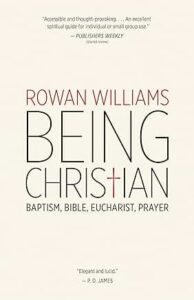
 Summary: We need to be able to see God in the Dark as well as the light.
 Inferno is the fourth book in the Robert Langdon series by Dan Brown. The first two books in the series were made into successful movies starring Tom Hanks. In this book, Robert Langdon is once again called on for his vast knowledge of symbols and iconography so that he might once again follow the clues and solve a dark mystery. Never knowing whom to trust, Langdon relies heavily on what he knows about specifically Dante and his masterpiece, Inferno, in order to hurry and beat a mastermind at his own game. While the first two books (Angels and Demons and The Da Vinci Code) in the series take place in Europe, the third book, The Lost Symbol, occurs mainly in Washington D.C. and New England. The third book was supposed to be made into a movie also but was supposedly passed over because its story resembled too closely that of National Treasure. In this book, Inferno, Langdon spends all of his time once again in Europe. Just like in his other books, there are many twists and turns and Langdon’s quest take him to a number of different famous and historic locations in Italy and a few other countries in Europe. Whereas The Da Vinci Code fed on our interest in conspiracies, this book addresses our ever growing population problem and our fears about epidemics becoming more widespread as our world has become more and more globally connected. The movie for this book is set to come out in the fall of 2016 and will once again star Tom Hanks as Robert Langdon.
 Donald Miller has always been unlike any Christian author I have read before. He rocked my world in Blue Like Jazz. He inspired me to get off my rear end and start living my life in A Million Miles in a Thousand Years. I’ve always been a big fan of Miller being an open and authentic writer plus an avid student of life. His latest book, Scary Close was released this month and it’s unlike anything he’s written before.
 Summary: 45 Reflections on how the bible pushes us toward disquiet.
 Many of us struggle to find our identity in our work. We struggle with the gap between what really interests us ““ where our passions lie, and how we earn a paycheck. In many instances, we work to pay the bills so that we can pursue our true interest. Others know their current career path is not their passion, but cannot pinpoint where their true passion lies. Are we living to work or working to live? Are we spending our work hours doing something that fulfills us? Are working at a career that is exactly what we were created to do, or have we pushed our dreams aside to face the reality of a 9 to 5?
 Elizabeth Is Missing is Emma Healey’s first novel about an older woman suffering from dementia. The story is from Maud’s point of view and gives the audience an idea of what life might be like to have one’s mind slowly deteriorate due to dementia. To help illustrate the point even more, Maud spends most of her time obsessing about the disappearance of her friend, Elizabeth. She finds it extremely difficult to follow the clues when she can’t remember what the clues are or even what they mean when she finds them.