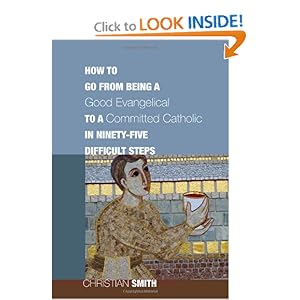
 Takeaway: If you are thinking about joining the Catholic church this has many good questions, clarification and guidance.
I am on a project to understand more about the Catholic church. I have two motivations around this, 1) a friend of mine recently converted and I am reading understand more about his decision and 2) I am convinced that much of the Evangelical opposition to Catholicism is rooted in ignorance of the Catholic church and not really on theology. So I apologize to those that have no interest in Catholic theology, but I will probably read at least another half dozen books in the next couple months.
I have been paying attention to Christian Smith for a while. He is a Sociologist specializing in Christian youth culture and maturation. But I had not read more than a couple of articles (more about his research than by him) before I read his book Bible Made Impossible last year. It was a massively frustrating book for me. He points out many of the problems that Evangelicals have with the bible and its use. In the end I think he is right that we need to read the bible with a Christological hermeneutic, but that is difficult to describe in practice. I think he strongly hinted at his conversion in the book because coupled with the Christological hermeneutic is the need for a church voice (or authority) to regulate the reading (ie the Catholic Magisterium).
 Summary: A richly told story of early Puritans and the struggle against the New England wilderness and the missionary outreach to Native Americans.
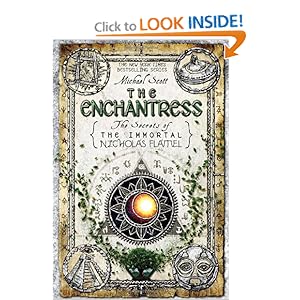 Summary: The conclusion of the Immortal Nicholas Flamel series.

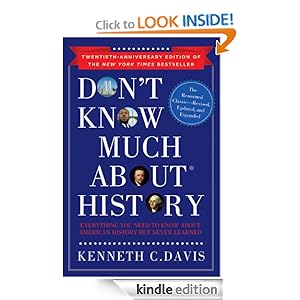 Takeaway: History is important.
 Summary: Christian Grey and Ana Steele separated at the end of the last book. They are in love, but can they be together?
 Takeaway: In spite of the explicit sex, this relatively traditional romance novel is surprisingly insightful into human behavior.