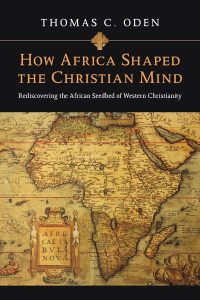
 Summary: Much of the early church was African. The west has largely forgotten its African character and misremembered the importance and reach of the African church.
One of the important points here is very similar to the one made in this article about the rise of the Nation of Islam that it has been the misuse of Christianity that has led to African (or African American) rejections of Christianity as a White religion. European Christians, especially post Hegalian, viewed the early church fathers as necessarily being European in character because they were essential to the development of Christianity. This ignores the reality that most of the early church fathers were ethnically and culturally African. Most of them spoke Greek and/or Latin, but that is because those were common trade languages. Today we would not say that Bishop Desmond Tutu was European in character because he speaks and writes in English. And that also ignores those that were not writing in Latin or Gre,ek such as St Anthony, who was illiterate, but the only surviving letters we have from him (that were dictated) were in Coptic.
A point which I had not heard before was that the consular format of the early church councils, which are today the basis of what is and is not considered orthodoxy and heresy, were developed by African Christians for use in Africa before they were used in the broader ecumenical councils.
Where I think that Oden gets into a problem is evaluating modern movements. He is a good theologian and historian but tends to paint modern movements too broadly to be helpful. In his section on ecumenicism, there are people that fit into his critique, but many that do not. And because he is not nuanced enough in that critique (and I want to be clear that this would be very difficult), I suspect there are people that will dismiss the clearer theological and historical work as also suspect.