A Great Reckoning by Louise Penny (Chief Inspector Gamache #12)

A Great Reckoning by Louise Penny (Chief Inspector Gamache #12) book reviewSummary: Stepping out of retirement, former Chief Inspector Gamache, has agreed to take over Surete (Quebec police) academy. 

A Great Reckoning is not a novel that you want to pickup if you are new to the series.  You could read it and I think enjoy it. But there is a lot of assumed back story. Gamache and his wife are retired in the small village of Three Pines. But Gamache still feels to pull to continue to root out the corruption inside the police force from the previous several books.

I really like this series and this is one of the best books in the series. It is not without its faults. The corruption angle I think has been problematic from the start. It is too big and too small at the same time. There is a timeline issue with one of the big reveals that just doesn’t make sense to me (the age of one of the characters and the secret relationship to Gamache’s history doesn’t really work.) But if you set aside the questionable reality of the police corruption and personal vendetta angles and just read them as a story, it rolls out nicely.

Gamache feels like the only way to solve the problem of the academy is to fire most of the bad teachers, but keep the one he thinks is the ringleader and then bring back the privately disgraced, but not incarcerated, former head of the Surete as one of the staff. He hopes he can use them to root one another’s corruption while keeping them under control.

Read more

Small Great Things by Jodi Picoult

This review was written by Bookwi.se Contributor Vikki Huisman.
Great Small Things by Jodi Picoult book review

Ruth Jefferson is a labor and delivery nurse with over two decades of experience. During a normal checkup on a newborn boy, Ruth is abruptly reassigned to another patient. The baby’s parents are white supremacists who do not want Ruth touching their child. Ruth is African American.

The following day, the baby experiences a cardia event while Ruth is alone with him. Ruth is expressly forbidden from touching the child based on the parents strong wishes. After a hesitation, she springs into action performing CPR but the delay results with Ruth being charged with a crime.

Read more

Strong Poison by Dorothy Sayers (Lord Peter Wimsey Mysteries #6)

Summary: A female crime novelist is accused of poisoning a former lover, and Lord Peter falls for her, but he has to prove she is innocent first.

After reading the first two books of the Lord Peter Wimsey mystery series and enjoying them, but being a bit disappointed by a collection of short stories that came next, I decided to skip to Strong Poison (book six), which many reviews suggest was one of the better books in the series.

Strong Poison opens with a judge reciting the facts of the case as he gives instructions to the jury.  Harriet Vine is accused of poisoning her former lover several months after they stopped living together. Unfortunately, the facts seem just a little too perfect for Peter Wimsey, and he is convinced that Harriet Vine is innocent.

After a hung jury, Lord Peter sets out to find evidence for his intuition.  After meeting regularly with Harriet Vine, he falls in love and has even more reason to prove her innocent.

This is a well-written mystery, and I think the best of the series I have read so far.  What I keep discovering about Sayers is that there are many instances of mystery conventions that seem to me to have originated with her in her hands.  I have to wonder how much of herself Sayers was writing into this book (and others.)  Here, in particular, Harriet Vines is a crime novelist who lived with a man out of wedlock (Sayers secretly had a son raised as her nephew, and his real identity was not revealed until her death.)

Read more

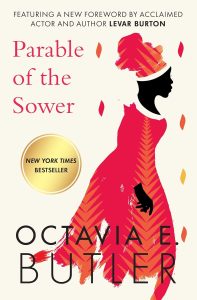
Wild Seed by Octavia Butler

Summary: Two long lived people interact, love and fight over generations.

Wild Seed is now the fourth book and the start of the second series I have read by Octavia Butler. She is a good writer and creates interesting (and wildly different) settings and characters.

But Butler is also hard to read at times. Not particularly unusually among fantasy and science fiction authors, she uses her settings to create alternative social structures and explore issues of ethics and morality.

Butler is known for her feminist writing. While not all men are evil, all of the books I have read from her so far have explored the ideas of male oppression of women.

Wild Seed is about two long lived people. Doro has the power to move from one body to another, living forever, but needing to “˜feed’ on those around him both to stay alive and because of an innate need. Because of his long life (he has been alive for over 4000 years), he has created breeding programs to breed special powers into his “˜children’. These settlements, first in Africa and then later in the Americas, are scattered, but allow him to live as a God. Worshiped by his children, who will willingly give up their bodies for their God.

Read more

The Emergence of Liberty in the Modern World by Douglas F. Kelly

The Emergence of Liberty in the Modern World by Douglas F. KellyReviewed by Bookwi.se Contributor Seth Simmons

The basic premise of The Emergency of Liberty in the Modern World is that the philosophical and theological seeds of a doctrine of religious liberty and its relationship with state power were developed first by John Calvin, and that his ideas so saturated and infiltrated the climate of Western thought that many today don’t even recognize his influence.
After discussing Calvin’s theological developments, the author describes how the French Huguenots in the late sixteenth century took Calvin’s ideas and expanded on them, recasting them in the language of natural secular rights. Running in parallel, Scotsman theologian John Knox expanded Calvin’s ideas further and developed a theology that practically obligated Christians to defy a government that oversteps its boundaries. Next, the history of medieval-to-modern England is a story of theological factions warring over the source and development of political authority and its relationship to the church. Eventually, the Puritans abandoned Europe (to a degree) and brought to a young America their views about state power.

Read more

Amends: A Novel by Eve Tushnet

Amends: A Novel by Eve TushnetSummary: A groups of alcoholics is the subject of a reality TV show.

Eve Tushnet is a writer that I have been wanting to read more from. I have read a number of blog posts and articles by her. In addition to this novel, she has a memoir that I have been wanting to read for a while. Several authors that I ‘know’ have recommended the novel. And because it was recommended as funny, and only $3.99, I picked it up.

I am not sure that funny is how I would describe it. Alcoholism and recovery are not inherently funny subjects, at least to me. I did a college internship with a drug and alcohol rehab program (primarily focused on recently homeless.) While I only worked as a counselor for a few months with the internship, I volunteered there for years and lived on site in exchange for working as night security for a couple years before I was married in grad school.

Amends presents a fairly realistic view of addiction and recovery. The reality TV program is being put together by an addict herself. The ‘talent’ is chosen for diversity and interest. So there is a gay man, a teen hockey star, a homeless Christian African immigrant, well known playwright, a woman who identifies as a wolf, etc.

These are all brilliant characters. Their conversations are occasionally over the head of the TV audience. The reality TV angle, similar to Christopher Beha’s Arts and Entertainment and Beauty Queens by Libba Bray, both irritated me and provided some needed context to the novel. I really do not like most reality tv. The exploitive nature of it, especially with something like addiction, is acknowledged by the book but also still wrapped up in the novel.

Read more

Helping Children Succeed: What Works and Why by Paul Tough

Helping Children Succeed: What Works and Why by Paul Tough book reviewSummary: Helping children from difficult backgrounds succeed, is more about creating the right environments for them to be successful than it is teaching them success strategies.

My paying job is to manage data for an after school program that works in low income areas and targets low performing students at low performing school. I am always interested in the latest theories and practices that seem to be successful. But I have been working at this job for nearly 15 years. And my wife has been a teacher for even longer. I have seen trends come and go. Solutions are never fast or simple because the problems have been long in coming and are infinitely complex.

Paul Tough is a journalist, a writer for the New York Times and a contributor to This American Life. This is his second book on this theme (the first was How Children Succeed: Grit, Curiosity, and the Hidden Power of Character). This is a very short book, 145 pages, less than 4 hours of audio. And in that short number of pages there are still 23 chapters. Tough opens by charting out why children from difficult backgrounds have difficulty in school and life. Adversity, stress, trauma, neglect, low attachment and other adversities all impact development. Some of these can literally change DNA, but all impact development of young children, which has a very long term impact on future development.

Helping Children Succeed is more than diagnosing the problem, Tough also attempts to chart out some of the failed solutions and some of the potential viable solutions. There is no pretense that solving problems of education is easy. But because of differences of demographics, population trends and birth rates, the majority of children in schools are now poor, minority or from other difficult to educate subgroups.

Where I think Tough is right is that character issues, internal motivation and ‘grit’ is more important in the long term than base intelligence. The question is how to develop the internal, and often precognitive, skills that allow kids to do the hard work that is necessary to overcome their educational difficulties.

Read more

Love in the Ruins: The Adventures of a Bad Catholic at a Time Near the End of the World by Walker Percy

Summary: A slightly neurotic psychiatrist faces the end of the world after inventing a device that can read the state of a person’s soul.

Walker Percy is one of those 20th century Catholic novelists that intrigue me. Percy, Graham Greene, Flannery O’Connor, Endo and several others were not writing ‘Christian fiction’. They were writing literary fiction that was influenced by their faith, usually quite overtly. They became prophets in a way that I am not sure is quite possible today.

Alan Jacobs’ long essay at Haper’s on the loss of the Christian Public Intellectual is somewhat similar to my thoughts here. It is not that there are not prominent literary figures that are Christians (Marilynne Robinson being the first on everyone’s lips.) But I am not sure that there is a similar prophetic voice, and I am not sure that the culture of the 1950-70s that produced these famous Catholic voices wasn’t a particular culture that was conversant enough about Christian themes, while not necessarily being Christian. But it is also always problematic comparing historical authors to current because the remembered historical authors are always greater than the whole of current authors that have not been winnowed by time.

Love in the Ruins is about Dr Tom More. Written in 1971, it envisions a near future USA that has devolved into a segmented culture with no real government. Small city states of conservatives (Knotheads) or liberals operate without any opposition. Several groups live outside of society, including the hippy communes and the Black radicals that are opposing a more extreme Jim Crow (near slavery) style oppression.

Tom More is a widower. His wife left him to find herself after their daughter died. And then his wife died with her universalist guru. Tom is now a brilliant alcoholic womanizing doctor. He is a sometimes  psych resident of the large teaching hospital. But mostly he is living by himself, minded by his nurse, pursuing local girls and trying to figure out his Ontological Lapseometer. The Lapseometer reads the state of the soul and toward the middle of the book he figures out how to turn the reading device into one that can adjust the mental imbalances of the individual, Angelism/Beastialism ratio among other types of imbalances.

Read more

Monk Habits for Everyday People: Benedictine Spirituality for Protestants

I am reposting this 2013 review because the Kindle Edition is on sale for $1.99. Also his recent book, Dangerous Passions, Deadly Sins: Learning from the Psychology of Ancient Monks is free if you subscribe to Kindle Unlimited.
Monk Habits for Everyday People: Benedictine Spirituality for Protestants by Dennis OkholmTakeaway: Spiritual Growth is not a quick fix.  It is a journey without end.

One of my favorite classes at Wheaton College was Systematic Theology with Dennis Okholm.  I think I learned more about theology in that class than I did in all of my theology classes at University of Chicago Divinity School combined.

So when I saw that Okholm’s book was on sale for kindle (2 weeks ago), I picked it up and read almost all of it in a single sitting, that probably goes against the theme of the book.

Monk Habits for Everyday People is a very readable and interesting look at how Protestants (and more particularly Evangelicals that are often most interesting in evangelism and salvation) can learn from Benedictines about how to live as Christians.  This is an ongoing theme for me this year.  Not intentionally, but I think it is something that God is doing in me. As Okholm says near the beginning of the book:

We have become consumers of religion rather than cultivators of a spiritual life; we have spawned an entire industry of Christian kitsch and bookstores full of spiritual junk food that leaves us sated and flabby. As if we believed the infomercial that promises great abs if we just buy the right piece of equipment for $39.95, we think that the secret to being a spiritually fit Christian can be had by finding some secret technique or buying the most recent hot-selling inspirational devotional. Maturity in the Christian life does not come in these ways. The life of the disciple is like that of the athlete who prepares for and runs a marathon. We can have the snazziest running garb, assemble a library full of training schedules and tips, and watch Chariots of Fire each day every day for a year, but while all of these things might help, they will not be a substitute for the unspectacular training and diet that we must engage in if we are going to become mature Christians, “œperfect and complete, lacking in nothing” (Jas. 1:4). It’s that way with anything in life””being a concert pianist, a skilled sculptor, or an insightful historian.

And this soon after that, “What Benedictines have to offer Protestants in this quest is the lived reminder that the Christian community’s ultimate function is to shape individuals who, as disciples of Christ, are being formed into his image.”

Read more

The End of All Things by John Scalzi (Old Man’s War #6)

The End of All Things by John Scalzi (Old Man's War #6)Summary: More inter galactic political intrigue and death defying heroics.

Old Man’s War was a great book. It was a nice update to Robert A. Heinlein’s Starship Troopers. I never did read the third and fourth books of the series (which I should). Scalzi rebooted the series with Human Division and continues it with The End of All Things.

These two books are short story collections that tell the story in snippets from a variety of perspectives. That is not my favorite method. But Scalzi is a good writer and in spite of the fact that I am not a fan of short stories. These are well done. They give the idea of some of the wide ranging fiction of George RR Martin or Neal Stevenson without the 900 pages of text.

Most of the time I write reviews soon after I finish a book, but it has been nearly 2 weeks since I actually finished The End of All Things. And while I know the story and can remember the major arc, it is a fairly forgettable. The problem with the story story collection idea is that it usually lacks the character development as it bounces around. And while several of the characters have been in several other books (Harry throughout), I just don’t really love any of them.

Read more