Remains of the Day by Kazuo Ishiguro (2nd Reading)

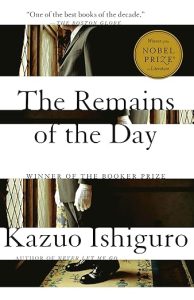
Remains of the Day by Kazuo Ishiguro cover imageSummary: An untrustworthy narrator tries to excuse his failures. 

Note: This post has a lot of spoilers because I am trying to grapple with how Ishiguro uses the unreliable narrator to grapple with what really happened to the protagonist and those around him. The book also has been out for over 30 years and there is a movie adaptation, so I am not particularly concerned about revealing spoilers. 

I have been revisiting books that I have liked and adding more fiction this year than I normally do. My daughter is currently studying the lead up to World War 2 and I helped her work on a project reading several original documents about Chamberlain’s appeasement policy and then she had to make an argument about whether it had been the right policy or not.

It is almost impossible to put yourself in the position to really make these arguments when you are aware of the result of WWII. Personally, I lean toward pacifism, even if I am not completely pacifist. I think we should try diplomacy as much as possible prior to war. And so reading The Remains of the Day while helping my daughter with her project really does make me appreciate what Ishiguro is trying to do here. Almost no one thinks that appeasement was a good policy at this point. And at the time it was controversial.

The main positive arguments, according to the documents my daug
Read more

Bel Canto by Ann Patchett

bel canto cover imageSummary: Beautifully written utopian tragedy.

I am not sure if I am feeling nostalgic or tired of non-fiction or if something else is going on, but I have very much been drawn to fiction this year. Generally I am a non-fiction reader. But year to date, about half of the reading I have done has been fiction, and two of the non-fiction books have been biographies of authors.

Bel Canto is the third book this year that I have re-read. It read it about 10 years ago. That time it was all on audiobook. And this time, it was about half audio and half in print. The audiobook narrated by Anna Fields was well done. (She also narrated Children of God.)

Bel Canto is a tragedy and you anticipate it as a tragedy almost from the very start. There is a dinner in honor of a Japanese businessman, who the country was wanting to encourage to build factories in the (fictional and unnamed) South American country. The dinner was hosted at the Vice Presidential home and attended by many ambassadors and business people from around the world. The highlight of the event and the reason that the businessman agreed to the dinner is that a world famous soprano opera singer would perform. And that businessman’s only real love in the world was opera, that singer in particular. But the dinner was interrupted by guerrilla terrorists who mistakenly believed that the President of the country would be there. I believe that this was inspired by a real hostage crisis in Peru in 1996.

As I said in my last post about the book, a type of uneasy utopia eventually develops. But a utopia could never last. And tragedy is the end result. That really is the whole story and it feels like I have described too much of the story even while I haven’t even named a character.

Read more

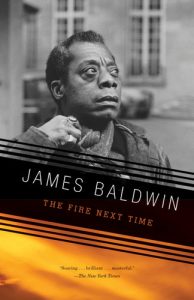
The Fire Next Time by James Baldwin

the fire next time cover imageTakeaway: One of the most effective books for discussion my book group has had.

Last fall the book group I have been leading for about six years read The Gospel According to Baldwin. It was an odd choice for the group because other than myself, no one has ever read James Baldwin and only two had seen I Am Not Your Negro. But we read it and the group  really enjoyed that book and was interested in Baldwin.

We tend to take off the Christmas season and so when we got together to come up with our next book, The Fire Next Time seemed like a good choice. It is a short book, just over 100 pages. There are two essays. One is framed as a letter to his nephew on the 100th anniversary of the Emancipation Proclamation.

And then the remaining 80 pages is a long biographical essay, written in three parts. The first part is mostly about Baldwin’s life growing up in Harlem and the way and how race and puberty and poverty impacted him. The second part was mostly about having dinner with Elijah Muhammad in Chicago in 1961 and the attraction that the Nation of Islam had, but ultimately why he could not be a part of the group. Part three is more about the way forward.

Read more

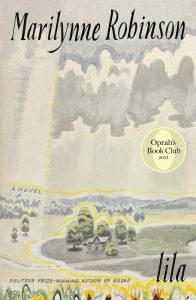
Lila: A Novel by Marilynne Robinson (Third Reading)

Lila: A Novel by Marilynne Robinson cover imageSummary: A theological novel about a woman grappling with God about her life. 
Recently I recommended Lila to someone that I thought would enjoy the novel. I recommended it, not just because it is a well written novel, but because of the theological content. I thought they needed to see someone else grapple with God about wrong done to them as a way to reframe the way that they thought of God.

It has been just over 10 years since this novel came out and since I read it twice in quick succession. I have said a number of times that Lila is probably my favorite novel, or at least in the top ten. And I am not changing my mind with that on this third reading. But I think I am more aware of some of the weaknesses of the novel. Just like Gilead (a novel based on John Ames, the husband of Lila), this is a novel without any chapters. There are pauses and breaks in the narrative, but as someone that does a lot of reading at night before I fall asleep, not having a clear chapter break means that I tend to keep reading too long. That structure makes sense of this being a stream of conscience novel mostly in the head of Lila. When you are thinking, you often jump from topic to topic without clear logical progression.

Lila reveals much of her history (and trauma) as the novel progresses, but it is not a linear retelling of her life. We get a glimpse of one period of time and then a different look at a different time once Lila is able to processes and look again at that event with new eyes. Lila is uneducated, but as John Ames can see, that does not mean she isn’t smart. She is wickedly smart, but her lack of training and her lack of confidence means that she assumes that her thoughts are invalid. She has to gain language to describe her life and then process her experiences through that new series of lenses which she did not have previously.

Read more

The Sparrow: A Novel by Mary Doria Russell (2nd Reading)

The Sparrow cover imageSummary: A group mostly made up of Jesuits discovers that another world with intelligent creatures exists and secretly decides to visit it; tragedy ensues.
I previously read The Sparrow about six years ago. In my ongoing reading about Discernment, it was a fiction book that was suggested to me as one that looks at discernment, so I put it back on my list to reread, but a Holy Post discussion about The Sparrow made me decide to pick it up when I did.

As I have been reading various ways to think about Discernment, I keep coming up against the tension between those who see discernment primarily as Christian decision-making, those who see it as a set of tools or a process that includes decision-making, and those who see it primarily as seeking after God. I am definitely in the latter camp. I know these are not mutually exclusive ways to think about discernment, but I do tend to think of them as the three modes where one is prioritized.

I started a book on discernment a couple of weeks ago, and I could not make it through the first chapter because it approached discernment as a tool that was more similar to an incantation to control God or to get God to reveal himself more than a method to help us understand who God is. This problem is part of why I have been reading about discernment, to help figure out where it seems to go wrong. Discernment is often invoked in discussions of spiritual warfare, and people who regularly talk about spiritual warfare seem more likely to believe in various conspiracy theories. The very nature of belief in conspiracy theories makes me distrust your perception of discernment.

Read more

Children of God: A Novel by Mary Doria Russell (2nd Reading)

Summary: The second half of the story of The Sparrow.
When I first read The Sparrow, I did not realize that Children of God was actually part two of the book. I thought it was a sequel, but instead, it should be considered the second half of a single story. Because of this, I did not read Children of God until two years after I read The Sparrow. It was not until re-reading that I realized how much those two years impacted my understanding. This is a single story.

The book opens immediately after the end of The Sparrow. The reader and the characters think that they understand what happened on Rahkat (the other world that they traveled to.) But one way you should prepare to read Children of God is to think of it as an explanation of all the things misunderstood in The Sparrow. This is an alien contact story. Culture and biology are different. And even when Sandoz thinks he understands the language as a linguist, there are mistakes and misunderstandings.

Sandoz was traumatized in The Sparrow, and multiple stages of healing come throughout the Children of God. It is not that he “forgets” his pain and trauma. But he does come to terms with it in some ways over time. This does bring up my main concern about The Children of God. In my post about The Sparrow, I somewhat minimized this as a book about the problem of evil, which is still a significant theme within The Children of God. I do not believe there is a solution to the problem of evil. However, one method of dealing with the problem of evil is to suggest that God was behind everything to accomplish the greater good. While I think there is some space for seeing a different plan than what we had or that we misunderstood God’s plan, I get concerned with “making things come out right.”

Read more

Black Cauldron by Lloyd Alexander

The Black Cauldron (Chronicles of Pydain Book 2) by Lloyd AlexanderSummary: A second adventure for Taran and his companions. Taran sees the problems of seeking glory and honor and the weight of leadership. 

I have been in a bit of a reading rut lately. So many books I want to read theoretically, but I have been not finishing much while starting a lot.

I stumbled across The Black Cauldron because there was an update to the Kindle edition, which pushed it to the front of my kindle. Last weekend I read through it in two sittings. These children’s books seem so much simpler reading them as an adult compared to my memory of them as a child. They are not simplistic, but the plots are much less detailed than some modern children’s books like Harry Potter and certainly less than many adult fantasy books.

What I like most about Lloyd Alexander as an adult and I think what drew me in as a kid was how seriously he takes Taran and Eiloiwy. They are not just some kids, but they are unique individuals, and while they are flawed people, they can grow and change, be self-reflective, and do important things. Unlike some kids books that have the kids do big things because the adults are incapable, Alexander has kids and teens do extraordinary things because there are important things to be done. This isn’t a rejection of adults, but part of the maturing process of becoming an adult.

I am about halfway through a book on discernment by Thomas Green (Weeds Among Wheat) that I am reading for my Spiritual Direction class. Green suggests that often when thinking about discernment, we believe God is either the puppet master, who controls all the things, so discernment doesn’t matter. Or we think about God in deistic ways with God not being involved in the world at all. Green thinks a better social imaginary is God as the parent of adult children. There are times that a parent of an adult will intervene and get involved, but there are times when the parent of adult children will allow their children to make their own decisions and live with the consequences as part of the process of growing up.

Read more

The Spy Who Came In From the Cold by John le Carre

Takeaway: Being a spy, influencing the other side is difficult to do and prone to morally questionable decisions.

The Spy Who Came in from the Cold is the book that first made John le Carre’s name (or made John le Carre, a pseudonym famous.) John le Carre was a spy who became a writer. At about the same time Ian Fleming was becoming famous with James Bond, he came to prominence. In many ways, he was the anti-Bond.

Bond is known for action and individualism. George Smiley is overweight and a bit dumpy. He is an intellectual and an analyst. Carre’s books are slow and have complex plots. Fleming’s books are much shorter, are much more action based, and idealize the work of a spy.

The Spy Who Came in From the Cold is the first of le Carre’s books I have re-read. And it reminds me much how soul-deadening le Carre makes intelligence work. There is some action and understanding of the west being on the right side of the cold war. But that doesn’t mean that the west is always right in its actions. John le Carre, if he had not read Niebuhr, he at least understood the basic concepts that Niebuhr wrote about in the Irony of American History.

Read more

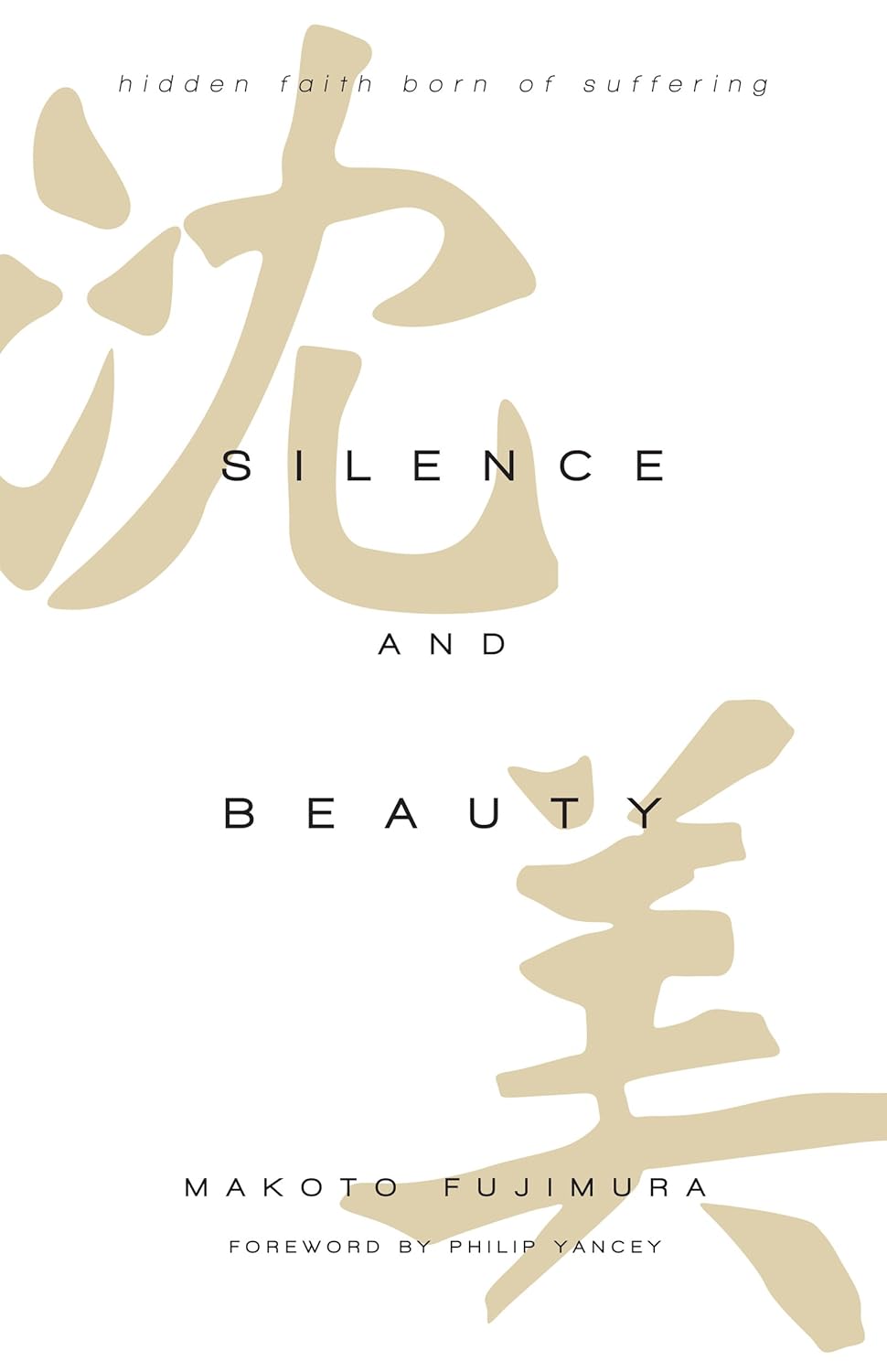
Silence and Beauty: Hidden Faith Born of Suffering by Makoto Fujimura

Summary: Thoughts on faith, art, Japan and the novel Silence.

Despite the movie Silence bombing at the box office (I didn’t have a chance to see it before it was gone), critics have mostly given positive reviews. And that seems to be similar to what I have heard from people that seen the movie. There were many that have previously read the book and have looked forward to the movie for years. But more than a few did not like the movie or the basic theme of the book. Bishop Barron, who regularly reviews movies as part of his video podcast and who I have usually found very sympathetic to attempts to portray faith in popular culture media really did not like it.

But I can’t help but feel like there is something missing in between those that have been raving about it and those that suggest it is missing between those that really like the film and those that are suggesting it is only marginally Christian theologically.

There is a pretty good discussion between Fujimura, Martin Scorsese and Kutter Callaway at Fuller Seminary. When I hear Scorsese talk about his intent behind the film or Fujimura’s discussion in Beauty and Silence or his many other places, it seems to be exactly the type of art that Christians need to be making. It has hard questions, no particularly easy or pat answers and it is technically superb.

Read more