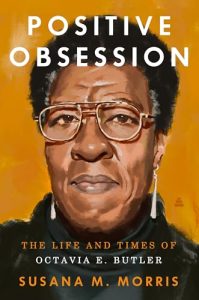
 Summary: A biography of the great Octavia Butler, but mostly focusing on her work more than her life.
I knew about Octavia Butler long before I read her. Around 2006 or 2007 I read the twilight books. I enjoyed them enough that I read the original Dracula and then I picked up Fledgling, Octavia Butler’s last book, which was also a type of vampire story.
That led me to reading Kindred and then the Patternist series and then the Xenogenesis series and the Parable of the Sower and the short story collection. I still have not read the Parable of the Talents because I think that other than the book from the Patternist series that Butler worked to take out of print because she didn’t like it, that is the last of her books that I have not read and I am reluctant to read it because of that.
I did not really know anything about Butler prior to Positive Obsession. Butler grew up in post WWII California. I knew that she started writing in part because she saw a really bad scifi movie as a pre-teen and thought she could do better. I knew that she struggled to sell books and worked to support herself by doing temp jobs so she could write for much of her career. And I knew she died too young. (I wish there was more about her death. It is definitely hinted at, that she died in part because of bad medical care and maybe more can’t be written about that beyond that speculation, but I wanted more.)
Positive Obsession did fill in more of her story. The author, Susana Morris, identifies Butler as autistic. I learned more about her background and a lot about the books she wrote. But as a biography, I thought Positive Obsession wasn’t as good as I wanted it to be. It wasn’t badly written. If you see it on sale (right now it is $1.99 on kindle) I think it is worth reading. But I think it is more about her books than about Butler. The author had access to Butler’s diaries and interviewed many. But there doesn’t seem to be much about her and her life.