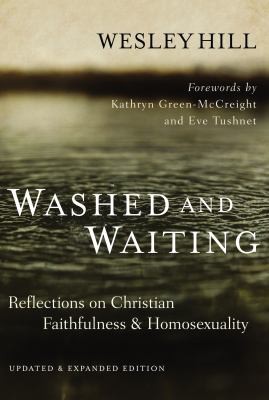
 Takeaway: Sometimes not having something really allows you to look and understand.
One of the things I remember from a grad class about understanding diversity is that often people do not focus on their identity as “_____” until they are a minority in that area. So people often do not think about their maleness, until they are in a class of all women. They do not think about their Appalachia roots until they live in New York City.
Wesley Hill has a better understanding of the purpose and use of sex from a Christian perspective than most Christian books on sex or marriage that I have read. I think it is in part because of his struggle to understand sexuality as a consciously gay (and celibate) Evangelical.
There are three things that this book really gets right. One it is very consciously personal. About half of the book recounts Hill’s struggle to understand his sexuality and his decision about why he feels that the only way he can be authentically Christian and still true to himself is to be celibate. The second thing that he gets right is that he does not keep it personal. He tracks two others Christians that also were both gay and celibate (Henri Nouwen and Gerald Manley Hopkins). Hill is still young, as a 20 something he does not have the life experience to discuss celibacy as a long term lifestyle and I think he wisely brings in the experience of two now deceased men. The picture of these men is not all that pretty, they lived tortured and lonely lives, but that is also part of what Hill will live as well if he continues to choose a celibate life. The third thing that I really appreciate is a view of sexuality as something that is not a ‘right’. And he views all of life as a possible means of teaching us to be like Christ. This connectedness of life to Christ is important to how he understands God. God is not a cosmic killjoy that says he can’t have sex out of meanness, but instead God has created a world that is fallen and that God uses the fallenness to mold us into the people he (God) wants us to be.
 Summary: A scandalous death and the threat of devil worship shake up the quiet village of St Denis.
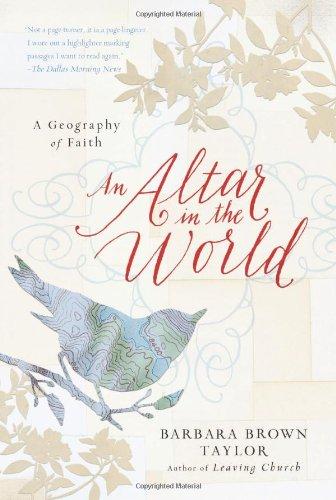 Summary: Finding spiritual practices for those that have become dead to spiritual practices.

 Summary: Bruno looks into a shady community market and stumbles on a series of international crimes.
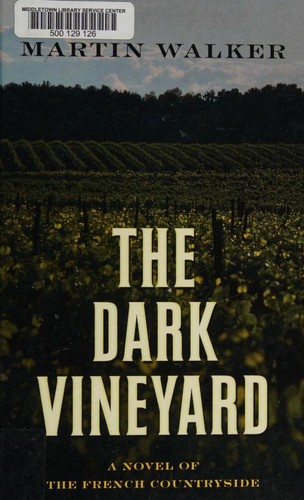 Summary: An arson on a remote (and illegal) genetically modified research farm leads to a crisis. And it might be related to a potential new investment by a large winemaker. Bruno as chief of police and lover of his small town seeks to preserve the community.