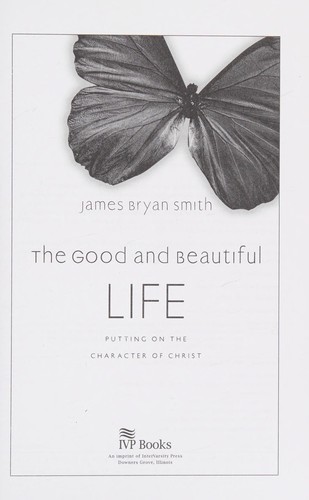
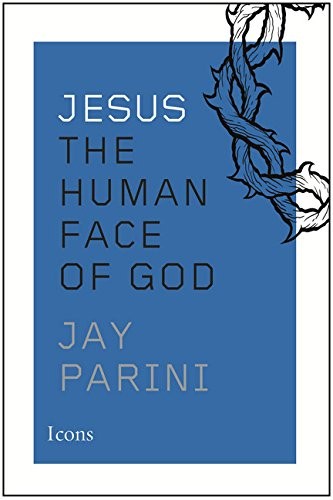
How (Not) to Be Secular: Reading Charles Taylor by James KA Smith

Summary: The traditional story of how to the world came to be secular (a subtraction of belief) is not the real story.

Starting last year I have been paying a lot of attention to James KA Smith (Jamie). The first book of his that came across my radar screen was Desiring the Kingdom: Worship, Worldview and Cultural Formation. (I still haven’t actually read that one, it is on my list for this summer.)

But I did read Imagining the Kingdom: How Worship Works. And it really did fundamentally change my perspective on liturgy and worship. Since then I regularly read Smith’s editorials (he is the editor of Comment magazine) and I have slowly been reading some of his other books.

How (Not) to Be Secular is the type of book I wish were more popular. For important ideas to really take hold, we need good authors to popularize those important ideas into formats that a general public can understand. Charles Taylor’s A Secular age is a massive and important book, but at 900 pages it is too long (and too dense) for most readers. (And more than a few people have suggested Taylor is not the most readable author.) So Jamie Smith has put together a 148 page companion that covers the basics of the argument and includes relevant contemporary examples.

The basic idea of A Secular Age is to explain what it means to live in a secular age and how we have come to this place in culture.

“We are all skeptics now, believer and unbeliever alike. There is no one true faith, evident at all times and places. Every religion is one among many. The clear lines of any orthodoxy are made crooked by our experience, are complicated by our lives. Believer and unbeliever are in the same predicament, thrown back onto themselves in complex circumstances, looking for a sign. As ever, religious belief makes its claim somewhere between revelation and projection, between holiness and human frailty; but the burden of proof, indeed the burden of belief, for so long upheld by society, is now back on the believer, where it belongs.”

Taylor’s innovation is how he reframes discussion about secularization from what it has lost (belief in God) to how the very nature of belief claims have changed.

Read more

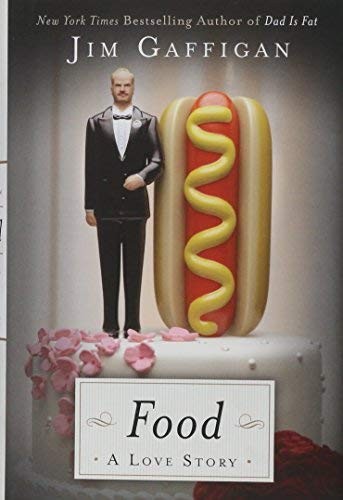
Dad is Fat by Jim Gaffigan

Dad is Fat by Jim GaffiganSummary: Funny stories mixed in with some advice.

I like comedy.  I don’t laugh nearly enough.  I have a tendency to be a little too serious.  But I have a few standard humor authors.  Christopher Buckley is one of my favorites (but I have read pretty much everything he has written.)  Christopher Moore is pretty funny except when he isn’t.  I really liked Bossypants by Tina Fey.

Last year, some friends introduced me to Jim Gaffigan.  Since then I think I have seen three of his TV comedy shows and I really like his humor.  He seems like a fairly real person.  And like me he is an introvert, likes kids, hates sports, is a little over weight and loves his wife.

This seemed like the perfect book for him.  He has great material on being a Dad.  He has five kids (six and under).  He lives in New York City in a 2 bedroom apartment (on the 5th floor without an elevator) and lives without a car.  When he is not touring, he is often at home with his kids.

Read more

A Christian Survival Guide by Ed Cyzewski

Summary: The basics of Christian practice and belief from someone that survived their faith.

One of the problems of my life is that I spend very little time with people that actually are non-Christians. I am a stay at home Dad, I work part time out of the house in my spare moments, my prefered enjoyment activities are reading and being alone.

The time I do spend with people is usually my extended family or church small group. In spite of that I feel like I know a lot of “˜post-Christians’. Those that have grown up in the church or on the perefery of the church, but have an uneasy relationship with the church now.

The US makes being a “˜none’ easier all the time. And for many, it is far easier to walk away from the church when things get difficult than it is to struggle through to a new equalibrium. Or at least that is how I describe it. It seems to me that there are many points in time where all is good, you are comfortable, you have faith, you see God working, and things make sense. But then there is a crisis of faith, or a dry spell or a tragedy or something that breaks that equilibrium and you have a choice of searching for a new equilibrium or to just stop fighting.

Ed Cyzewski has written this guide for two groups of people, those that have no background in the church, or those that have lost their equilibrium and need to find a new one. For both readers, the old answers aren’t working any more. New Christians have different questions because they didn’t grow up in the church and they are culturally ill-disposed toward the standard answers that were based in a previous generation’s questions. And those that have grown up in the church and had their equalibrium break, the standard answers were probably what caused the break in the first place.

Read more

Perelandra by CS Lewis (Space Trilogy #2)

Perelandra by CS Lewis (Space Trilogy #2)Summary: In the second book of the series Ransom visits Venus.

The books of Lewis’s space trilogy are hard to review.  How to you review a classic work of CS Lewis?

In the first book, Out of the Silent Planet, Ransom is kidnapped and taken to Mars where he finds a ‘garden of Eden’.  Mars is an old world, one that has not fallen.  There is no sin.  There are only the creatures, following in perfect unison with their creator.

In Perelandra, Ransom is called to Venus for some purpose he does not know.  Once there Ransom meets a green woman.  One of only two people on the planet.  She has been separated from ‘the king’.  The world of Venus is a great ocean with floating islands.  There is one solid place in the whole world.  But the green woman and ‘the king’ have been told by their God that they can visit, but they are not to live there.

Read more

1Q84 by Haruki Murakami

Reposting this 2013 review because the Kindle Edition is on sale for $3.25
Takeaway: The world is not what it seems.

This is a wide ranging book, originally written as a trilogy in Japanese .  It is hard to classify it as a genre, but I would probably call it a contemporary fantasy.  Although I think that most of the people that will like it would not pick up a book labeled fantasy as a first choice.

Aomame (the female protagonist) opens the book late for an appointment.  She is stuck on a skyway in a cab.  The cabbie suggests that if she really needs to get to her appointment she could get out of the cab, climb down an emergency ladder and take the subway (which has a stop near the bottom of the stairway.)

Aomame decides to do this, but the cabbie warns her that nothing will quite be the same once you have stepped outside the realm of your normal life.  And nothing is. Aomame is not going to any old business appointment.  She is on her way to assassinate a man who beats his wife.  She has a relationship with a rich older woman that provides her with information (and money and support) to kill men to stop them from beating their wives.

Read more

CS Lewis: A Life by Alister McGrath

Summary: An important, highly readable biography of Lewis.

More than several people agree that this is the best Lewis biography to date (see links below).  So far I have not read any negative reviews of Alister McGrath’s new biography.

McGrath unlike previous biographers was not a friend, student or family of Lewis.  And unlike previous biographers McGrath had access to an enormous library of Lewis’ correspondence which has led to a new understanding of Lewis.

McGrath also is planning a second, more academic evaluation of Lewis, so this book is written as a popular biography.  If there is a weakness of the book it is that it does not go into as much depth as I would like it to about several areas.  His spiritual development as a young Christian, how Lewis related to his step sons both before and after their mother’s death, and his theology are all areas I would have liked more depth. (Bookwi.se Note: I read A Life Observed: A Spiritual Biography of CS Lewis by Devin Brown after writing this review and it is a good supplement in this areas.)

Read more

Tenth of December by George Saunders

Takeaway: Another short story collection I didn’t like, surprise!

Anyone that has read my blog regularly over the past year or so will not be surprised that I didn’t like another collection of short stories.  That makes me 0.5 of 5 this year.  And it is not that the collections were poorly reviewed or by bad writers.  The collections I have read over the last year were by PJ Wodehouse, GK Chesterton, Dorothy Sayers, and Flannery O’Connor and now George Saunders.  (Technically the Flannery O’Connor was a few days over a year ago.  And it was definitely the one I liked the best of the five.)

Given my general dislike of short stories you as reader are probably tired of me posting about not liking them.  But I keep wanting to read books that are well reviewed and generally loved.  Karen Swallow Prior gave Tenth of December very good review at Books and Culture. And it one the 10 best books by New York Times Book Review as well as winning some other awards.

Read more

The Man Who Knew Too Much by GK Chesterton

Summary: A collection of 8 short stories (mysteries) centered around the character Horne Fisher, someone that knows everyone and know why the system usually frames the wrong person.

I have been getting a bit bored with my standard fare lately so I keep switching books in rapid succession trying to find the right book to hit my mood.

The Man Who Knew Too Much was not it.  But the stories are relatively interesting.  I am not a fan of short stories.  I like more character development and a longer story arc.  But I enjoyed Chesterton’s Father Brown Mysteries so I gave this a try.

Horne Fisher is an intelligent, upper crust Englishman.  He “˜knows too much’ about how things work and who is behind them.  So these are a fairly cynical bunch of stories mostly centered around how those with money and power can get away with things that other cannot.

But Horne is there to explain and figure out the solution that sometimes puts the real person back in the spot light, although in the cases that I listened to it wasn’t about putting them in jail or punishing them, but simply identifying them, often because the guilty party is either already dead or in some other method has already received their ‘reward’.  These stories are more about the why something was done than the how of Sherlock Holmes stories (so still a similar different as the Father Brown stories.)

Read more

Mere Christianity by CS Lewis

Reposting this 2013 review because the Kindle Edition in on sale for $4.50

Mere Christianity by CS LewisSummary: A classic book of apologetics.

I know it is near heretical in some Evangelical circles, but I have never read Mere Christianity before.  As you are reading this I should by Kayaking around a small island in Georgian Bay of Lake Huron.  This is my 20th trip with my guy friends from College.

For the past couple years I have conned them into reading a book prior to the trip to give us something to discuss.  Since I have some influence and there are two pastor’s kids, a missionary, and a hebrew professor in the group we read theology.  We have read Scripture and the Authority of God and The Lost World of Genesis One (which sparked online discussions of The Bible Made Impossible and Incarnation and Inspiration).

This year we decided to read Mere Christianity.  I think only one of us had previously read it.  Prior to the trip I listened to it on audiobook and then re-read it on kindle on the plane ride.

I understand somewhat why it is a classic.  In part, because huge sections of the first part (the more general apologetics section) I have heard in one form or another. So Lewis’ arguments are either standard arguments about God or those that are original have been repeated so much over the past 60 years that they sound standard.

Read more