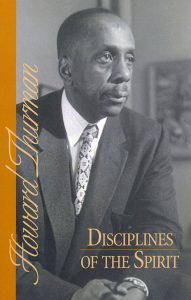
 Summary: An introduction to Howard Thurman focusing on the role of radical inclusivity in his work.
This is the fourth book by or about Thurman I have read this year. I am pretty familiar with Thurman at this point, but I find that many of the book written about him are mostly introductory, but often do not overlap significantly. This is an incredible reality for Thurman because his work was often so diverse, that many people can write introductions to his work from various perspectives and yet not overlap with much of their focus.
Howard Thurman was a theological and philosophical forerunner of the civil rights movement and a spiritual director and mentor to its leadership. But he was also an expert in mysticism, interfaith cooperation and learning, the role of non-violence, personal spiritual disciples and other areas. As has often been reported, he was advised by an early white mentor to avoid the academic study of racial issues because it would cause people to pigeonhole him into only being “a race man.” Thurman both understood why that advice was given and resented the advice (and somewhat followed it.)
Thurman’s work simply was influenced by his social location and experience. That is not a controversial statement, but there is no way that he couldn’t have been influenced by being primarily raised by a grandmother who had been enslaved or by having to be a boarding student for high school because there were no local high schools that admitted black students. There is no way that he couldn’t have been influenced by the ways that he broke color barriers throughout his life. As Thurman pointed out in his memoir, the White mentor thought that it was possible for Thurman to not center race in his work, but didn’t really understand how race had been centered in the experience of the whole United States.