Christians Are Hate-Filled Hypocrites…and Other Lies You’ve Been Told: A Sociologist Shatters Myths From the Secular and Christian Media by Bradley R.E. Wright

Takeaway: Statistics are important. And if you are a Christian that believes in truth, you need to be even more careful with numbers.

I like numbers. My day job is being a nanny stay at home Dad, but my part time consulting job is evaluating an after school program. I track grades, school attendance, program attendance, home and school visits, behavior, test scores, and a variety of other statistics. In a previous life, one of my jobs was demographic research for church plants and I was statistician for a local Baptist association. I was a sociology major as an undergrad and even went to a sociology paper competition (and came in 3rd) for a sociology paper about the relationship between believe in rape myths and matriculation in a Christian college campus.

If you know me in real life, then you have probably heard me quote a stat (or 50) about something or other. So I should have jumped at this book. But I did not. Frankly, I am a bit negative about a lot of Christian’s use of numbers. A couple weeks ago two different times in the same Sunday, from the pulpit and in a private meeting I heard a similar statistic about divorce that I knew was wrong. My church is about 60 percent single adults. So when people talk about marriage, I want it presented in a fairly positive light, not to be fake, but to not compound the negative feelings that many in my church have toward marriage. So when I hear the same statistic about divorce rising, I get frustrated. I did not say anything, but I was frustrated.

You see, divorce is not rising. In fact it is dropping. In part because many people are just choosing to not get married, or at least get married much later. And divorce among highly educated, upper income people (like most everyone in my church) has fallen off a cliff. So when we talk about divorce as being a major and increasing issue among Christians, we are actually wrong. We should be providing support for marriages, that is why my wife and lead a small group for newly married couples. And we should be providing support for those that facing or recently completed a divorce. But in my church, telling people (most of whom are single) that divorce is increasing, does not really address either reality, or the issue most in the congregation are facing.

Christians Are Hate-Filled Hypocrites…and Other Lies You’ve Been Told: A Sociologist Shatters Myths From the Secular and Christian Media is a very good remedy to the many poorly presented statistics that are floating around in and outside the Christian world. Dr Wright, spends a significant amount of time addressing why so many bad statistics are being used. And really it comes down to two major areas, attention and authority. We are trying to get people’s attention, so pastors (and many others) troll around for the worst statistics to try to prove their point. (This is also why we get so many topical sermons that do not seem to fit the broader context of the passage.) It is not that pastors (or others) are trying to mislead, but rather, they start from the end and find support for their position. The second major issue is that many people are misled because they saw something in print. If it was printed, it must be true. Christians, as people of the book, may be more influenced by the authority of something being in print.

Read more

Being Christian: Baptism, Bible, Eucharist, Prayer by Rowan Williams

Being Christian cover imageSummary: Quick look at four universal Christian practices. 

Many people have a lot of respect for Rowan Williams. He was the Archbishop of Canterbury for ten years before retiring three years ago. He is still fairly young (64), and he is still publishing a ton. So, I keep meaning to read some of his books—this one I picked up free with some promotional credit from Audible.

Being Christian was originally a series of Holy Week lectures adapted into a short book. The focus is on four universal practices among Christians, regardless of theological stream or denomination.

Considering the short length and the ubiquitousness of the practices, it would have been easy to be filled with clichés. But Williams both stayed true to the essence of the practices and brought a unique presentation to them so the book did not feel stale.

Read more

Learning to Walk in the Dark by Barbara Brown Taylor

Summary: We need to be able to see God in the Dark as well as the light.

Barbara Brown Taylor is a beloved memoir writer. I know a number of people that she speaks to deeply. But this is the second book of hers that just didn’t connect.

Learning to Walk in the Dark is about embracing the dark parts of life as well as the light, about seeing that God loves us when we can’t figuratively or literally see anything around us.

Thematically I think Taylor is right, but I couldn’t finish the book. Much of the book seems very literal. Taylor talks about being terrified of the dark as a child. She talks about the beauty of the night in the country, about being alone in a dark cabin for the night. Almost all of her stories of darkness are about literal darkness. But she then tries to make the connection to spiritual darkness and the connection, at least for me, seems to fall flat.

Read more

Disquiet Time: Rants and Reflections on the Good Book by the Skeptical, the Faithful, and a Few Scoundrels

Summary: 45 Reflections on how the bible pushes us toward disquiet.

I am not a devotional guy. I rarely read devotionals and I even more rarely find them helpful. It is not that I am against them as a concept, but that they just don’t work well for me. I read too much and am too disorganized to find short devotional reading useful.

But every once in a while I try again. I have been occasionally using Disquiet Time as a devotional over the past three months. I have read a chapter two or three times a week most weeks before bed. This is one of the better devotional books I have read, in part because it is attempting to disquiet and not quiet.

The main focus of the book is to ask a WIDE variety of writers to reflect on what is disquieting about scripture. And the results are quite diverse and almost universally good. Amy Julia Becker (blogger at CT and author) talks about how we all cherry pick verses. Karen Swallow Prior (English Professor and author) writes about how our bibles tend to leave out or hide all of the sh*t in scripture. Caryn Rivadeneira (church staff and author) talks about the scandal of being made in God’s image.

Read more

Stardust by Neil Gaiman

I lightly updated this 2012 review because the Kindle Edition is on sale for $2.99.

Stardust by Neil GaimanTakeaway: Fairytales are not just for children. Stardust is intentionally a fairytale written for adults and quite good.

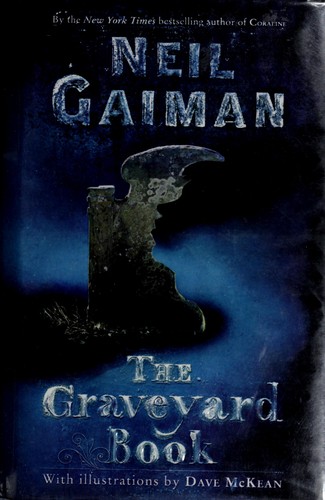
Gaiman is one of my favorite fantasy authors. I have read almost all of his books. He is mostly an adult author (although I enjoyed his children’s books Coraline and Graveyard Book.) He is often quite funny, but he is not a slapstick author like Douglas Adams.  Many of his fantasy are on the dark side, but not oppressively so, more realistically dark.

Stardust is a story of Farie.  The story opens with a fair, once every 9 years the people of Farie (the magical world) and the people of the village of Wall (at the wall that separates Farie from the rest of the world) have a fair and buy and sell and meet one another.  Tristran’s father, meets a woman from Farie (there is one sex scene right at the beginning of the book) and Tristan is a product of that night.

When Tristran is grown (without knowing his parentage) he takes a challenge to go beyond the Wall into Farie to retrieve a fallen star so that he can win the heart of the girl he loves.  Of course it is not that simple, but the getting there is quite good.

Read more

Coffeehouse Theology: Reflecting on God in Everyday Life by Ed Cyzewski

Summary: If you know you want to explore more about theology and the bible but are not sure where to start, this is a good place.

This is the third of Ed Cyzewski’s ‘books’ that I have read. One of the books was really just a short, but I appreciate where Cyzewski is coming from and overall we have much in common. We are both stay at home Dads with theological degrees, we have both moved around a bit theologically, although our starting places and current places are not quite the same, the movement as he describes it seems familiar.

So I picked Coffeehouse Theology up because it was a free ebook as part of Scribd (ebook/audiobook subscription service that I recommend) and I thought I would read another one of his books. There is much to commend here especially for the Christian that is really starting to explore theology or wants to start doing theological work on their own.

Cyzewski starts by exploring what theology is and why theology has to be enculturated (made relevant to the culture that we are in and speaking to).

Read more

A Rule Against Murder: A Chief Inspector Gamache #4 by Louise Penny

Summary: Inspector Gamache and his wife go away to their favorite vacation spot for their 35th anniversary, murder follows them.

This is my fourth Inspector Gamache book in as many weeks and the series seems to be getting better. Inspector Gamache and his wife traditionally go to a small quaint upscale wilderness inn for their anniversary. Again this year for their 35th, after a rough year, they are able to get away.

The only other guests at the inn are a wealthy extended family. The matriarch and second husband, the adult four children and corresponding spouses and one grandchild round out the guest list. Returning characters Peter Marrow, and his wife Clare, from Three Pines is one of those children. Peter, the third of the four and in his early 50s is still in many ways traumatized by his family as it seems are the rest of the family.

After several days, a statue of the children’s father is installed at the inn. The next morning the second child (the oldest daughter) is found crushed by the statue in the garden.

Read more

The Cruelest Month: A Chief Inspector Gamache #3 by Louise Penny

Summary: When a group from Three Pines decides to have a séance to purge the evil spirits of the Hadley house, one of the participants appears to die of fright.

I know some people like to be scared by books or movies or TV shows, I am not one of those people. I have never read a Stephen King novel, I don’t watch horror movies, I won’t watch Walking Dead no matter how many people tell me that I will like it.

So I was put off by the early part of the book. The characters in Three Pines first have a séance for fun, then a semi-serious one to try and rid evil spirits from the Hadley House (which was connected to deaths in the previous two books.) In the end, the murder at the center of the book occurs at the second séance, where a woman appears to have died of fright.

The first two books I enjoyed, but I thought were missing the final piece that makes me want to recommend them. This third book I loved (and the fourth that I am half way through now I love even more.)

The series is set in a small rural village filled with extraordinary people that have escaped the outside world to settle in Three Pines. There is a back story to everyone, and with the first two books it felt like that back story was sitting there and unused. It was hinted at, but without the actual story, the bruised and battered people of Three Pines (as well as the few that have found healing) were just cardboard without the additional background.

This story, about half way through, really started working on giving back story to Inspector Gamache. The case that has hung over the previous two books came to the fore. The conclusion of the book almost minimized the resolution of this murder too much to deal with the problem Gamache’s historical problem. But there was a resolution to it all, or at least enough to keep you reading the series.

Read more

When the Church Was Young: Voices of the Early Fathers by Marcellino D’Abrosio

Summary: A history and guide to early church theologians, pastors and writers.

I am sorry if you are not interested in Christian History, I think I am going to be reading a lot of it this year. The resurgence of awareness of the early Church Fathers, not only in the more traditional liturgical church settings but in the Evangelical world has given rise to a number of good books about early Church history and the actual writings of those early Christians.

After reading John Michael Talbot’s mostly memoir-ish look at the early Church fathers I decided that I wanted a more history oriented book, but still introduction level. I have read fairly in depth about the early Church Fathers on the trinity, but not on much else. (Although I have read several other than Christian history survey books that cover the era.)

When the Church Was Young fits the bill well. D’Ambrosia is Catholic and writing this in part to encourage Catholics, but this is not an exclusively Catholic view of the early church. After all, at this point it was just the Church, the major splits were yet to come, although there were certainly lots of little splits.  There were a few places where I think that D’Ambrosia made too much of a leap from ancient to current Catholic and I think he started referring to all Christians as Catholic earlier than the history warrants, but with those caveats, D’Ambrosia does a good job of giving context and history to the various Church Fathers and enough of a sense of their writing to feel like you are getting more than just survey history.

Read more