Books By or About Dietrich Bonhoeffer on the 70th Anniversary of his Death

Dietrich Bonhoeffer was executed on April 9, 1945.  In honor of that date I wanted to post about the best books I have read on Bonhoeffer.  I waited later in the day to post this because in the past several of his books went on sale in honor of this anniversary.  Unfortunately that does not seem to be the case today. (This is edited of a post from a couple years ago.)

Biographies

If you read just one biography of Bonhoeffer, I think it should be:

Dietrich Bonhoeffer 1906-1945

Dietrich Bonhoffer: 1906-1945 by Ferdinand Schlingensiepen

(Bookwi.se Review)

This biography was published in English in June 2010.  Schlingersiepen was a close friend of Eberhard Bethge and is one of the founders of the International Bonhoeffer Society.  This biography was first published in German in 2005 and was the first modern biography that was the result of the completion of Bonhoeffer’s complete papers that were published in 16 volumes.  This is the best modern biography of Bonhoeffer.  But it is also very expensive.  Right now is it $14.39 on Kindle and out of print in English.  If you do not want to spend that much, then you should read:

Bonhoeffer: Pastor, Martyr, Prophet, Spy

Bonhoeffer: Pastor, Martyr, Prophet, Spy by Eric Metaxas

(Bookwi.se Review)

Metaxas has written the first really popular level biography of Bonhoeffer.  And it has sold very well which means that you can easily find it and it is relatively cheap.  I picked up my copy for $1.99 on kindle a couple years ago.  Right now the Kindle version is $12.99 and the paperback is $15.05 (but there are lots of used copies).

The strength of Metaxas is that it feels like a novel.  It is very fast paced and written in a very accessible prose.  The negative is that Metaxas is not a Bonhoeffer scholar, makes mistakes on the history (mostly minor) and like to use creative language.  In the end Bonhoeffer ends up looking like a modern American Evangelical in many areas.

or

Strange Glory: A Life of Dietrich Bonhoeffer by Charles Marsh 

I picked up the audiobook of this earlier this week but have not started it yet. It is the most recent of the full biographies and has been very well reviewed.  But like much about Bonhoeffer, it is not cheap.  The Kindle Edition is $16.14 but the paperback which will be released at the end of the month is $13.46 for pre-order.  If you want the kindle edition, I would advise waiting for a couple weeks because it is likely to drop to at least the paperback price.  (I get a lot of these expensive books on audio, both because I like to listen to audiobooks, but also because I buy credits to purchase audiobook in bulk at Audible, so each credit ends up being just over $9).

Read more

Ms Marvel Vol 1: No Normal

Summary: The new superhero Ms Marvel is a 16 year old Muslim girl from Jersey City.

Being a new parent not only take time, it takes brain cells. Some of the denser books I started I have put aside for a bit until I can actually concentrate on them. So mostly I have been listening to Inspector Gamache books. Last night after seeing people sing its praises yet again, I picked up Ms Marvel Vol 1 because it was on sale for Kindle (sale is over unfortunately).

I like comic books, but I rarely read them. They are expensive (or at least can be) and I have never been patient enough to wait for serials. But I really love superhero stories. They appeal that part of me that wants to save everyone and have some secrets.

I have not read previous incarnations of Ms Marvel. But this re-boot of the character is well written and interesting. Many people have compared it to early Spiderman and his teen angst and his desire to help others, but his struggle to hide his powers from those around him for their own protection.

Kamala Khan is a geeky girl into fan fiction and superheros. When she is transformed into a superhero herself, she learns that the powers (and her subsequent life) are not all they are cracked up to be.

Read more

Bury Your Dead (Chief Inspector Armand Gamache, #6) by Louise Penny

Summary: Gamache and Beauvoir are both recovering after serious emotional and physical injury after a mission gone wrong.

The first five book of this series I found on Scribd. The next three books I found at my library. The seventh book came before the sixth, but I was only five pages in before a significant spoiler from book six was reveled. I immediately put down the book and waited for Bury Your Dead to come up. (I really hate reading books out of order.)

Bury Your Dead is told both alternating in forward time between Gamache and Beauvoir and in flashback. It isn’t until close to the end of the book that we get the full story of what happened in a mission gone wrong prior to the book’s opening.

At the start of the book Gamache is in Quebec City with his retired mentor recovering. And because Gabri sends Gamache a letter every day about Olivier’s innocence (see book 5), Gamache asks Beauvoir to go to Three Pines and unofficially open the case back up to see if there is soemthing they missed.

Read more

Simply Jesus: A New Vision of Who He Was, What He Did & Why He Matters

Takeaway: Jesus is important.

I had decided to not read Simply Jesus until more reviews were out.  I read Wright’s The Challenge of Jesus earlier this year.  And knowing that Wright’s style is to write a heavy theological tome and then to revise it at a more popular level I suspected that there would be a lot of overlap. But it is more than just a revision. It is an entirely new book. Obviously, it has some overlapping content since the subject matter is the same, but it is a very different and very good book.

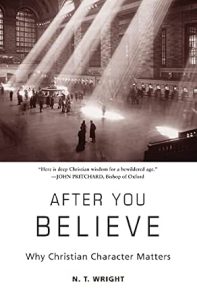
Simply Jesus is intended to be a follow up to Wright’s earlier Simply Christian and in the same basic series as Scripture and the Authority of God and After You Believe.  As crucial as Wright’s academic writing is, his pastoral tone of this series and the intent of writing for the non-academic are very important.  These are not simplistic books; the content can be quite thick occasionally. But they are written for the non-professional (there are virtually no footnotes here). In general, I like to listen to Wright’s books first, get an overview of what he is doing, and then read them later to dive a bit more deeply into the content.  I am going to propose that this be the next book for a small email reading group I participate in.

What is both good and bad about Wright is that he is cohesive.  Everything that he thinks about seems to be related to everything else.  So his understanding of scripture is related to how he understand’s God speaking, which is related to what he understands God’s purpose to be, which is very important to understanding who Jesus is and what Jesus’ mission on Earth was, etc.

Read more

Jumping Through Fires by David Nasser

Jumping Through Fires

Takeaway: This is a great example of Christian autobiography.  It tells a good story, inspires me to greater devotion, and makes me want more.

David Nasser tells a good story. That the story happens to be about him and real is even better. I know Nasser through his connection to the Glory Revealed projects.  I read the book that he wrote in connection with the first CD.  I still frequently listen to the two CDs that are part of the Glory Revealed project.

I might have forgotten Nasser, but he and his family are family friends with my wife’s cousin’s family. I haven’t ever met him, but I know they vacation together regularly and so I have heard about him.

David and his family escaped from Iran during the 1979 revolution.  David’s father was a Colonel in the Iranian Air Force and was in danger of being killed under the new regime.  They eventually made their way to the United States and David eventually became a Christian.  This is the story of how that happened and how he has gone on to become a speaker, writer and pastor.

Read more

What If?: Serious Scientific Answers to Absurd Hypothetical Questions by Randall Munroe

Reposting this 2014 review because What if is today’s Audible Deal of the day (March 30) and on sale for $2.95 for the Audible.com Audiobook. This is one that might be better in print, but the narrator is Wil Wheaton and the audiobook is well reviewed.
Summary: Serious science, with humor and line drawings, what more could you want.

The best thing I randomly stumbled across in my searching through the Kindle Unlimited books is the recently released book What If? by the author of the xkcd comic.

This is formatted as a book to browse through (or a bathroom book if that is your thing.) Each question is 4 to 5 pages and Munroe takes the subtitle’s Absurd idea seriously.

Some of the questions are absurd, but most of the answers are taken to an absurd level that puts the original questions to shame.

One of the questions asks if you could turn the recoil of a machine gun into a jetpack. Then Munroe calculates the recoil of various machine guns and figures out how many of them together would need to lift you into the air.

Read more

Upside: Surprising Good News About The State of Our World by Bradley Wright

Upside: Surprising Good News About the State of Our World

Takeaway: In most ways, the world is better now than it ever has been.

It might be surprising to many of us, especially in the midst of our current economy, but the world is actually fairly well off.  In fact, if you are an average middle class person right now, then you are better off in virtually every way than 94.6 percent of everyone that has ever lived.

Upside is a very good follow up to Wright’s first book, Christians are Hate Filled Hypocrites and other Lies You’ve Been Told.  Wright has the same basic point, to objectively look at the statistics and try to separate the hype and doom-sayers from reality.  In the first book, Wright shows that while there indeed are problems with the church, the church is not going to end in this generation and that most people do not hate Christians.

In Upside, Wright looks at the general state of the world.  Wright takes a long view of the issues and sees real improvement.  Early in the book he shows that most people view the best historic decade as the one that they spent their 20s.  So if you were born in the 1960s, you would view the 1980s as the best decade.  We have a relatively short view of the world, so humans in general always think things are getting worse, because the our lives are always getting more complex.

Economically, in spite of this short-term economic problem, the average family in the US has about twice as much income (inflation adjusted) as in 1950 and much more than in 1900.  In health areas, many diseases are significantly decreased, while there are others (like cancer and AIDS) that have increased.

Read more

Know the Heretics by Justin Holcomb

Takeaway: Knowing theology is more than just knowing the positive (creeds and beliefs) it is also understanding the negative (the Heresies).

We are all acquainted with the mantra, “˜Christians should be known more for what they are for than what they are against.’  It is simplistic, but I generally agree with the concept.

However, that does not mean that we should ignore the concept of Heresy.  Justin Holcomb has a very helpful, easy to read, good for small group discussion, book on the basic heresies of the church.

Marc Cortez, a theology professor at Wheaton College had a recent helpful post on the positives of “˜Becoming a Heretic’.  Cortez talks about how when he was teaching a class on the church fathers he temporarily became an Arianist, using the best arguments and historical documents to prove his case.  (Arianism is an ancient heresy that suggests that Jesus is eternally subordinate to the Father and was not eternal but created later.)

Cortez made his case to his students that because they didn’t really understand the reasoning behind the heresies, they did not really understand how to defend against them.

Read more

The Anxious Christian: Can God Use Your Anxiety for Good?

The Anxious Christian: Can God Use Your Anxiety for Good?

Takeaway: Anxiety is real emotion. Allow God to use it to help you and do not allow it to control you.

I have followed Rhett Smith on twitter for several years as moved to Texas and started a counseling practice.  I have read his blog as he thoughtfully talked about issues of technology, theology, marriage and faith.

I was not surprised when Moody approached him about writing a book.  I knew it would be good and well worth reading.

But when I heard it would be about anxiety, I thought it would be a good book for me to pass on to friends and family.  Because I have a particular understanding of anxiety.  Anxiety is rooted in fear, fear is something that as Christians we should not have.  Therefore the best thing to do with anxiety is to reject it as sin.

Thankfully, that is not the thesis of this book. Autobiographically, Rhett Smith works through how he dealt with fear and anxiety through the early loss of his mother (and much of his extended family to cancer), his problems with stuttering, school and the normal anxiety of growing up, finding a career, and relationships.

Read more

How the West Won: The Neglected Story of the Triumph of Modernity by Rodney Stark

Takeaway: Sometimes in the attempt to tell a fuller story, part of the story gets lost. But the correction usually has the same problem.

I really appreciate Rodney Stark’s desire to fight back against biased history. This is my third book by Stark. God’s Battalions told the story of Crusades and the Triumph of Christianity used sociology and history to explore how Christianity grew.

In How The West Won, Stark is fighting against a pendulum that has swung too far and now can be anti-western. Earlier, pride in Western achievements was easy to see, but also easy to see was how that Western bias lead to racism and blind spots about the negatives of some of the West’s bad points.

Stark, fairly briefly attempts to re-balance the academy’s view of Western triumph. The components of how the West Won are fairly simple. Christianity had a rational worldview and a God that created and ordered the world. That orderly world gave rise to science and innovation. Christianity valued education in order to better understand the world. In addition, Capitalism and European political disunity (which kept countries vying for power and innovating in technology), while maintaining Latin for communication across Europe further developed Western strengths. (This is, of course, over simplifying Stark, his argument is rich in detail and very readable.)

Read more