The Liturgical Year by Joan Chittister (The Ancient Practices Series)

I am reposting this 2009 review because the Kindle Editionn is on sale for $1.99
I grew up as a low church baptist.  We didn’t pay attention to the liturgical year, we didn’t use the Lectionary.  I have absorbed some things about the church year through my time at Wheaton College and seminary.  Some friends have paid more attention to the liturgical year and my wife and I have paid attention to Lent on and off since we went to Israel for Easter in 2001.  But this book was a good formal introduction to not only what the liturgical year is, but why it is.  The author describes it this way:

“The church year is not the marking of one lucelent, passing moment in the midst of eleven long months of dark nothingness all the rest of the year. It is month after month, every year of our lives, being taken back to the empty cross and the empty tomb, one way or another, in order to shape our own life in the light of them.” (From the 1st chapter.)

The author is a catholic nun, and writes using the Roman Catholic system as her primary focus.  She also talks about some of the differences between Eastern and Western calendars and where the differences arose.  It is not technical, fairly conversational and quite understandable to an outsider.  It was a quick read, I read it is in two evenings.

Read more

The Last Policeman by Ben H Winters

Summary: There is only 6 months before the world ends, but Detective Palace still has crimes to solve.
Mostly I picked up this book because I liked the concept. A large asteroid is coming toward earth and because of its odd orbit it was not detected until just about a year before it is scheduled to hit the earth. At the time of the book, it is six months until it hits. It has been confirmed that it is a certainty that the asteroid will hit and it will likely wipe out most of the population of the earth.

The world economy is in shambles (reminiscent of Station Eleven), but there is a longer preparation time. What would you do if you had six months to life, and so did everyone else?

Hank Palace is a young detective. Only 25, but he is sure that his recent suicide case (his ninth in 3 months) is not actually a suicide. But he not only has to fight for the freedom to solve it, he has to try to solve it in the context of a system that is breaking down.

Read more

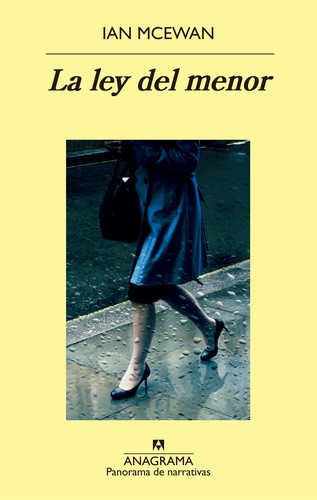
The Children Act by Ian McEwan

Summary: A family law judge wrestles with the ethical issues of her job and the personal issues of her life.
I once primarily read science fiction because it was in science fiction that I thought that ideas were best explored. I have since grown and experimented more in my reading choices. And recently I have come to think that “˜literary fiction’ should be defined more by its ability to interact with bigger ideas than any other measure.

The Children Act (and the Susan Howatch books I have been reading much of this year) are prime examples of what I mean by this description of literary fiction.

Fiona Maye is a UK High Court judge. She has very difficult cases in areas that in the US we would call family law. Divorce, child abuse, medical treatment of children, etc. While she is at the top of her career, a career that she has sacrificed her own chances of motherhood for, her husband has decided that his life needs a change. And so he is asking her permission to have an affair, although it is clear he has decided to have one regardless of her permission.

Read more

The High Flyer by Susan Howatch

Summary: A high flying lawyer, with no time for the spiritual life, is forced to confront the spiritual world.
Carter Graham is a no nonsense lawyer that has a life plan and is sticking to it. That life plan includes getting married at around 35 and having children sometime before 40. When Carter meets Kim Betz, she thinks she has found a perfect partner to continue her life plan.

As with most of Susan Howatch’s books the story is important, but the story is also a means to work through spiritual and philosophical issues. In this case, the atheist Carter Graham, confronts the reality of the spiritual world through unexpected spiritual manifestations (ghosts, spiritual healers, curses, etc.) and then has to work through her issues around theodicy, the problem of evil, the role of God in evil, why God didn’t create a perfect world, her role in sin and how her sin affects others and other’s sin affects her, etc..

More than most of Susan Howatch’s books I have read this is a book of explication. Carter spends a lot of time talking through issues with counselors, doctors, psychologists, spiritual directors, friends, etc. This allows for a lot of different perspectives, but also a book that is as much theology as story.

Read more

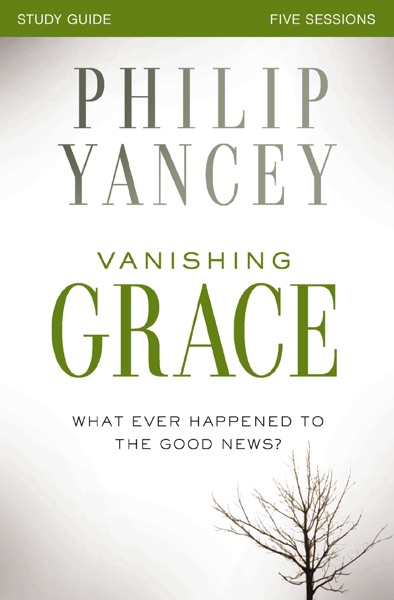
Vanishing Grace: Whatever Happended to the Good News by Philip Yancey

Summary: The central message of the gospel is grace. If the world around us understands the central message of the church to be judgement, then we have messed up the message that Christ came to give.
There are four parts to this book and even in the introduction Yancey says that this is essentially four different books. I just wish he had tried to do less.

The first part is all about the vanishing of grace from the message of the church. This part is five stars and I would like virtually all Christians to read it. He calls on Christians to not only recover grace as the central message of Christ and the church, but also to remember that the method of the message has to be in love. I really don’t think that basic message can be emphasized too much in Christianity because the natural temptation of Christians is to change the message of the gospel to one that is about earning our salvation through moralism or tradition. After all, a gospel of moralism or tradition is easy for Christians who tend to be already familiar with tradition and fairly good at presenting a moral facade to the world around them. But that changing of the gospel away from grace fundamentally changes the message of the gospel.

Read more

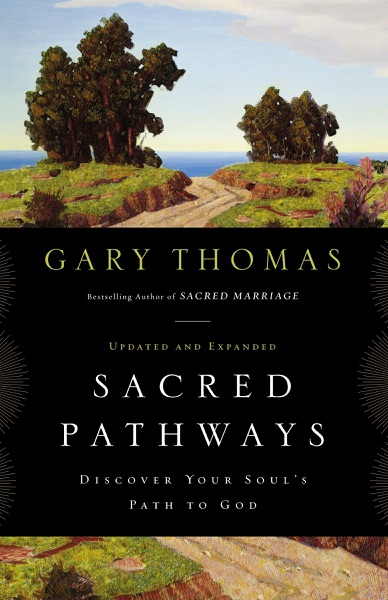
Sacred Pathways: Discover Your Soul’s Path to God by Gary Thomas

I am reposting this 2011 review because the Kindle Edition is on sale for $1.99 for the month of October. The audiobook edition is $3.99 with the purchase of the kindle edition.
Sacred Pathways: Discover Your Soul's Path to God

Takeaway: People are reflection of God. The ways God creates people to draw near to him are a gift to the church. God has created us all with a desire for him, but those methods of spiritual growth are not the same. Gary Thomas talks about 9 ways that we can draw near to God.

This is a book I have had on my shelf for a long time and just finally got around to reading it.  I have read a couple of books that are similar, most recently Streams of Living Water by Richard Foster.  Streams of Living Water is focused on the different Christian faith traditions and their strengths and contributions to Christianity as a whole.  Sacred Pathways is focused on individual spiritual temperaments and how the way God has made each of us, affects the way that we are designed to love God.

Unfortunately, some people fall into the trap of believing that all spiritual growth should look the same (30 minute quiet time, daily prayer alone, Sunday School attendance, active service to the poor, etc.).  Instead, if we read our bibles it is pretty easy to see that the characters of scripture had different temperaments, different ways of relating to God and different pathways to spiritual growth.

Read more

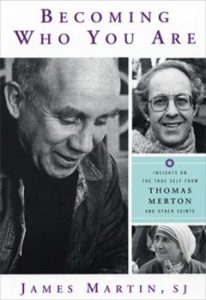
Becoming Who You Are: Insights on the True Self from Thomas Merton and Other Saints by James Martin

Becoming Who You Are cover imageSummary: Brief exploration of seeking after who you were created to be.

I originally read this just over a year ago. James Martin originally put this together as a lecture to honor Thomas Merton and Henri Nouwen.

On the second reading, Martin’s insights are still as hard to internalize, but as still important.

God has created each of us as unique individuals. Working toward becoming the self that God created is a lifetime process. And at least part of that process is rejecting the roles that are placed upon you but not a part of you.

The second reading I was struck by how we become who we are, not by focusing on our own selves, but by serving others. This was the theme of a sermon at my church recently so the focus here resonated more.

I mentioned this in the earlier review, but part of what is helpful about this book is that it is focused on people that many consider spiritual giants. Merton, Nouwen, Mother Theresa all were human. They were all broken people that struggled into their spiritual lives.

Read more

Unclean: Meditations on Purity, Hospitality, and Mortality by Richard Beck

Unclean: Meditations on Purity, Hospitality, and Mortality by Richard Beck cover imageSummary: Moving our psychological revulsion (based around food) to morality, ethics and people, fundamentally distorts our Christianity.
I appreciate Richard Beck’s outsider perspective on theology. Beck is a psychologist who writes theology. While he is not untrained in theology, that training is not formal, and it is not his primary academic area.

Beck approaches practical areas of theology in ways that many academic theologians do not. Previously, I read The Slavery of Death, which is probably the best book I have read about the power of sin and the practical understanding of how sin controls us.

In Unclean, Beck takes his understanding of psychology to help us as Christians understand how our faith becomes distorted when we allow the concept of revulsion (a natural feeling around unclean food) and apply it to people and/or ethics.

This book is full of insights into how we unconsciously avoid doing the work that we (as the church) are called to, by avoiding the messy people that are around us. What this book is not, is a simple prescription on how to change our own perception of those around us. Beck says that this is too personal of a problem for him to proscribe simple steps.

Read more

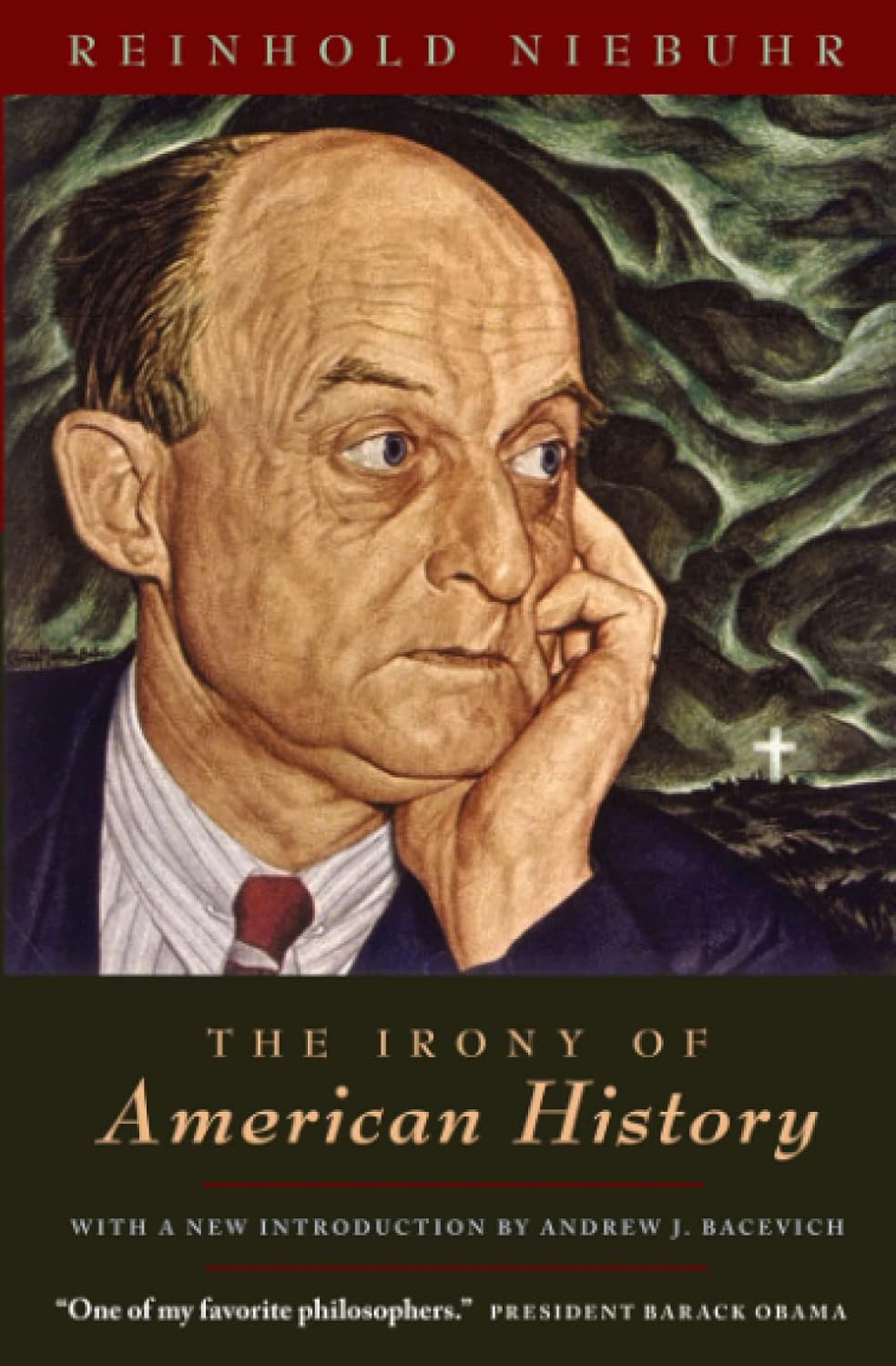
The Irony of American History by Reinhold Niebuhr

Takeaway: I wish more people read Reinhold Niebuhr.  He has much to say both about politics and international relations, and also about the limits of security and state power.

The Irony of American History is oddly relevant.  It was written in 1952 and based on two lectures given earlier than that. The introduction calls it the most important book on American foreign policy ever written. That is a bit too strong, but still Niebuhr understands in a way that very few do, the weaknesses of all human forms of government, while still being hopeful that government can serve the people.

Niebuhr, with proper use of irony, speaks of the issues of the 1950s in similar terms to many others in talking about the global reach of US power.  It is almost funny that Niebuhr quotes US policy makers that think that the Asians should be more grateful to the US (at the time it was Korea, soon to be Vietnam) for our intervention to their affairs. But it is very similar to the way that some in the Bush administration thought we would be received in Iraq and Afghanistan.

The narrator on the audiobook is a bit pretentious sounding and I think that detracts from what Niebuhr is trying to say. But in general Niebuhr traces the thought patterns of a Jeffersonian (roughly secular) and a Puritan (certainly Christian) that both view the United States as a fundamentally separate place. The language of the Puritans is a “City on a Hill” and “called out by God for a specific purpose”. But the Jeffersonian ideals are not much different. Jefferson was secular in his reasoning, but thought that the separateness of the geography and the rightness of our political will and life also left us with a specific calling and purpose that in the end was not much different from the calling and ideals of the Puritans.

Read more