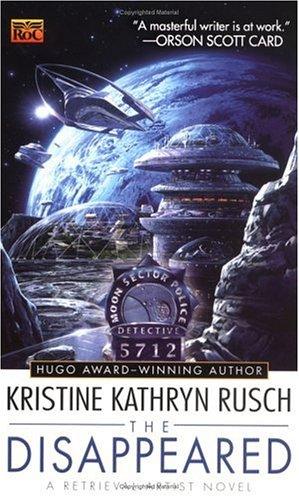
Tricked (Book 4 of The Iron Druid Chronicles) is a chance for the reader to catch his breath. Book 3 ended with an epic battle up in Asgard against the Norse gods, with Atticus barely escaping with his life. Now that he’s proven he is capable of killing a god, and bringing the battle to multiple planes of reality, he’s at the top of the magical most wanted list. And so, he fakes his death (twice, actually) in order to keep the gods off his trail. But before Atticus can settle down in obscurity to train his new apprentice, he must take care of a bunch of loose ends. One of those is to return a favor owed to a trickster Navajo god, and naturally he gets far more than he bargained for.
Book Reviews
Fresh Air: The Holy Spirit for an Inspired Life by Jack Levison
Summary: A readable (and devotional) look at the Holy Spirit.
I picked it up Fresh Air: The Holy Spirit for an Inspired Life when it was originally on sale after reading an interview on Scot McKnight’s Jesus Creed Blog and then a long review by Brian LePort at Nearemmaus.
Levison is a professor at Seattle Pacific University. He has written academically about the Holy Spirit, but this is more devotionally focused than academically focused (at least that is how I read it.)
Each chapter starts with three or four scripture passages that Levison asks that you read before you start the chapter, and maybe keep open beside you as you read the chapter.
Most chapters are explorations of the Holy Spirit in Biblical context. For instance, one chapter looks at the interaction between Job and Elihu. Levison talks about how we speak of the advice we give to others. Elihu uses words and concepts that are biblical and theologically correct, but uses them in a tone and methods that violate the actual principle of the words he was saying. Levison says, “I worry that many of us, like Elihu, mistake spectacular experiences for the spirit and, as a result, damage others because we think we’re wiser than we actually are. We dispense advice or deliver speeches that are neither inspired nor beneficial. Elihu thinks he’s inspired, but, as Jeremy might say, he’s really just plain mean.”
For the Love: Fighting for Grace in a World of Impossible Standards by Jen Hatmaker
I’ve never read Jen Hatmaker before and still don’t really know who she is compared to her legion of fans. I’ve long been familiar with her name and knew she was a blogger and author; I’ve recently learned she is also a speaker and television personality. For the Love: Fight for Grace in a World of Impossible Standards held a spot on my Amazon Wish list and I received a copy as a Christmas present through work.
As my first experience reading Hatmaker, I thoroughly enjoyed the book which is a collection of essays. She is humorous, insightful, and witty. For the Love opens strong with a chapter I found most meaningful, “œWorst Beam Ever”; this chapter challenges the notion of realistically achieving work-life balance. Personally, after reading this chapter, I feel as though someone has personally lifted me off the hook and allowing me to breathe easier.
Sidney Chambers and the Shadow of Death by Jame Runcie (Grantchester Mysteries #1)
Summary: The basis for the TV show Grantchester (PBS).
Last year, around the time when Downton Abbey’s fifth season came out, my wife and I watched the short six episode season of Grantchester (also on Masterpiece). I have been looking forward to the show’s eventual second season when I saw that the book was on sale. (Still $3.85 for Kindle Edition, and $3.99 for the audiobook with the purchase of the Kindle Edition.)
Sidney Chambers is a young parish priest in Grantchester, a small town on the edge of Cambridge. It is 1953 and the world is returning back to normal after WWII. Sidney is trying to find his way in the world and eventually finds that he is good at finding trouble. His friend Inspector Keating soon realizes that Sidney is good at getting information from people that would not talk to the police and can connect disparate pieces of the puzzle together to find the criminals.
Overall this is a good book. It is more of a story of a pastor that is working through his calling and who happens to keep coming across murder and crime than a true cozy mystery book. There are hints of a young Father Brown, but the focus is not on Sidney’s wisdom but his perceived inadequacy. He seems to be good at solving mysteries, but he wants to be good at (and satisfied with) leading a church parish.
Hammered by Kevin Hearne (The Iron Druid Chronicles #3)
The mythical backdrop completely shifts in Hammered (the third book of the Iron Druid Chronicles). In order to secure the assistance of a powerful Hindi witch, which he needed to destroy a powerful enemy in the previous book, Atticus O’Sullivan agreed to steal one of Idun’s golden apples, which bestow immortality. He manages to sneak into Asgard but encounters more than he bargained for, and barely escapes with his life. Now the Norse pantheon is after him, including Odin and the Valkyries.
But there’s more. Atticus is maneuvered into leading a band of vengeful supernatural beings into Asgard again–this time to kill an enemy they hold in common, a Norse deity whom it turns out is universally hated: Thor. An epic battle ensues on the plains of the Norse realm. I won’t give the ending away, but the book closes on a cliffhanger.
The Givenness of Things: Essays by Marilynne Robinson
Summary: Mostly thoughts on religious things.
Marilynne Robinson is a fantastic novelist. Her most recent novel, Lila, is among my favorite novels ever and I recently re-read her award winning novel Gilead and enjoyed it even more the second time.
But Marilynne Robinson the essayist I am not sure of. She is an incredible writer. Her ability to string words together holds true whether she is writing non-fiction or fiction. But being an essayist requires more than a gift with words.
Part of my frustration with her is that her politics are always present. That is fairly natural since most of the time, the subject actually is politics. Her earlier book of essays, When I was a Child I Read Books, was much more political than this collection. In many ways I am not sure why her politics bothers me so much, because much of the time I agree with them.
I am not always sure why these essays were written. Some of them were probably cathartic or were addressing a specific issue, and I guess that shouldn’t matter. But I was just not engaged through many of them. There are snatches of brilliance throughout the book. (As I said, she can put together a phrase.) And part of the issue is that I listened to the book. For both this an When I was a Child, I picked up the audiobook because the Kindle or paper editions were so expensive. It is odd, in this case the audiobook was half the price of the kindle book. I think that if I read another set of her essays I will check them out of the library.
That being said, what I do find interesting about Robinson is her Calvinism. She is clearly Calvinist in the way that Abraham Kuyper and the covenantal Calvinists are Calvinist (and not the way that neo-Calvinists like John Piper and Albert Mohler are Calvinists.) The focus is on covenant not the five solas or the TULIP. And so she speaks with great respect for Calvin and has clearly read him carefully and widely. Her essays on fear or grace or human limitations are all theologically rich and intellectually helpful.
Catholicism: A Journey to the Heart of the Faith by Robert Barron
Summary: A useful introduction to the Catholic expression of Christianity.
As I continue on my project of reading about Catholicism, I stumbled on a book that is a companion to a documentary series. I did not watch the documentary, but I picked up the book because the point of the documentary and companion book was to explain Catholicism to those that are inside and outside the church.
My first thought is that this is not about Catholicism, it is about Christianity. But the author of the book and documentary is not primarily explaining Catholicism, as opposed to Protestantism or Orthodoxy, but explaining Catholicism as an expression of Christianity. So parts of this book read more like a basic systematic theology. Barron is explaining who God is, why we worship him, the basics of the Trinity, the revelation of God, basic teachings of Jesus, end times, heaven, hell, purgatory, etc.
There were three areas that I found particularly helpful. Most helpful is Barron’s discussion of the church. He takes three different looks at it. One is a discussion of St Peter and Paul as exemplary of the tension between the organizational care of the church and the outreaching mission of the church. Both are essential and a focus on either one to the exclusion of the other weakens the church as a whole.
Joy: Poet, Seeker, and the Woman Who Captivated C. S. Lewis by Abigail Santamaria
Takeaway: Real life is usually not like the movies.
Joy Davidman is best known, not for her own work, but as the wife of CS Lewis. The story of their marriage was featured in the movie Shadowlands. It is a good movie, but it seems as much fiction as reality.
I have previously read a short biography by Lyle Dorsett that was the rough basis of Shadowlands and I have read several biographies of Lewis which include discussions of Joy and her life.
This new biography is the first full fledged biography of Joy Davidman and is the product of much new documentation (primarily newly discovered letters) and research. It is hard to think more documentation would become available to warrant another biography.
Santamaria has written a highly readable and interesting biography of a complicated and not always likable woman. Davidman was a child prodigy, a promising young author and poet. But she was swept up with communist fervor, atheism, and her art became primarily focused on her causes.
Davidman was brilliant, but troubled. After strings of affairs, starting as a fairly young awkward teen she started a relationship with Bill Gresham. They were married in August 1942 and had two children. But it was a turbulent marriage. Bill was an alcoholic and likely had other mental health issues. But Joy was an equal partner to the turbulence.
Monkess the Homunculus by Seth Hahne
Takeaway: Monkess the Homunculus has the wonder of childhood, in graphic novel form. I do not read a ton of children’s book. My daughter is just starting to get to the point of reading slightly longer picture books and I think that this one is just a bit longer than she is ready for. But … Read more
The New Testament: A Very Short Introduction by Luke Timothy Johnson
Summary: A great overview of the New Testament in less than 150 pages.
I love the idea of the Very Short Introduction series. Short books, around 150 pages, written by experts in the field for a general reader that has little or no background in the field. The reality is that the series (now over 300 books) is wildly inconsistent. Luckily, this is one of the better from the series that I have read, not as good as Mark Noll’s book on Protestantism, which is the best in the series that I have read, but it is close.
My main complaint about the Very Short Introduction to the Bible is that it did not talk at all about the content of the bible. Luke Timothy Johnson spends the majority of time in this book on content. Much of that is focused on the synoptic gospels. Then there is an overview of Paul, with an in-depth look at of Paul and an overview of Johannine books (including the Gospel of John and Revelations).