Glamorous Powers by Susan Howatch

Summary: An Abbot feels he receives a call from God to leave his order and return to the world.
I am working my way back through Susan Howatch’s Church of England series. This six book series is about four different Church of England clergy told from five different main characters (one is told from the perspective of a mistress) over 30 year period.

Glamorous Powers was probably my least or second least favorite of the series on the first reading. But I discovered a lot more depth on a second reading. The first time I read this on kindle, this time I switched to audiobook.

As with all of Howatch’s writing, I think there is too much melodrama. But the melodrama makes a lot of sense to the story here. Jon Darrow is an Anglian monk. He is Abbot of one of the houses of the Fordite order (the order is fictional, but according to Wikipedia there are about 2400 Anglican Monks or Nuns around today.)

Darrow is the spiritual director from Glittering Images, the first book in the series. In the first book, Darrow was a near perfect figure, always knowing what to do, in near perfect communion with God and using his psychic abilities for spiritual direction. But several years after the first book he receives a vision that he interprets is a sign from God to leave the order and re-enter the world.

Read more

Practice Resurrection: A Conversation on Growing Up in Christ by Eugene Peterson

Summary: The church is where we we can learn to grow up as Christ intends.
A bit over 4 years ago I first read Practice Resurrection. It affected me then and affects me now. I picked it up again and intentionally re-read it with Glittering Images.

The two books, at different times, are two of the books that have most impacted me since I started Bookwi.se.

Practice Resurrection, the final of a five book series on practical theology by Peterson, is a long exploration of Ephesians as an illustration of why the Christian life is at root a means of allowing us to practice being like Christ (and central to that practice, why that  must be done in context of church.)

Peterson uses the illustration of practicing to remind us that no one is suddenly saved and holy. Yes from conversion we are saved and viewed as righteous in God’s eyes. But the rest of our life is practice on how we can become more like Christ.

Read more

Glittering Images (Church of England Series #1) by Susan Howatch (Second Reading)

Takeaway: One of the best examples of how fiction is important to give form to important ideas.
Almost exactly two years ago, while on vacation I first read Susan Howatch. That first reading started me down a path which helped shift me theologically, I am now much more Anglican (or at least sacramental). I have found a spiritual director and been meeting with him for nearly 18 months. And I have started thinking of the spiritual life much more as an ongoing work in progress than I did previously.

Glittering Images is the start of a six novel series set in the 1930s (first four) and the 1960s (second two) and then a spin off trilogy set in the 1980s (that I haven’t read yet).

Charles Ashworth is a young professor and Anglican priest who is sent by the Archbishop of Canterbury Lang (actual person) to spy on the Bishop Jardine of Starbridge (fictional town). Bishop Jardine, as many of Howatch’s characters are, is based on a real bishop. And as the original bishop did, Jardine has spoken out about the need to liberalize England’s divorce laws.

Charles Ashworth attempts to investigate Jardine’s personal life to see if there is anything to the rumors about Jardine’s womanizing. What follows is a mix of straight melodrama, serious theological discussion, and some of the best fictional portrayals of spiritual difficulty I have read.

Read more

The God Of The Mundane: reflections on ordinary life for ordinary people by Matt Redmond

Summary: God is God of all of us, not just the extraordinary that get the world’s attention.

I think I am in a season where I want to re-read books that have impacted me.  As I am drafting posts today, three of the four books I am writing about are books that I am re-reading. (My original review of God of the Mundane.)

Re-reading a book a couple years later is something I try to do regularly because often good books have more content than can be absorbed in a single reading. And several years later, you are in a different place and different things are impactful.

This time I suggested that my small group read this book together for discussion. The length is perfect as a discussion book, there are 15 chapters in less than 100 pages. Even slow readers can read 2 or 3 chapters in 20 or 30 minutes.

Read more

Lila by Marilynne Robinson (Second Reading)

Lila: A Novel by Marilynne Robinson cover imageTakeaway: Love, in essence, is the greatest expression of Grace.

It is not often that I re-read a book so quickly after a first reading, but Lila was the best novel I read last year and I wanted to re-read fairly quickly to see if I was just swept up or if I would love it just as much the second time.

The first time I listened to the audiobook, this time I read it on kindle. I didn’t realize (because I was listening) that there are not chapters, but only pauses. That lack of formalized structure reflects Lila, who is uneducated, almost feral.

At the beginning of the book Doll takes Lila (as a young child) from the home where she was being ignored and neglected (nearly to death) and raises her the best she can. But because of that kidnapping and some other background, Doll and Lila are on the run for all of Lila’s childhood and young adult life. There is no one, except Doll, that Lila can trust; no one that really loves her.

So when Lila stumbles into Gilead and meets the elderly pastor John Ames and is loved by him (and eventually married to him) that lack of trust in the world does not end over night.

Read more

The Princess Bride by William Goldman

Takeaway: The classic 1973 book, which was made into the 1987 movie, is still worth reading.
Like most of my generation and later, I was introduced to the movie before the book. The book was written the year I was born. And the movie came out when I was 14. So, the characters have always been the movie characters in my head.

I first read the book pretty soon after the movie came out. I expected a movie novelization, but while the movie was closely based on the book, it was clearly not a novelization. I remember it as a book where I literally laughed out loud often at the time.

I have not read it since but have maintained my appreciation of the book and movie. I usually watch at least a few minutes of the movie every time I notice it is on TV.

I do not always want to re-read books that I have fond memories of. I have re-read too many books that do not hold up on a second or third reading, a decade or two later. That is probably true here, although I still really enjoyed the book (it just felt a bit too long.)

The book jokes that it is an abridgment of a classic novel and William Goldman puts himself into the book and makes lots of comments about why he is abridging a section. But also the “˜original author’ S Morgenstern also is continually making aside comments as well.

Read more

The Art of Letting Go: Living the Wisdom of St Francis by Richard Rohr

Summary: A series of six lectures on spiritual development.
Just over a year ago I first listened to The Art of Letting Go. And at the time I absorbed much, but also thought I needed a second listening. So I have slowly listened to this a second time over the past two weeks.

The strength and weakness of the book is its format as lecture/conversations.  It is formated as six lectures for those that would like to go on a spiritual retreat with Rohr but cannot. Rohr is clearly working off of notes but does tend to go off those notes occasionally and is not always as precise about his language as he could be. But at the same time this is very conversational and relaxed in tone.

One of the things I appreciate about reading Catholic priests and monks is that the Catholic church is much more comfortable with psychology and philosophy than the Evangelical world. But the flip side of that is that the language used by Catholics often has slightly different meanings (usually more precise academic meanings) than many Evangelicals are used to.

Read more

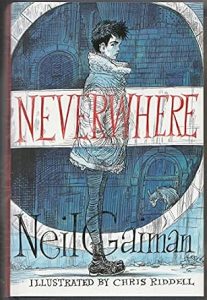
Neverwhere by Neil Gaiman (Read Again)

I am reposting my review of Neverwhere because it is the Kindle Daily Deal and on sale for $2.99.
Neverwhere by Neil GaimanTakeaway: Is comfortable better?

After I reviewed Neil Gaiman’s latest novel (The Ocean at the End of the Lane), I started having friends ask for recommendations of other Gaiman books.  So I decided I should go back and re-read some of those books that I keep recommending.

My traditional advice with Gaiman is that is you like the adult fairy tales, then you start with Stardust, then read Neverwhere or The Ocean at the End of the Lane.  Then read his creepy kids book Coraline.

But if you like Gaiman’s alternative takes of mythology, then read American Gods, Good Omens and Anansi Boys.

Neverwhere is the story of a man (Richard) that has a comfortable, but plain life in London. When he stumbles on Door (a young woman that is bleeding on the sidewalk in front of him). He is introduced to the world of London Below.  And suddenly his life in London Above is not quite the same.

Read more

A Passion for God: The Spiritual Journey of AW Tozer by Lyle Dorsett

Summary: AW Tozer is one of the great spiritual writers of the 20th century, and a prime example of God using less than perfect people.

I read A Passion for God first about three years ago.  It is one of those books that has stuck with me more than most.

The main reason is that Tozer is a perfect example of something that theologically I don’t really have a category for.  Tozer, by nearly everyone that knew him’s estimation, was a real and passionate man of God.  But at the same time he was distant from his family (especially his wife), personally lonely and probably leaned toward clinical depression.

It is not that I don’t think Christians can be depressed or lonely.  I certainly think they can.  But Tozer, like several other pietistic leaning pastors that I have read or read about seemed to lack many of the interpersonal tools of relating to those closest to him (while pouring forth energy on others.)

As with the first time I read the book, the most damning sentence in the book is a quote from Tozer’s wife who remarried after Tozer died. Her standard answer when people asked how she was doing after re-marrying was a variant of: “˜Aiden loved Jesus but (her new husband) loves me.’

Read more