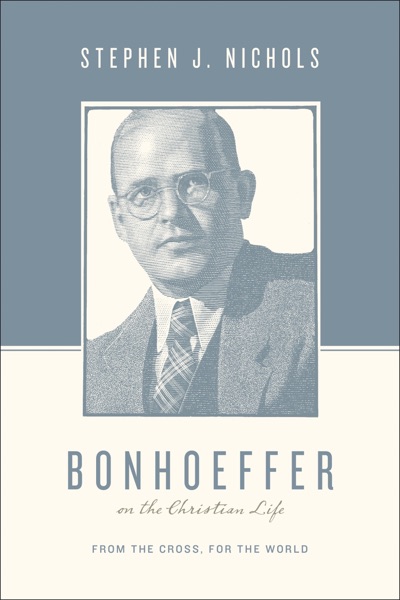
Summary: The history of how and why this Bonhoeffer’s Letters and Papers from Prison spread so widely and became so influential.
At this point I have read far more about Bonhoeffer than by Bonhoeffer. That is not to say I haven’t read Bonhoeffer, but to say I have read a lot about Bonhoeffer, especially over the past several years since writing on him seems to have exploded.
It is actually the now out of print Love Letters from Cell 92 that really humanized Bonhoeffer for me and moved him from abstract theologian to real live human person. About the same time as I was reading Love Letters from Cell 92, I started University of Chicago Divinity School and had Martin Marty as a professor.
So you received a new Kindle for Christmas. Now what do you do. Below the jump you can find out about borrowing books, importing books, audiobooks, tracking the prices of kindle books, finding new books, getting your questions answered and more. This post focuses on Amazon Kindles, but some of the content is also true for Amazon Fire Tablets or other eink readers as well.
Free or Sale Kindle Books
Amazon Kindle
One of the first things you want to do is check out free books. There are a lot of free books, usually 500-600 free books a day (although many repeat at least quarterly). You have a couple of options to find free ebooks. The ones I most I recommend are ereaderiq or ereaderperks. Both will send you a daily email of 30 to 40 recommend kindle books divided into genre, with a short summary and a book cover. You can customize the email to the genres that you are most interested in.
There are also blogs that focus on sale books. Gospelebooks and VesselProject focus on Christian books but there are a variety of others including ereaderiq that post about kindle book sales.
You can also follow Bookwi.se. Bookwi.se posts a free Christian Kindle books nearly every day and several days a week I post about sales. Project Gutenberg and Christian Classic Ethereal Library are excellent for finding public domain books. Baen Publishers maintains a free library of ebooks if you enjoy science fiction or fantasy.
Amazon’s message board system also is a good place to find free or sale books.
Amazon got into the borrowing and lending of kindle books fairly late in the game. But they learned from others and made the process very easy. Here is a post about how to Borrow or Lend a book. Many people do not know a lot of other kindle owners, so Kindle book sharing sites popped up. Bookwi.se has reviewed two. Lendle and Booklending. I prefer Lendle, but it requires you to earn credits by offering up books to be loaned (most free books are lendable, so you can get some free books to build up some credits). Booklending allows you to borrow without lending, but does not have as many books. However, there is not a good reason to not check both sites if one site does not have a book you want to borrow.
To Kill a Mockingbird is a classic and well-beloved fiction novel by Harper Lee. The novel is from the perspective of a young girl, Scout, growing up in a small town in Alabama during the 1930s. Aside from experiencing some of the usual adventures of a small child during that time, Scout and her brother Jem must navigate life as their father, Atticus, defends a black man who has been falsely accused of raping a white woman. Seen in some way as a story within a story, the trial shows the true character of Atticus and how some bravery and standing up for one’s beliefs and dignity really does matter.
To Kill a Mockingbird is not a perfect novel but it is about as good as it can get. It is my impression that critics of the novel had to really search for problems with the novel. Apart from the social lessons to be learned from the novel, the true beauty of the novel is how wonderfully descriptive and visual Harper Lee makes it. I would credit this aspect in part to the fact that many of the characters and the events in the novel are autobiographical. It is a lot easier to be descriptive about people you know and events that you experienced. I am not sure whether I read the novel or saw the movie first, but, when reading the book this time, I would have sworn that some of the scenes from the book had made it into the movie that didn’t because they left such a strong visual impression when reading them. This might be like the chicken and the egg conundrum where the question is was the book so well-written that it was easy to visualize the scenes as if they were a part of the movie, or were the actors in the movie so adept at portraying the characters of the book that it made it easy for me to visualize them in the scenes from the book.
Because of all the sales, I wanted to repost about how to give a kindle book as a gift. First you go to the kindle edition of the book. Then look below the regular Buy Now button and click “˜Give as a Gift’. That brings up another screen that allows you to do one of … Read more
The central idea of the book is that given our culture (and Spufford is writing to a secular UK here, not primarily to an Evangelical US) the idea that we should try to prove our Christianity through logic or proof is the wrong move.
As Alan Jacobs says in the opening of his review, apologetics should be more concerned with rhetoric than dialectical tasks, in other words, follow the interest of the listener, not your own desire to be right.
So Spufford is concentrating here on why, for him, Christianity can be an emotionally right choice, even if he can’t prove it scientifically or logically as many of the New Atheists are challenging Christians to do (or vice versa).
Spufford starts with trying to find the shared belief that we all have about this life. That central shared idea is HPtFtU, which stands for the Human Propensity to F*ck things Up (and he abbreviated most of the time.) Christians call this sin, but I think Spufford is right that calling it the HPtFtU feels more accurate. We can debate the reality or transmission method of original sin, but pretty much no one can debate that HPtFtU is real. We all have been a part of it and we all have seen others participate in it.
Takeaway: Regardless of whether you are Protestant or Catholic, John Paul II was important.
Last year, I picked up Witness to Hope for Kindle when it was on sale. But the size and time commitment kept me from actually reading it. As much as I would like this blog to not influence my reading, I often don’t pick up long books because of my attempt to keep up, with assistance from several regular contributors, a 5 review a week schedule.
So, I do not often make room for a biography that clocks in at more than 1000 pages. At the same time, I tend to hate abridged audiobooks. If it was important enough to put in the book initially, it was probably important enough to read later.
But when I noticed that the audiobook of Witness to Hope was in the Scribd audiobook library, even though it is abridged, I picked it up.
The actual content is just under half of the original book. And it feels like an abridgment. The biggest problem with the abridgment is that it focuses too much on the political life of John Paul II as Pope and not enough on the spiritual influence. Spiritual is undoubtedly there, but when you compare the time devoted, it seems less important.
Christianity Today released their Best Books of 2014 list. Like normal they have several categories and with a couple of ties, there are 23 books on the list. The book of the year is Teach Us to Want: Longing, Ambition and the Life of Faith by Jen Pollock Michel. It is one among several of this … Read more
Summary: It is not a violation of faith in Christ’s work, to pay attention to our own soul.
Lately I have been increasingly frustrated with Christian Living books. Particularly their introductions. I think I first noticed this strongly with James Bryan Smith’s The Good and Beautiful Life, but I have noticed the problem with a number of other books as well.
Soul Keeping has this problem. I really love that John Ortberg is writing a book that is as much about a tribute to the work of Dallas Willard in his life as it is about soul keeping as a subject. But honestly, I don’t need to be convinced that it is important to think about and work on my own spiritual health. I have been seeing a spiritual direction for over a year now. I read Christian books incessantly. I go to church regularly and while far from perfect, I really do think I am paying attention to my spiritual life for a lot of good reason. And the primary reason I don’t need to hear about the importance of spiritual care is that I grew up as an Evangelical (as would most of the readers).
The best of 2014 Books lists are coming out strong now. There are a lot of repeat books (last year there was a summary list that someone put together to compile all the books and how often they were cited, so hopefully someone will do that again.) But I have to wonder how much book lists like these matter to general readers. Here is an earlier post on other Best Books of 2014 lists
I have to give props to Bill Gates for turning himself into a Lego to give his best books he read this year.
NPR – 250 titles with filters and categories to give most everyone at least a few books they would like. But 250 seems way too many to be helpful.
Amazon has their best selling lists of 2014. I always am interested that the best selling Kindle books lists and paper books lists are so different. The lists are both the top 100, but the top 10 only have 2 overlapping books. And the next 10 only have 2 more.
Paul Sohn at Salt and Light has the 11 most thought provoking books on leadership. This is a Christian site, but most are general books instead of specifically Christian leadership books.
Relevant Magazine has a list of best books to give as gifts. The list was prepared by C Christopher Smith of Englewood Review of Books and has a number of good books for a variety of readers, ages and interests. I have read two of the books on the list and have already bought two more
Vulture – a culture review site has their 10 best. I have never heard of the site before, but they have my top book of the year as their top book of the year.
Publisher’s Weekly has their top 10 books. Several lists have mentioned Thirteen Days in September about the 1978 Camp David Accords, Deep Down Dark (about the 33 trapped 69 days in the Chilean Mine collapse of 2010), and A Brief History of Seven Killings about 3 decades of Jamaican history centering on an attempted assassination of Bob Marley. I am interested in the Camp David Accords one at least.
Washington Post’s list (other than 7 Killings and Being Mortal) has 8 books I have not heard of.
Boston Globe has a variety of lists with nothing that explains them (not all that helpful)
Slate has staff picks. Which I think I like better than straight best of lists. I would rather get someone tell me their book that might be a bit quirky instead of the “˜best’ lists that often focus on literary merit more than enjoyability.
Audible has their Best of 2014 – which also has a short video and includes a number of categories, like best narration, listener favorites, and several book category lists.
Welcome Bob Santos. I asked him to talk about the reason he wrote yet another book about Grace. His new book, The Divine Progression of Grace ““ Blazing a Trail to Fruitful Living will be free on Kindle this weekend, but you can buy it now.
___
Try doing a web search for books about grace and you will find dozens of titles””many of them by well-known authors. It makes a person wonder why anyone would consider writing yet another book about grace. Haven’t we already said all that needs to be said? In short, the answer is a definitive no.
I’ve been involved with various facets of Christian ministry for well over twenty years, and I still find a lot of people are confused about grace. Based on some recent trends, the problem is probably as bad now as it’s ever been.
“œBut,” a person might wonder, “œdoes our understanding of grace really matter all that much?” Absolutely!