 Summary: A semi-autobiographical tale of a white and black family that decide to intentionally become friends in the context of 1967 Houston protests.
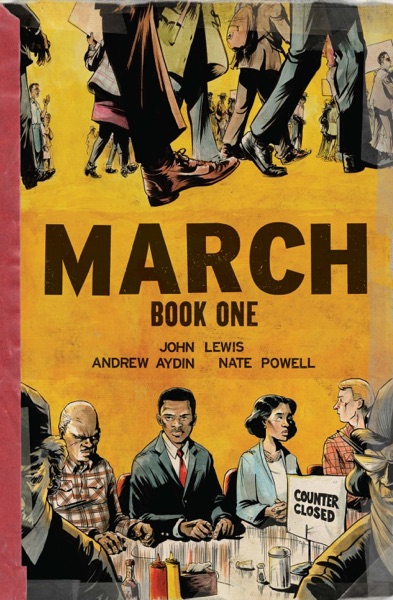
I picked The Silence of our Friends up because it was Nate Powell’s art. Nate Powell is the artist on the March trilogy. Silence of Our Friends was published two years before the first book of the March Trilogy.
This is a smaller and more intimate graphic novel in many ways. Instead of intentionally being a biography of the Civil Rights movement as a whole, Silence of Our Friends attempts to tells the story of two men, and their families, during a relatively small period in one city.
It is in many ways hard to describe any significant incident in the Civil Rights era as small. Lives were changed, people were killed. But unless you are a pretty close student of the Civil Rights era, this protest, the police response, the deaths associated with it were not a “first” or “greatest” or particular incident in most respects. In some ways, I think that makes the story more important because it was more mundane. It is also an interesting story because like the end of the third book of the March trilogy, it recounts the shift of the Civil Rights era into the Black Power movement.