The Good Luck of Right Now by Matthew Quick

The Good Luck of Right Now: A Novel by Matthew QuickSummary: A 38 year old man (maybe on the Autism spectrum?) learns to cope with his Mother’s death by writing letters to Richard Gere.

Mental Illness is serious, which is why I think it is so important that Matthew Quick has made a career of writing good, usually funny books about it. The three books I have read all follow roughly the same method.

They are all first person narrative told entirely inside the head of the protagonist. They all have some wacky other characters and come to a sort of resolution without minimizing the real issues of mental illness. They all have characters that want to help one another and are generally likable. (Note: I know that Autism is not really a mental illness, but Quick is mixing it in as if it were. There are also three other characters that more clearly have mental health issues that are also a part of the book.)

In the Good Luck of Right Now, Bartholomew Neal is writing to Richard Gere. Bartholomew’s mother has just recently died of brain cancer. As part of her cancer’s effects, his mother thought that Bartholomew was Richard Gere, her favorite actor. So Bartholomew played along and is now confessing to Gere, seeking his advice and looking for a friend.

Read more

Jesus: The Human Face of God by Jay Parini

Jesus the Human Face of God by Jay PariniSummary: A traditional liberal understanding of Jesus.

This is a short review because I did not completely finish the book. This is one of the books that borrowed from Kindle Unlimited. I was close to finished (72%) when my subscription ended. So I waffled back and forth a bit about writing up a review. In the end, I decided to write it mostly because I needed the reviews.

Parini is a literature professor. So in writing a biography of Jesus he is moving outside his primarily area of academic study. Although he is fluent in ancient Greek and has studied both New Testament and other literature from the era.

Parini’s desire for the book is to “˜re-mythologize’ Jesus. He is not a fan of the traditional Jesus Seminar methods of trying to strip away all of the supernatural from Jesus. Parini, as a literature professor, understands that in stripping away the supernatural, the Jesus Seminar methods are also stripping away a lot of the purpose behind telling those supernatural stories.

Read more

Your Church Is Too Small by John Armstrong (Part 1: Introduction)

I am reposting this 2010 review (yes it is a nearly 2100 hundred word review that I posted in 3 parts) because the Kindle Edition is on sale for $4.99.  I believe that this is part of Zondervan’s general ebook sale that still has not been announced anywhere and don’t have have an end date. Part two of the review is here and part three here.

_____

After having read Your Church is Too Small I immediately thought of four people that need to read the book.  So the summary review is that I think the book is good enough that I have bought and sent the book to four friends and bought one more to give away here.

After I was about half way through the book I decided that there is just too much rich content to comment on in just one blog post.  So I am breaking tradition and I am breaking this post into three parts.  Part 2 will post on Saturday and Part 3 on Sunday and I will restart the normal schedule on Monday.

Having read John Armstrong’s blog regularly for the past several years, I can think of few others that would have been better to write Your Church is Too Small.  The basic thesis is that only the “…church of Jesus Christ, ministering out of its spiritual unity in Christ and rooted in core orthodoxy, can best serve Christ’s mission.”

Armstrong loves the church and throughout the book reminds us that we should not fear for the church, because it is not our job to build and maintain the church but Christ’s and the Holy Spirit’s.  However, like our faith, we are saved by grace and encouraged by the Holy Spirit, but we still have responsibility for participating in our own spiritual growth.  Armstrong suggests that the unity the Jesus prayed for in John 17 cannot just be an invisible, spiritual unity, but must be a relational.  So while the church is one spiritually, there is a role for our participation in drawing the church together in unity.  I think this is an important point.  Just like James (2:17-18) tells us that we should not tell someone that we will pray for them, but not actually do anything to help them, we should not talk about the Big C Church and do nothing to build relationships with those outside our stream of faith.

Read more

Pure Pleasure: Why Do Christians Feel So Bad about Feeling Good? by Gary L. Thomas

I am reposting this 2010 review because the Kindle Edition is on sale for $2.99 (along with the also reviewed Sacred Pathways and Sacred Marriage).

Takeaway: God has created pleasure, we should not feel bad when we enjoy what he has created.

I have been puttering through this book for about eight weeks now.  I started it, read a few chapters, then got distracted by some other books.  Then picked it back up as my pastor started a series called “Guardrails” (itunes podcast link).  In some ways, Pure Pleasure is the opposite of the point of the Guardrails series.  But I like to read several books together in tension.  I have been reading three different books on virtue and keep stopping one to read another to keep them in conversation.

The short version of the thesis is Christians were designed as spiritual, physical people.  But too often Christians reject physical pleasures as “less than” or sinful.  Instead Christians should embrace both physical and spiritual pleasures as a form of worship.

Read more

Patternmaster (Patternist #4) by Octavia Butler

Summary: The world has devolved into perpetual war between the clayarks and the patternists. A young patternist must find his way and try to avoid getting killed by either group.
Finally at the end of the series I figure out why each of the four books of this series have been so radically different. When Octavia Butler was 10, she saw a really bad science fiction movie and thought she could do better. So she started writing a story. That story become the book Pattermaster. It was the first book she finished and published.

The second book on the series Mind of My Mind was published a year later. The first book in the series, Wild Seed was not written and published until 1980. And the third book in the series (at least chronologically within the story) was Clay’s Ark published in 1984. There is a fifth book in the series, Survivor, published in 1978, but it has been out of print for a long time because Butler did not like the book and refused to let it come back into print.

Each of the books in the series fill in the gaps of the story introduced in Patternmaster. Wild Seed give the origin of the rise of a genetically different group of humans. Mind of My Mind is about the creation of the telepathic’s Pattern. Clay’s Ark tells of how the disease started (which is the origin of the war between the Patternists and Clayarks.

Read more

Lila: A Novel by Marilynne Robinson

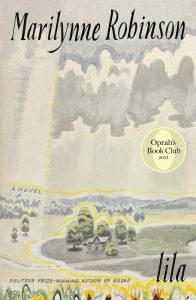
Lila: A Novel by Marilynne Robinson cover imageSummary: A woman familiar with abandonment learns about Grace.

Every once in a while you stumble on something beautiful. I happened to be looking for another book at my library’s website last week and it happened that Lila had just been released that morning and I stumbled on it before anyone else grabbed it.

So this past week I have been slowly listening to the lyricism of Robinson’s writting. Robinson’s 2005 book, Gilead, won the Pulitzer Prize and it on a number of best novel lists. I read it first about 2 years ago after a number of people had recommended it to me. And I really did enjoy that slow character study of an old pastor, John Ames, writing letters to his young son. He knew that he would not live long enough to pass on the important things in life to his son in person, so he wanted to put them on paper.

Gilead is half about the wisdom of age and half about the hope of life. Lila picks up the story from his much younger wife’s perspective. Lila was a neglected and abandoned child. She was stolen by a passing woman to protect her from her negligent parents. And then raised on the run from both real and feared reprisal.

Read more

Jack: A Life of CS Lewis by George Sayer

Summary: An older biography of Lewis, but with the memories of a friend and student. 

I continue, after about 18 months of reading about one book a month on or by CS Lewis, to be continually impressed by him. Part of what continues to impress me about Lewis is his humanity in the context of his greatness. Lewis was certainly fallible and this biography by a former student and long term friend acknowledges the fallibility.

Fallibility is important, I think especially in regard to Christians. Christianity is large part is centered around the need for a savior and acknowledgement of our sin and limitation. So I think it is especially important for Christian biography to honestly (and gently) talk about limitation (and sin) in a way that acknowledges that humanity. We are not gods, and all those that are not God are limited.

CS Lewis was certainly limited. He was limited by his lack of math (won’t have gotten into Oxford without his military exemption from the Math entrance exam and throughout his life his poor understanding of his finances and his ability to sell his books limited him.) He was limited by life situations (he cared for the mother of a friend throughout his life as well as his alcoholic brother.) He was limited by time. He was only 63 when he died and that was just a couple years longer than his wife (they were only married for 3 years before she died.)

Read more

Clay’s Ark by Octavia Butler (Patternist #3)

Summary: A human starship has returned from its first visit to another star system, but it did not come back alone.

As I am writing this I have finished the fourth book of the series and finally understood why the books of this series are so different. I will leave that to the review of the fourth book. But yet again, this is a very different book in style and content from the first two books in the series.

This is a story of alien contact, almost horror, but not quite. The story is told in parallel, with the current time line and a historical timeline. Neither one is completely chronological so some of the jumping around slows down the suspsense and confuses the story.

The historical timeline tells the story of Asa Elias Doyle, an astronaut and the only member of a 14 person crew to make it back from visiting another star system. The spaceship crashlanded onto earth and he is presumed dead by everyone. The problem is that he was infected by an alien microbe that is slowly changing him. He is trying to protect humanity by staying away from other humans.

Read more

The Magician’s Nephew (Chronicles of Narnia) by CS Lewis

Reposting this 2011 review because the Kindle Edition is on sale for $1.99
The Magician's Nephew: The Chronicles of NarniaTakeaway: Wonderful illustration of creation as metaphor

It has been decades since I have read the Chronicles of Narnia.  I remember my mother reading them out loud to us on family vacations.  We spent a lot of time listening to my mom read on vacations.  And as we got older we spent a lot of time reading ourselves on vacations.  I am not a great out loud reader.  I read to quickly and have a hard time forcing my eyes to slow down to the speed of my mouth, so I often lose my place and get tongue-tied.  But I still read out loud to my nieces.  They are getting old enough to start reading short chapter books (not to the Chronicles of Narnia yet).  I am looking forward to reading these with them when they get older.

If you are not familiar with this book, it is the creation story of Narnia.  In the traditional ordering of the book, it is book six, right before the last book.  But in the new ordering, it is the first book of the series.  The children Polly and Digory are not in the books as children again so there is not a natural flow from this book to The Lion Witch and the Wardrobe.  And I think that the Lion Witch and the Wardrobe is also a better introduction to Narnia than the Magician’s Nephew.  So I would still start in the traditional ordering not the new ordering. (This was also the second book written if you want to read them in order written.)

This was never my favorite of the series, so I have probably read it the least.  But after spending time reading a number of books on scripture and creation over the past year, this is a very good book to use to talk to your children about the purpose and meaning of creation stories.  John Walton’s Lost World of Genesis One (my review) is the most important book on understanding the Christian creation story that I have read and with the Magician’s Nephew I think it would be a useful way to talk about what is important, that God has created us and that he is Lord over our world.

Read more

The Anglican Way: A Guidebook by Thomas McKenzie

Summary: A readable, recent introduction for those new to Anglicanism.

Fads are a reality of the world, Christian as well as not. In my world right now, converting to Anglicanism seems to be almost the level of a fad. Not that I think there is anything wrong with returning to a more liturgical practice of Christianity, or participating in the second largest global body of Christians. Honestly, if the Parish were on my side of town, instead of the opposite side of town, I would be seriously considering it.

Over the past couple of years as I have been reading James KA Smith (not Anglican) and gaining a greater understanding of the Liturgy (and maybe just getting older), more people in my extended digital world have been doing the same. Eddie Kirkland, former worship director at my church has started the Parish, Glenn Packiam as formed an Anglican congregation inside of New Life Community Church in Colorado, Scot McKnight has been ordained Anglican, Aaron Niequist, while not officially moving toward Anglican ordination as far as I know, has started a Sunday evening service at Willow Creek that by description seems to lean Anglican.

Personally, my theology has become much more sacramental and much less Baptist over the past 10 years or so years since I stopped working for the Southern Baptists in Chicago. I am also far less interested in arguing minor points of theology and much more interested in a Christianity at accepts all that hold to the Nicene Creed or other traditional Creeds.

So The Anglican Way is exactly right type of book for me. Thomas McKenzie is a parish pastor in Nashville (and the exact same age as I am I assume since he graduated from high school the same year I did according to one of the stories). He grew up in an Episcopal church, but was not really active until he went to college and was introduced to a charismatic form of Anglicanism.

The first section of the book is about the balance within the Anglican Way (illustrated by the Compass Rose) between Charismatic and Orthodox, Conservative and Liberal, Activist and Contemplative, Evangelical and Catholic. Temperamentally, that type of focus of relationship within theological and practical tension appeals to me. I want to be around, and worshiping with Christians, that are different from me, while still broadly holding to the orthodox tenets of Christianity.

Read more