 Summary: Anxiety is part of how we were created.
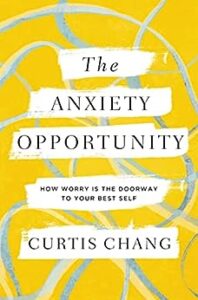
Like everyone (and in keeping with how anxiety is talked about in the book), I have anxiety. I hate conflict. I do everything I can to avoid situations where I might be in conflict, especially conflict with people close to me. Curtis Chang suggests that anxiety is part of how we were created. We should have anxiety because we care. Part of how care for the world and those around us expresses itself is being anxious over the fear of loss. No anxiety at all would not show that we have great control over our emotions, but instead, it would show that we may not have appropriate care or love.
“Love: We suffer anxiety because we are vulnerable to losing what we most love. This further explains why anxiety is unavoidable for anyone who is truly human. To be free of anxiety is to be free of any love (which is capable of being lost), which in turn would mean becoming inhuman.”
Chang uses formulas to illustrate how he wants to talk about anxiety. “Anxiety = Loss tells us that anxiety is generated by loss or, more specifically, by our fear of loss. Every anxiety is the fear of some future loss.” Once that basic idea is explained, he expands on it to show how anxiety can be made worse: “Anxiety = Loss x Avoidance.” Fear of loss is something that we all have. And he also identifies that a certain level of anxiety is also inevitable. But the part that moves us from normal anxiety to dysfunctional anxiety is our avoidance. It is common to speak about fight or flight (and sometimes fawn) as responses to stimuli. Chang also speaks about them as tools of avoidance.
“CEOs tend to have high-functioning anxiety, like I do. Also, like me, they tend to default to fight mode. They often plunge forward with their own versions of firing off long emails to their staff at three in the morning. Too often, their colleagues don’t push back. Team members don’t realize their leader’s behavior is anxiety-driven. Instead, they feel confused, insecure, guilty, and blamed. Anxiety spreads like a contagion throughout the entire organization.”
Others (like me) tend to avoid our anxiety by pretending anxiety doesn’t exist or by avoiding situations where it might pop up. One of the book’s more helpful sections was the discussion about how different responses to anxiety impact relationships. Chang suggested that he tends to default to a fight response, and his wife tends to default to a flight response and that those different responses are interpreted by the other and a lack of care about their anxiety.