Lost History of Christianity by Philip Jenkins

Summary: At one point the church of the East was as strong, or stronger than the Church of the West, but then it started a slow decline under persecution.

Once again, with the recent comments by President Obama and the violence of ISIS, the crusades are back in the news. And it is again popular for the average person to pontificate about the history of something that they have not actually spent any time studying. Philip Jenkins is trying to solve that, or at least the problem of a lack of information.

The main focus of the The Lost History of Christianity is of the 1000 year history of the church of Asia and Africa from approximately the 4th to the 14th century.

The image on the cover is a stylized map of Jerusalem in the middle with the three continents of Europe, Asia and Africa proceeding from it. At one point, there was far more balance in Christianity between the three continents than what is commonly understood today.

In the 4th century the great councils ruled on how to understand the divinity of Christ. The ‘winners’ of that fight we now call orthodox and the losers we call ‘heretics’. But everyone did not simply adopt the creed. Much (but not all) of the Eastern church continued to identify with what we now call the Monophysite heresy. These Christians are now called Oriental Orthodox (as opposed to Eastern Orthodox who did accept Nicaea) or Nestorians. They believe that Jesus Christ has one nature, not two, and was wholly divine. Modern scholars do not find as much difference between the two camps as might be assumed and so Jenkins wants to keep the understanding of them as Christian on the table.

Read more

Binti by Nnedi Okorafor

Summary: An African teen in the future leaves her (traditional) home to attend a university on another planet.

A couple of days ago, I was describing Octavia Butler as the only female African American science fiction author that I could think of. The next day, I received an email from Amazon about a book they thought I would like. I tend to ignore most of those emails, but I opened this one. I read a few reviews and picked up Binti. (Binti won both Hugo and Nebula awards for best novella in 2015.)

Binti is a 96-page novella. It was cheap, and I was looking for something quick and different. Once I was on Goodreads, I saw that a couple of friends had read and liked Binti. And Friday evening, John Green (author of The Fault in Our Stars) tweeted about reading the follow-up book, Binti: Home.

Binti is the name of the main character. She is a 16-year-old who has been accepted (and given full scholarships) to Oomza University, the best university in the galaxy. Binti’s family is from a traditional African village. While they trade with outsiders (her father is a skilled craftsman), they do not leave. Binti decides to accept the offer to study at Oomza University. She leaves without telling her family.

Read more

Dream With Me- Race, Love and the Struggle We Must Win by John Perkins

Dream With Me: Race, Love and the Struggle We Must Win by John PerkinsSummary: Thoughts from an elder as he reflects on his life, the church and the world.

I have read just about everything that John Perkins has written. So I pre-ordered Dream with Me months ago on kindle and picked up the audiobook as well. I have followed John Perkins’ work since I first became aware of the Christian Community Development Association in 1991 and attended their annual meeting in 1992.

Since then I have attended two or three additional annual meetings and read widely books that have been written by others associated with CCDA. I wrote my Masters thesis for my Masters in Social Service Administration on the different ways that Christian Churches and their church based non-profit arms related to one another using three Chicago based CCDA member organizations as examples.

If you do not know the name John Perkins or anything about CCDA, this probably isn’t the first book I would recommend. I would suggest starting with Perkins’ earlier memoir Let Justice Roll Down or Stephen Berk’s now out of print biography on Perkins, A Time to Heal, both give a much larger context to Perkins’ work and thoughts and would help you to understand why we should listen to Perkins in the first place.

Read more

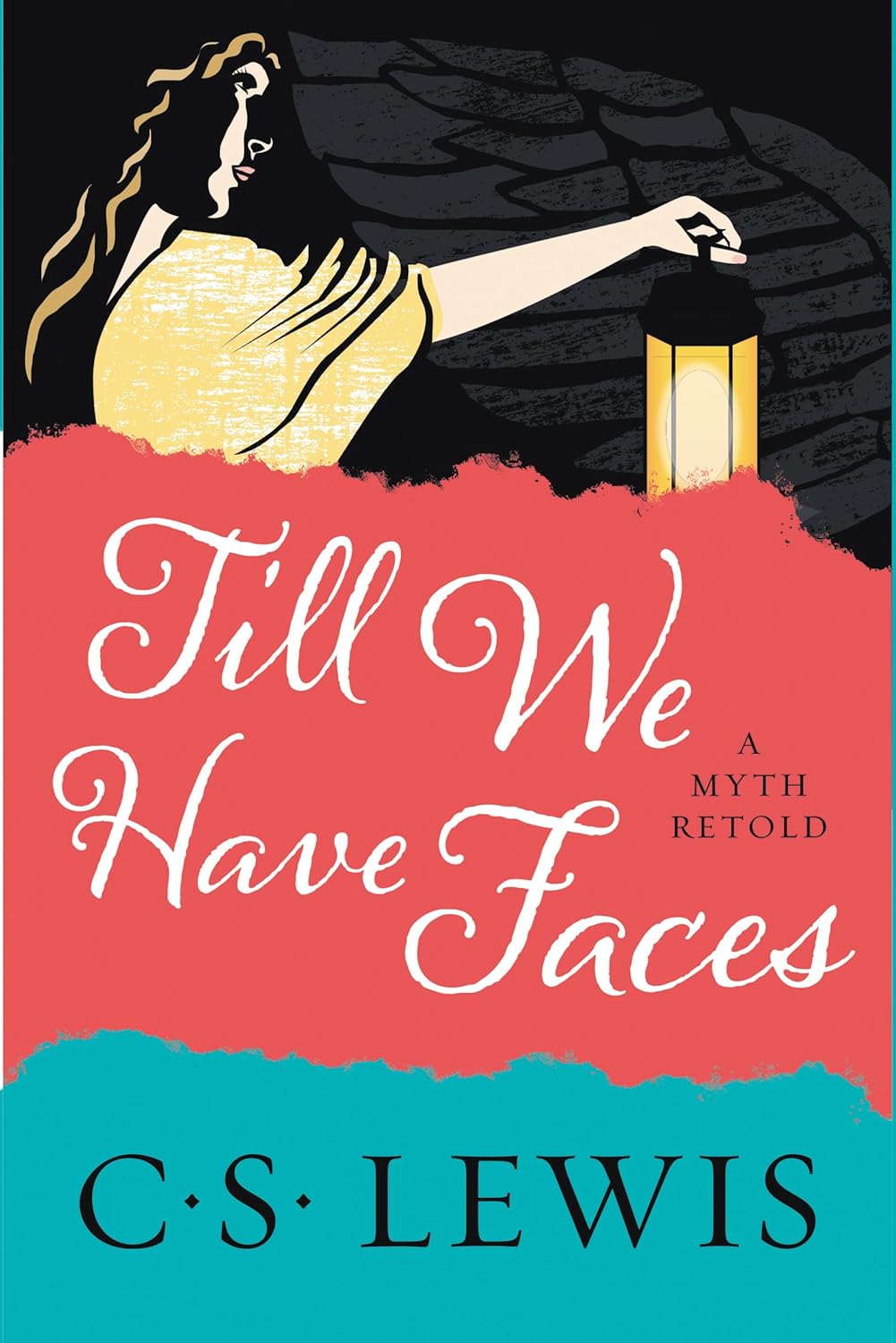
Till We Have Faces by CS Lewis

Takeaway: A story of regret and complaint, joy and pain. Much like the story of many of us.

As regular readers of this blog well know, I have been intentionally reading a lot of CS Lewis for about 18 months. Lewis is an icon of Christian literature. And there are few that can compete with the breadth of his work, from apologetics, to memoir, to children’s literature, to serious adult fiction, to serious academic work, to contemporary essays.

I first read Till We Have Faces nearly three years ago before this most recent reading. I liked it much more this time. I think I both understand Lewis and have more context than the previous reading and I think I probably read the book better.

Till We Have Faces is a retelling of the story of Cupid and Psyche from the perspective of one of Psyche’s sisters. I didn’t really know the story of Cupid and Psyche before, and so I intentionally read several things about it before I re-read this to make sure I have the basics of the story in my head.

Books and Cuture had a good review by John McWhorter of a book on the history of jazz. The thing that has really stuck with me is McWhorter’s comments about a 1957 Looney Tune cartoon that riffed off of the three little pigs story with jazz musicians.

What McWhorter notes is that in order to understand the “Three Little Bops” cartoon, the audience had to understand the original story of the three little pigs. And similarly, when jazz was popular music, the jazz solo was riffing off of a known melody and song. But as jazz has become a more “classical form” it has taken more work to understand the original musical stories that are currently being riffed off of.

Read more

The Assassination of Jesse James by the Coward Robert Ford by Ron Hansen

I am reposting this 2015 review because the Kindle Edition is on sale for $1.99.
Takeaway: The downfall of greatness seems to be written in advance by the weaknesses that are inverse to the greatness.

John Wilson, the editor of Books and Culture, at some point listed Ron Hansen as one of the best living Catholic novelists. About a year or so ago I read Hansen’s Margarete in Ecstasy. It was hard for me to think about an author that wrote that story of a young devout nun also writing a story of the thief and murderer Jesse James.

Prior to reading the book, I really did not know anything about Jesse James or Robert (Bob) Ford. Hansen is writing historical fiction, but this is very historical, almost biography in feel. The difference between straight biography and historical fiction is blurred here, but it seems to be mostly accurate but with imagined dialogue.

Read more

Go Set a Watchman by Harper Lee

Book Review of Go Set a Watchman by Harper LeeSummary: Scout (now Jean Louise) returns home to Atticus as an old man and her view of the world is shaken.

Reading this nearly two years after it came out, and after I have read many reviews, it is hard to be objective. I knew the basic story before I started. I knew why so many people really didn’t like the book and why many others thought that it was an important sequel. And I basically agree with both sides.

Go Set a Watchman is the story of Jean Louise’s return back to visit her family as a 26 year old. She has been living in New York City and her distance from her family and the culture causes a culture shock. Her hero worship of her father is crushed when she see him (and his now law partner and her current love interest Henry) at a Citizen’s Council meeting.

Read more

The Late Monsieur Gallet by George Simenon

Summary: Overworked and understaffed, Inspector Maigret has an obscure murder that doesn’t seem to make sense.

I keep hearing about the brilliance of Georges Simenon and his Inspector Maigret series. The first couple (realize that there are over 100 of these) were fine but nothing special. And even this one, which I think has been the best so far, isn’t really good enough to be top level. But I can see the glimpses of where Simenon can really shine.

Inspector Maigret does not really want to investigate this seemingly standard murder himself. It is the summer and other inspectors are on vacation and really no one else can do it except himself. But something seems off. Maigret’s image of the man does not really match the descriptions that others give of him. And then the facade starts to crumble. But was it murder or revenge, was the victim a crook, was the victim even who he said he was?

Read more

The Master Musician- Meditations on Jesus by John Michael Talbot

The Master Musician Meditations on Jesus by John Michael Talbot Book ReviewSummary: A short devotional using music to to think about Jesus and our role as Christians.

John Michael Talbot was a popular musician in his teens in the 1970s. He became a Christian through the Jesus People movement and then through his reading about the early church fathers found his way into the Catholic church, eventually founding a monastic community (with both Protestants and Catholics, married and celebrate, clergy and lay people.)

While John Michael Talbot continued to be musician, he has also written a number of books: devotionals, memoir, prayer and a number about different aspects of monasticism. I have appreciated that he has intentionally continued to write as a Catholic, but in an inclusive way. Intervarsity Press has published a number of his books.

The Master Musician (from Intervarsity) is short, easily read in less than two hours. As someone that was a musician at a Christian college (I was briefly a music major and then played in the Wind Ensemble for two years), I have heard a number of devotionals about music. So many of the ideas of this book were not particularly new.

Talbot talks about the crafting of an instrument and compares that to our spiritual growth as a Christian. He talks about the different styles of music or different ways people gather together as musicians to play are related to the body of Christ. He talks about Jesus as conductor and musician.

Read more

Harry Potter and the Goblet of Fire by JK Rowling

Summary: If you really need a summary, you probably aren’t going to read the review.

I have been craving some comfort reading lately. So I picked up the Stephen Fry narrated version of The Goblet of Fire that a friend loaned me. (It is the narrator for the British edition; Jim Dale is the narrator for the US edition). There isn’t any way for someone in the US to get the UK edition without importing the CDs or off the internet.

The new narrator did help give a fresh gloss to a story I have read at least five times and listened to at least once. Stephen Fry is best known to me as the narrator of Pocayo, a kid’s TV show. I prefer him to Jim Dale. I need to listen to another one or two books to be sure.

Read more

Magnus Chase and the Gods of Asgard by Rick Riordan

Summary: New series, new characters, a new set of gods, all of what made Percy Jackson good. 

I have had a hard time finding time to read lately. With two young children, never enough time to do the work that actually pays bills and other responsibilities, reading (and writing reviews) keeps getting pushed aside. Part of the problem is that when I get less time to read, I tend to want to read ‘important’ books. But ‘important’ books are often slow, time consuming and require lots of brain power. Sometimes you just need young adult fiction.

I am a big fan of Rick Riordan’s Percy Jackson series. I am not a fan of his Kane Chronicles (I just read the first of the trilogy and really did not like it.) The follow up series to Percy Jackson (Heroes of Olympus) I am more mixed on. They just felt too long and full of filler. And I still haven’t started the last book of that series in spite of the fact that I bought it almost a year ago.

But when Magnus Chase was on sale for Black Friday I picked it up. Once I started reading it, I sped through it and finished it in just a couple days. This series is not wildly different from Percy Jackson. Magnus Chase is a homeless 16 year old. He has never known his father. Two years ago his mother died protecting him and Magnus has been living on the streets (and on the run) ever since.

Read more