Holy is the Day: Living in the Gift of the Present

Holy Is the Day: Living in the Gift of the Present
Summary: Another beautifully written book about finding God in the present.

I love blogging. But every once in a while, I get tired of the pressure to keep churning out content. It is work to try to figure out something to say about every book that you read.

However, much more often, books are a joy to read. It is one of my great pleasures to be able to recommend particular books to friends and family and then have them come back later and say they loved the book.

One of the books that I recommended to many over the past two years is Carolyn Weber’s Surprised by Oxford. It is Weber’s account of her first year of studying at Oxford and her unexpected conversion to Christianity during the same year. It is a beautifully written book.

So I have been expectantly waiting for her new book Holy is the Day. I was lucky enough to get an advanced copy the day before I left for vacation last week.

This was an airplane book (the only place I regularly read paper books.) Much shorter and more episodic than her previous book, Holy is the Day recounts stories of where Weber finds God in daily life.

I, as an expectant father, was particularly drawn in because the book opens and closes with birth stories. Birth and death are natural places where we see God because they are such transcendent experiences. But in between birth and death, God sometimes gets a little lost (or at least we lose sight of God in the midst of our busyness).

Most of the stories are in some way about family, community, and the church. We have a tendency to live as if we are alone. But it is in community, our families, the church, neighbors, and friends, that we often most clearly see and hear God. (This is very similar to the focus in Eugene Peterson’s Practice Resurrection).

Read more

Waterfi Waterproof Kindle Paperwhite Review

If you asked me what my favorite thing to do, on the list would be floating in the ocean, reading. Several years ago I found a floating waterproof case for my Kindle 2. And up until recently I had still been using it. It finally broke and on impulse I picked up a refurbished Waterfi Waterproof Kindle Paperwhite two weeks ago right before I went to the beach for a week’s vacation.

The first thing you notice about Waterfi’s waterproofed Paperwhite is that it is basically indistinguishable from a regular Paperwhite. The waterproofing is not visible and doesn’t add any weight (at least not enough to be noticeable).

Waterfi is an aftermarket system. So you purchasing one from Waterfi voids the Amazon warranty. A refurbished Waterfi has a six month warranty. The refurbished Paperwhites are a mix of 1st and 2nd generation Paperwhites, but you can ask them for one or the other.

There are two main negatives about the Waterfi system that was not true of my old floating Kindle case. First, it does not float. So if I dropped it in the ocean, I would have go grab it. I have thought about how to create some type of float for it, but I haven’t worked that out yet. (I think some type of foam case should work.) I was just careful when I was swimming with it.

The second negative is that because the Paperwhite is a touch screen device that moves by electrical conduction, hard spray from salt water can turn the page or turn on the screen commands. It was not a huge problem, but I did need to try to keep it out of the spray to actually pay attention to the book. (And it really makes me wish that either Amazon had real page turn buttons or that Waterfi had waterproofed a Kindle Voyage).

But those two negatives aside I am really happy with the purchase. It is waterproof, the screen was not at all fuzzy as the one waterproof case for the Paperwhite that I have tried was and while I would not normally spend the extra $20 to get rid of ads, it is nice to not have ads.

Read more

Vanishing Grace: Whatever Happended to the Good News by Philip Yancey

Summary: The central message of the gospel is grace. If the world around us understands the central message of the church to be judgement, then we have messed up the message that Christ came to give.
There are four parts to this book and even in the introduction Yancey says that this is essentially four different books. I just wish he had tried to do less.

The first part is all about the vanishing of grace from the message of the church. This part is five stars and I would like virtually all Christians to read it. He calls on Christians to not only recover grace as the central message of Christ and the church, but also to remember that the method of the message has to be in love. I really don’t think that basic message can be emphasized too much in Christianity because the natural temptation of Christians is to change the message of the gospel to one that is about earning our salvation through moralism or tradition. After all, a gospel of moralism or tradition is easy for Christians who tend to be already familiar with tradition and fairly good at presenting a moral facade to the world around them. But that changing of the gospel away from grace fundamentally changes the message of the gospel.

Read more

Sacred Pathways: Discover Your Soul’s Path to God by Gary Thomas

I am reposting this 2011 review because the Kindle Edition is on sale for $1.99 for the month of October. The audiobook edition is $3.99 with the purchase of the kindle edition.
Sacred Pathways: Discover Your Soul's Path to God

Takeaway: People are reflection of God. The ways God creates people to draw near to him are a gift to the church. God has created us all with a desire for him, but those methods of spiritual growth are not the same. Gary Thomas talks about 9 ways that we can draw near to God.

This is a book I have had on my shelf for a long time and just finally got around to reading it.  I have read a couple of books that are similar, most recently Streams of Living Water by Richard Foster.  Streams of Living Water is focused on the different Christian faith traditions and their strengths and contributions to Christianity as a whole.  Sacred Pathways is focused on individual spiritual temperaments and how the way God has made each of us, affects the way that we are designed to love God.

Unfortunately, some people fall into the trap of believing that all spiritual growth should look the same (30 minute quiet time, daily prayer alone, Sunday School attendance, active service to the poor, etc.).  Instead, if we read our bibles it is pretty easy to see that the characters of scripture had different temperaments, different ways of relating to God and different pathways to spiritual growth.

Read more

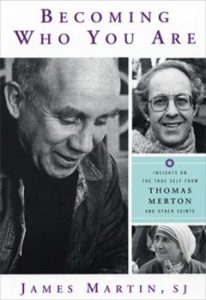
Becoming Who You Are: Insights on the True Self from Thomas Merton and Other Saints by James Martin

Becoming Who You Are cover imageSummary: Brief exploration of seeking after who you were created to be.

I originally read this just over a year ago. James Martin originally put this together as a lecture to honor Thomas Merton and Henri Nouwen.

On the second reading, Martin’s insights are still as hard to internalize, but as still important.

God has created each of us as unique individuals. Working toward becoming the self that God created is a lifetime process. And at least part of that process is rejecting the roles that are placed upon you but not a part of you.

The second reading I was struck by how we become who we are, not by focusing on our own selves, but by serving others. This was the theme of a sermon at my church recently so the focus here resonated more.

I mentioned this in the earlier review, but part of what is helpful about this book is that it is focused on people that many consider spiritual giants. Merton, Nouwen, Mother Theresa all were human. They were all broken people that struggled into their spiritual lives.

Read more

Unclean: Meditations on Purity, Hospitality, and Mortality by Richard Beck

Unclean: Meditations on Purity, Hospitality, and Mortality by Richard Beck cover imageSummary: Moving our psychological revulsion (based around food) to morality, ethics and people, fundamentally distorts our Christianity.
I appreciate Richard Beck’s outsider perspective on theology. Beck is a psychologist who writes theology. While he is not untrained in theology, that training is not formal, and it is not his primary academic area.

Beck approaches practical areas of theology in ways that many academic theologians do not. Previously, I read The Slavery of Death, which is probably the best book I have read about the power of sin and the practical understanding of how sin controls us.

In Unclean, Beck takes his understanding of psychology to help us as Christians understand how our faith becomes distorted when we allow the concept of revulsion (a natural feeling around unclean food) and apply it to people and/or ethics.

This book is full of insights into how we unconsciously avoid doing the work that we (as the church) are called to, by avoiding the messy people that are around us. What this book is not, is a simple prescription on how to change our own perception of those around us. Beck says that this is too personal of a problem for him to proscribe simple steps.

Read more

Crazy Dangerous by Andrew Klavan

Crazy DangerousSummary: A pastor’s kid is thrust into something bigger than he could imagine.

Andrew Klavan is a big deal in the thriller world.  He has had two books made into movies and written the screen plays for two more.  He has won 4 Edgar Awards (the biggest mystery award) and written more than a total of 28 books.

Over the past couple years he has been transitioning to writing books for a Christian markets, primarily young adult books.

After I read and reviewed the very good Homelanders series, I picked up this book to review.  It was released in May but I just got around to reading it over the weekend.

If you were a fan of the Homelanders series, you will like this.  It has a similar feel.

Sam Hopkins is a pastor’s kid in a small town.  He would like to be known for something other than being his father’s son.  He gets involved with some friends that are clearly criminals before realizing that he has to break away from them.

Read more

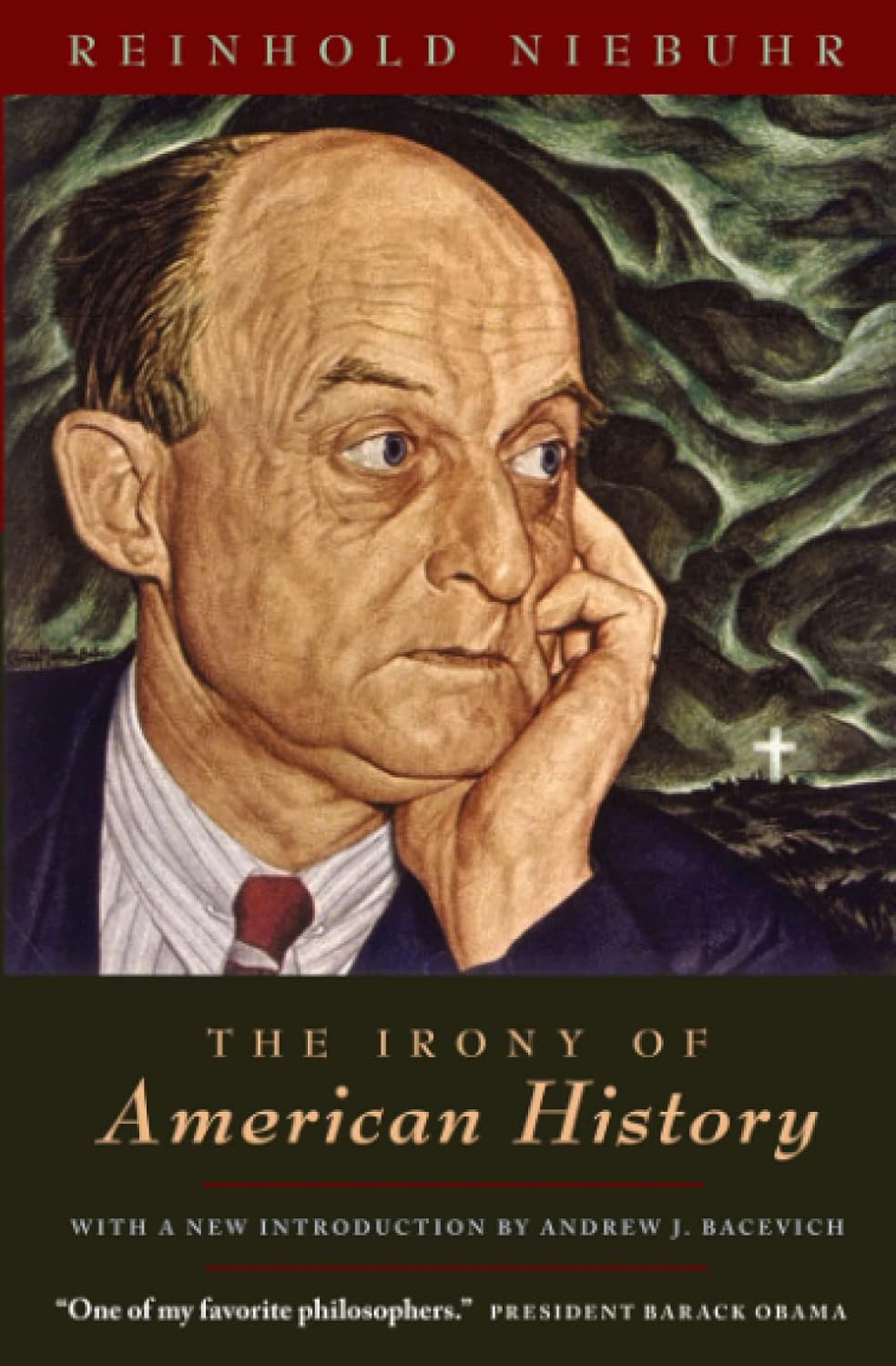
The Irony of American History by Reinhold Niebuhr

Takeaway: I wish more people read Reinhold Niebuhr.  He has much to say both about politics and international relations, and also about the limits of security and state power.

The Irony of American History is oddly relevant.  It was written in 1952 and based on two lectures given earlier than that. The introduction calls it the most important book on American foreign policy ever written. That is a bit too strong, but still Niebuhr understands in a way that very few do, the weaknesses of all human forms of government, while still being hopeful that government can serve the people.

Niebuhr, with proper use of irony, speaks of the issues of the 1950s in similar terms to many others in talking about the global reach of US power.  It is almost funny that Niebuhr quotes US policy makers that think that the Asians should be more grateful to the US (at the time it was Korea, soon to be Vietnam) for our intervention to their affairs. But it is very similar to the way that some in the Bush administration thought we would be received in Iraq and Afghanistan.

The narrator on the audiobook is a bit pretentious sounding and I think that detracts from what Niebuhr is trying to say. But in general Niebuhr traces the thought patterns of a Jeffersonian (roughly secular) and a Puritan (certainly Christian) that both view the United States as a fundamentally separate place. The language of the Puritans is a “City on a Hill” and “called out by God for a specific purpose”. But the Jeffersonian ideals are not much different. Jefferson was secular in his reasoning, but thought that the separateness of the geography and the rightness of our political will and life also left us with a specific calling and purpose that in the end was not much different from the calling and ideals of the Puritans.

Read more