
Takeaway: Statistics are important. And if you are a Christian that believes in truth, you need to be even more careful with numbers.
I like numbers. My day job is being a nanny stay at home Dad, but my part time consulting job is evaluating an after school program. I track grades, school attendance, program attendance, home and school visits, behavior, test scores, and a variety of other statistics. In a previous life, one of my jobs was demographic research for church plants and I was statistician for a local Baptist association. I was a sociology major as an undergrad and even went to a sociology paper competition (and came in 3rd) for a sociology paper about the relationship between believe in rape myths and matriculation in a Christian college campus.
If you know me in real life, then you have probably heard me quote a stat (or 50) about something or other. So I should have jumped at this book. But I did not. Frankly, I am a bit negative about a lot of Christian’s use of numbers. A couple weeks ago two different times in the same Sunday, from the pulpit and in a private meeting I heard a similar statistic about divorce that I knew was wrong. My church is about 60 percent single adults. So when people talk about marriage, I want it presented in a fairly positive light, not to be fake, but to not compound the negative feelings that many in my church have toward marriage. So when I hear the same statistic about divorce rising, I get frustrated. I did not say anything, but I was frustrated.
You see, divorce is not rising. In fact it is dropping. In part because many people are just choosing to not get married, or at least get married much later. And divorce among highly educated, upper income people (like most everyone in my church) has fallen off a cliff. So when we talk about divorce as being a major and increasing issue among Christians, we are actually wrong. We should be providing support for marriages, that is why my wife and lead a small group for newly married couples. And we should be providing support for those that facing or recently completed a divorce. But in my church, telling people (most of whom are single) that divorce is increasing, does not really address either reality, or the issue most in the congregation are facing.
Christians Are Hate-Filled Hypocrites…and Other Lies You’ve Been Told: A Sociologist Shatters Myths From the Secular and Christian Media is a very good remedy to the many poorly presented statistics that are floating around in and outside the Christian world. Dr Wright, spends a significant amount of time addressing why so many bad statistics are being used. And really it comes down to two major areas, attention and authority. We are trying to get people’s attention, so pastors (and many others) troll around for the worst statistics to try to prove their point. (This is also why we get so many topical sermons that do not seem to fit the broader context of the passage.) It is not that pastors (or others) are trying to mislead, but rather, they start from the end and find support for their position. The second major issue is that many people are misled because they saw something in print. If it was printed, it must be true. Christians, as people of the book, may be more influenced by the authority of something being in print.
Read more
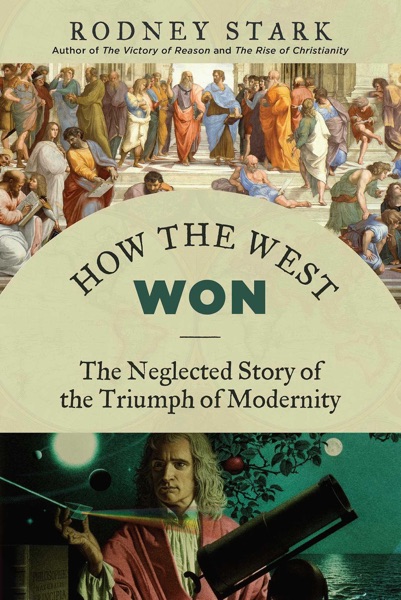 Takeaway: Sometimes in the attempt to tell a fuller story, part of the story gets lost. But the correction usually has the same problem.
 Summary: An Abbot feels he receives a call from God to leave his order and return to the world.
 Summary: An evaluation of Billy Graham’s place in history.
 Summary: The church is where we we can learn to grow up as Christ intends.
 Argo: How the CIA and Hollywood pulled off the most audacious rescue in History by Tony Mendez is his first-hand account of the rescue of six Americans during the Iran hostage crisis. As the lead operative on the project, Tony recounts how he hatched the plan, carried out preparation and executed the plan so that everyone would be brought home safely. This spy story is set apart from others because this rescue was successful in part because Hollywood was used to make the mission a success.