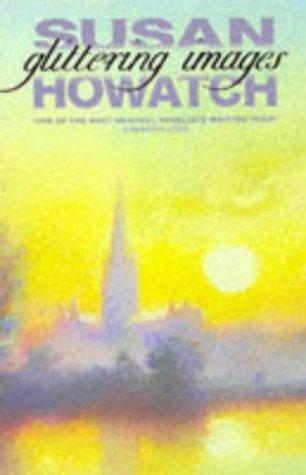
 Takeaway: One of the best examples of how fiction is important to give form to important ideas.
Almost exactly two years ago, while on vacation I first read Susan Howatch. That first reading started me down a path which helped shift me theologically, I am now much more Anglican (or at least sacramental). I have found a spiritual director and been meeting with him for nearly 18 months. And I have started thinking of the spiritual life much more as an ongoing work in progress than I did previously.
Glittering Images is the start of a six novel series set in the 1930s (first four) and the 1960s (second two) and then a spin off trilogy set in the 1980s (that I haven’t read yet).
Charles Ashworth is a young professor and Anglican priest who is sent by the Archbishop of Canterbury Lang (actual person) to spy on the Bishop Jardine of Starbridge (fictional town). Bishop Jardine, as many of Howatch’s characters are, is based on a real bishop. And as the original bishop did, Jardine has spoken out about the need to liberalize England’s divorce laws.
Charles Ashworth attempts to investigate Jardine’s personal life to see if there is anything to the rumors about Jardine’s womanizing. What follows is a mix of straight melodrama, serious theological discussion, and some of the best fictional portrayals of spiritual difficulty I have read.
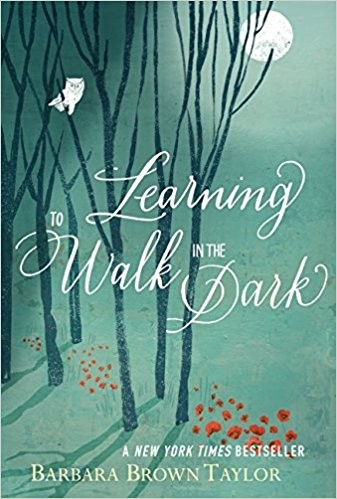 Summary: We need to be able to see God in the Dark as well as the light.
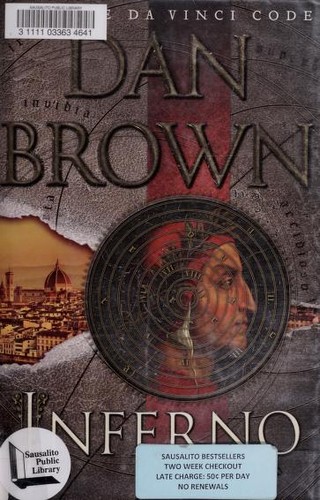 Inferno is the fourth book in the Robert Langdon series by Dan Brown. The first two books in the series were made into successful movies starring Tom Hanks. In this book, Robert Langdon is once again called on for his vast knowledge of symbols and iconography so that he might once again follow the clues and solve a dark mystery. Never knowing whom to trust, Langdon relies heavily on what he knows about specifically Dante and his masterpiece, Inferno, in order to hurry and beat a mastermind at his own game. While the first two books (Angels and Demons and The Da Vinci Code) in the series take place in Europe, the third book, The Lost Symbol, occurs mainly in Washington D.C. and New England. The third book was supposed to be made into a movie also but was supposedly passed over because its story resembled too closely that of National Treasure. In this book, Inferno, Langdon spends all of his time once again in Europe. Just like in his other books, there are many twists and turns and Langdon’s quest take him to a number of different famous and historic locations in Italy and a few other countries in Europe. Whereas The Da Vinci Code fed on our interest in conspiracies, this book addresses our ever growing population problem and our fears about epidemics becoming more widespread as our world has become more and more globally connected. The movie for this book is set to come out in the fall of 2016 and will once again star Tom Hanks as Robert Langdon.
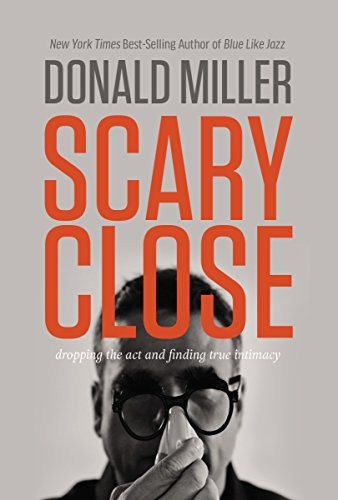 Donald Miller has always been unlike any Christian author I have read before. He rocked my world in Blue Like Jazz. He inspired me to get off my rear end and start living my life in A Million Miles in a Thousand Years. I’ve always been a big fan of Miller being an open and authentic writer plus an avid student of life. His latest book, Scary Close was released this month and it’s unlike anything he’s written before.
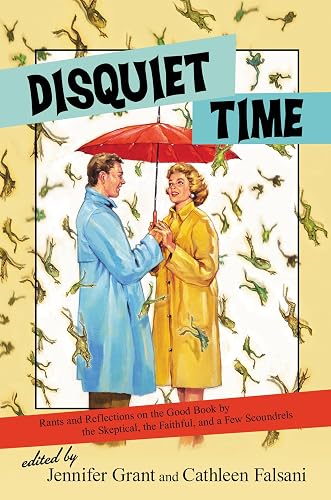 Summary: 45 Reflections on how the bible pushes us toward disquiet.
 Many of us struggle to find our identity in our work. We struggle with the gap between what really interests us ““ where our passions lie, and how we earn a paycheck. In many instances, we work to pay the bills so that we can pursue our true interest. Others know their current career path is not their passion, but cannot pinpoint where their true passion lies. Are we living to work or working to live? Are we spending our work hours doing something that fulfills us? Are working at a career that is exactly what we were created to do, or have we pushed our dreams aside to face the reality of a 9 to 5?
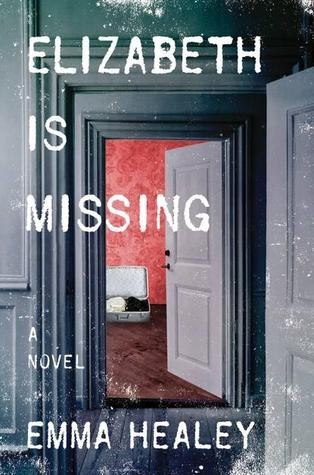 Elizabeth Is Missing is Emma Healey’s first novel about an older woman suffering from dementia. The story is from Maud’s point of view and gives the audience an idea of what life might be like to have one’s mind slowly deteriorate due to dementia. To help illustrate the point even more, Maud spends most of her time obsessing about the disappearance of her friend, Elizabeth. She finds it extremely difficult to follow the clues when she can’t remember what the clues are or even what they mean when she finds them.