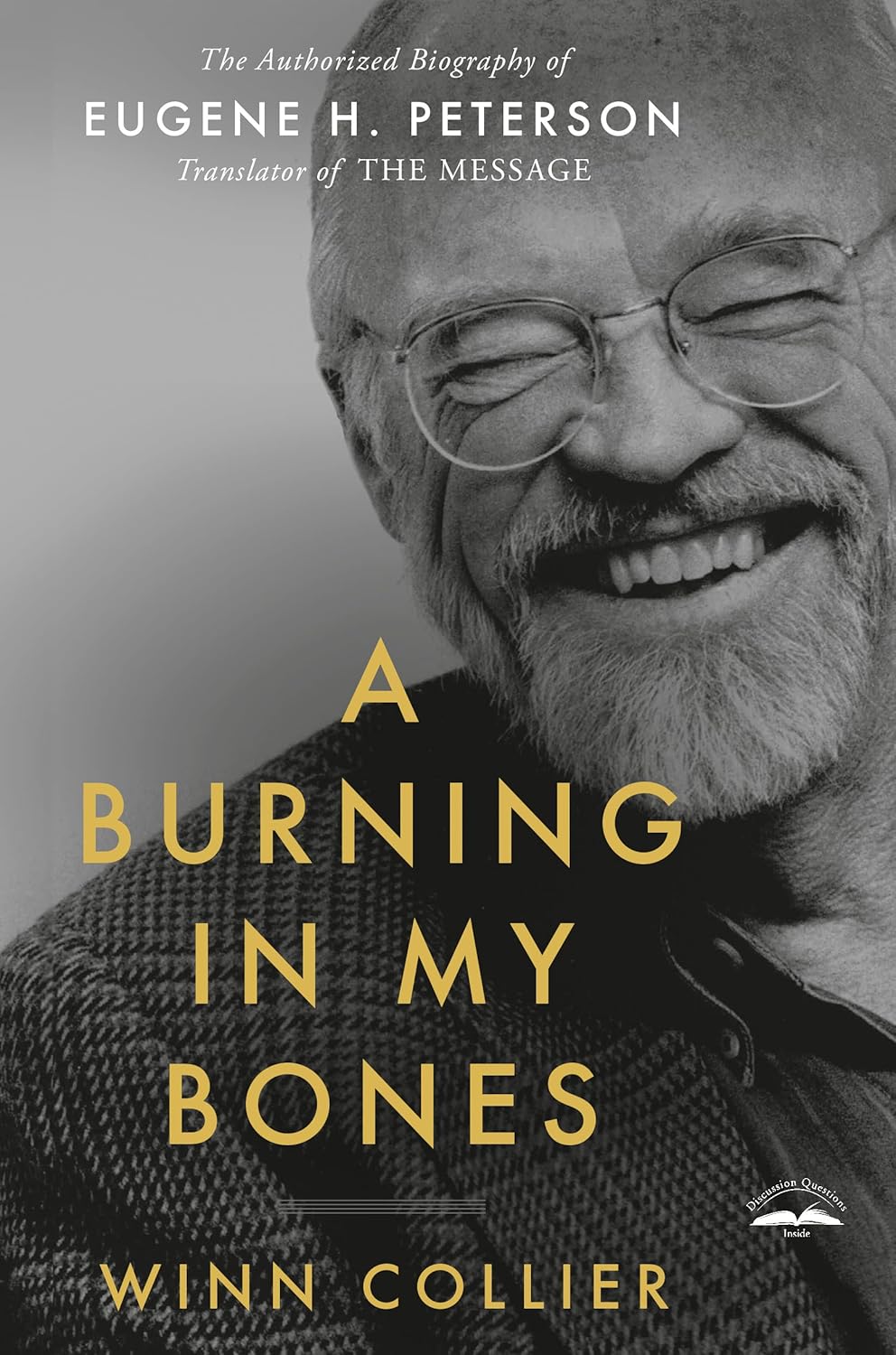
 Summary: The first full (and authorized) biography of Eugene Peterson
I have long been a fan of Eugene Peterson. There is something about him and his imagination of what it means to be the church and what it means to pastor people that resonates with me deeply. When his memoir came out, I read it twice in less than six weeks and then again about six months later, and I have read it at least once since then as well. I can’t think of any other book that I read three times in less than a year. So when I heard about a new biography, I jumped at the chance to get an advance copy.
It has been about a month since I started and about 2-3 weeks since I finished the book. I have been sitting with it. My last meeting with my spiritual director primarily talked through my response to it. One of the thoughts that came to me as I was reading was that in many ways, without really using the language of spiritual direction (although he does have one book where he does talk about spiritual direction), I think his pastoral method was spiritual direction. If you are not familiar with spiritual direction, that doesn’t mean anything. But to me, who is in training to be a spiritual director, it was revelatory to what draws me to his approach so strongly.
The early chapters, on Peterson’s childhood and family, felt light and almost verging on hagiography. There were problems identified, especially the distance between Eugene and his father and between his father and mother. But his childhood was presented as near idyllic. Collier points primarily to Eugene’s mother as his spiritual teacher, in part because the church does not seem to have mattered much at all. But something drew Peterson to God in ways that we can see both here and in The Pastor. But in neither was I really satisfied that it was explored enough.
In the college, seminary, and early years of the pastorate, I think there is a much clearer grappling with the whole of the man that became, eventually, the Eugene Peterson that many of us hold as a saint and mentor. I am not going to retrace his story in detail. I will re-read A Burning in My Bones again when it officially comes out on March 23, and maybe I will write about the book again then and trace it a bit more clearly.