The Art of Letting Go: Living the Wisdom of St Francis by Richard Rohr

Summary: A series of six lectures on spiritual development.

Just over a year ago I first listened to The Art of Letting Go. And at the time I absorbed much, but also thought I needed a second listening. So I have slowly listened to this a second time over the past two weeks.

The strength and weakness of the book is its format as lecture/conversations.  It is formated as six lectures for those that would like to go on a spiritual retreat with Rohr but cannot. Rohr is clearly working off of notes but does tend to go off those notes occasionally and is not always as precise about his language as he could be. But at the same time this is very conversational and relaxed in tone.

One of the things I appreciate about reading Catholic priests and monks is that the Catholic church is much more comfortable with psychology and philosophy than the Evangelical world. But the flip side of that is that the language used by Catholics often has slightly different meanings (usually more precise academic meanings) than many Evangelicals are used to.

Read more

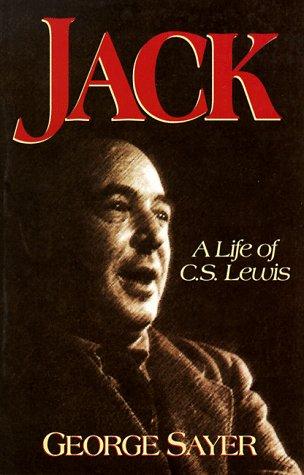
CS Lewis: A Life by Alister McGrath

Summary: An important, highly readable biography of Lewis.

More than several people agree that this is the best Lewis biography to date (see links below).  So far I have not read any negative reviews of Alister McGrath’s new biography.

McGrath unlike previous biographers was not a friend, student or family of Lewis.  And unlike previous biographers McGrath had access to an enormous library of Lewis’ correspondence which has led to a new understanding of Lewis.

McGrath also is planning a second, more academic evaluation of Lewis, so this book is written as a popular biography.  If there is a weakness of the book it is that it does not go into as much depth as I would like it to about several areas.  His spiritual development as a young Christian, how Lewis related to his step sons both before and after their mother’s death, and his theology are all areas I would have liked more depth. (Bookwi.se Note: I read A Life Observed: A Spiritual Biography of CS Lewis by Devin Brown after writing this review and it is a good supplement in this areas.)

Read more

Tenth of December by George Saunders

Takeaway: Another short story collection I didn’t like, surprise!

Anyone that has read my blog regularly over the past year or so will not be surprised that I didn’t like another collection of short stories.  That makes me 0.5 of 5 this year.  And it is not that the collections were poorly reviewed or by bad writers.  The collections I have read over the last year were by PJ Wodehouse, GK Chesterton, Dorothy Sayers, and Flannery O’Connor and now George Saunders.  (Technically the Flannery O’Connor was a few days over a year ago.  And it was definitely the one I liked the best of the five.)

Given my general dislike of short stories you as reader are probably tired of me posting about not liking them.  But I keep wanting to read books that are well reviewed and generally loved.  Karen Swallow Prior gave Tenth of December very good review at Books and Culture. And it one the 10 best books by New York Times Book Review as well as winning some other awards.

Read more

The Man Who Knew Too Much by GK Chesterton

Summary: A collection of 8 short stories (mysteries) centered around the character Horne Fisher, someone that knows everyone and know why the system usually frames the wrong person.

I have been getting a bit bored with my standard fare lately so I keep switching books in rapid succession trying to find the right book to hit my mood.

The Man Who Knew Too Much was not it.  But the stories are relatively interesting.  I am not a fan of short stories.  I like more character development and a longer story arc.  But I enjoyed Chesterton’s Father Brown Mysteries so I gave this a try.

Horne Fisher is an intelligent, upper crust Englishman.  He “˜knows too much’ about how things work and who is behind them.  So these are a fairly cynical bunch of stories mostly centered around how those with money and power can get away with things that other cannot.

But Horne is there to explain and figure out the solution that sometimes puts the real person back in the spot light, although in the cases that I listened to it wasn’t about putting them in jail or punishing them, but simply identifying them, often because the guilty party is either already dead or in some other method has already received their ‘reward’.  These stories are more about the why something was done than the how of Sherlock Holmes stories (so still a similar different as the Father Brown stories.)

Read more

2001: A Space Odyssey by Arthur C Clarke

2001: A Space Odyssey by Arthur C ClarkeTakeaway: The unknown may be the greatest horror of all.

I am a fan of science fiction.  And I know I have seen 2001 at least twice.  But I did not really remember much about it outside of the main story and the beautiful space shots.  So when it was the Kindle Daily Deal last week I picked up the kindle version.  And since the audiobook was discounted to $1.99 with purchase of the kindle book I picked that up as well and alternated between reading on kindle and listening to the audiobook.

(If you have a kindle and like audiobooks you really should try whyspersync.  It is Amazon’s ability for you to move seamlessly between your kindle and audible.com audiobook without losing your place. I have started using it quite a bit.)

This edition of the book opens with an introduction by Arthur C Clarke.  He read the introduction in 2000 (when he was 82 and 8 years before he died.)  In audio, it is actually him reading the introduction and his age is evident.  I had no idea that the book and the movie were written together at the same time.  Clarke and Kubrick made changes to each in order to incorporate elements from one into the other.  But there are differences and I will go back and watch the movie soon.

Read more

Mere Christianity by CS Lewis

Reposting this 2013 review because the Kindle Edition in on sale for $4.50

Mere Christianity by CS LewisSummary: A classic book of apologetics.

I know it is near heretical in some Evangelical circles, but I have never read Mere Christianity before.  As you are reading this I should by Kayaking around a small island in Georgian Bay of Lake Huron.  This is my 20th trip with my guy friends from College.

For the past couple years I have conned them into reading a book prior to the trip to give us something to discuss.  Since I have some influence and there are two pastor’s kids, a missionary, and a hebrew professor in the group we read theology.  We have read Scripture and the Authority of God and The Lost World of Genesis One (which sparked online discussions of The Bible Made Impossible and Incarnation and Inspiration).

This year we decided to read Mere Christianity.  I think only one of us had previously read it.  Prior to the trip I listened to it on audiobook and then re-read it on kindle on the plane ride.

I understand somewhat why it is a classic.  In part, because huge sections of the first part (the more general apologetics section) I have heard in one form or another. So Lewis’ arguments are either standard arguments about God or those that are original have been repeated so much over the past 60 years that they sound standard.

Read more

Citizen Insane by Karen Cantwell

Summary: A suburban housewife and her two friends find out that their neighborhood struggles (PTA, school year books, crazy neighbors, etc) all might be connected to a much deeper problem than they could have expected.

I am very careful with my purchases of books.  Because I aways have a few (hundred) books that I could fall back to reading from my library, I tend to only buy books when they are on sale or I really have a specific interest.  But I also tend to always pick up free Audible credits or promotional books.  Recently there was a $10 promotional credit for Audible.  And I used it to buy audio companions to books that I already had on Kindle, but I had not ever gotten around to reading.  I try to be adventurous because after all I didn’t pay for the credit, I might as well go out of my standard reading practice.

As I have said recently, nothing lately has really been pricking my interest.  Usually when I get in this mood I need to find something funny.

Citizen Insane was billed as a funny cozy mystery.  It is about Barb, a suburban housewife, mother of three and wife of an FBI agent that is a dead ringer for George Clouney.  This is the second book in a series (didn’t realize that when I picked it up, but the first book, Take the Monkeys and Run is free on Kindle). The books in this series are relatively short (less than 200 pages) and funny (almost farcical) look at suburban life.

Read more

Ignorance: How It Drives Science by Stuart Firestein

Summary: It is ignorance, not knowledge that really drives science.

Stuart Firestein is a professor of Neurobiology and a researcher.  At one point he realized that he loved doing research and coming up with new things to research and questions to ask.  But when he taught his upper level undergrads about Neurobiology he tended to focus not on the questions and what was unknown and where the science was going, but on the facts.

He realized that this gave students the impression that what was important was gaining a foothold in the facts so that they could grasp the concepts of the field.  But what he needed to be teaching them was not the facts (although they did need basic information and concepts that were important), he needed to be teaching them wonder and sparking the creative ideas of his students and helping them understand that no matter how much we will learn, that the very fact of learning opens up new areas of ignorance so that there will never be a point when science has solved all the questions of particular field.

The book is split into two large sections, the first is a description of what Ignorance is all about. Eventually, Firestein started teaching a class on ignorance. He would bring in prominent scientists in their field and talk about what was unknown, what areas were driving their research, what things that scientist would love to know, but can’t because of limitations of equipment or observation.  Essentially, the scientists talked about all the areas of their field that they were ignorant of and how that was driving their science.

Read more

Waterfall: A Novel by Lisa Bergren (River of Time #1)

Summary: A surprisingly prepared 17 year old gets sent back into time to 14th Century Italy.

I have a pretty high tolerance for cheesy stories. But Waterfall really pushed the cheesy factors. I was pretty tired of all the teen slang that felt like it was included to try and be more authentic, but ended up being annoying and making the book feel younger and less professional.

Gabi is a 17 year old daughter of a pair of archeologists. Her father recently died and she and her sister and mother are on site in Italy trying to excavate an ancient tomb. While exploring the tomb, Gabi and her sister touches the wall and somehow Gabi gets sent back to 14th century Italy. When she walks out of the tomb she is in the midst of a small battle between two neighboring keeps (and her sister is no where to be found.)

Read more