God’s Life in Trinity edited by Miraslov Volf

God's Life in TrinitySummary: A series of 18 essays about the implications of the Trinity of a variety of areas of a theology and practice.  Compiled in honor of Jürgen Moltmann’s 80th birthday. 

There were two reasons I picked up this book.  One, I am trying to read about the Trinity as part of my annual reading goals.  Two, I am reading it because Miroslov Volf’s name is on it.  I have been hearing about Volf for a while and just have not had a chance to read him.

Volf is a professor at Yale and is best known for his work in the areas of social Trinity and forgiveness (Exclusion and Embrace, The End of Memory and the less academic Free of Charge).  He also has controversial book on Christian response to Islam (Allah) and a well reviewed book on Christianity and the Common Good (Public Faith).

What is interesting to me about Volf is that he is academically responding to real issues around him.  Volf was born and raised in what is now Croatia.  He studied in Germany under Jürgen Moltmann and eventually came to the US to teach at Fuller until moving to Yale in 1998.

Read more

Sound the Holiday Alarm

A friend of mine is trying a digital experiment with his latest book.  Dan Mayhew is releasing it as a serial.  The first chapter is free and you pay $0.40 for each additional chapter. I strongly recommend Dan’s other books The Butterfly and the Stone (about parenting a prodigal), Sword of Submission (which I have … Read more

Theology of the Body for Beginners by Christopher West

Theology Of The Body For BeginnersSummary: Very helpful, quick overview of John Paul II’s theology of the body.

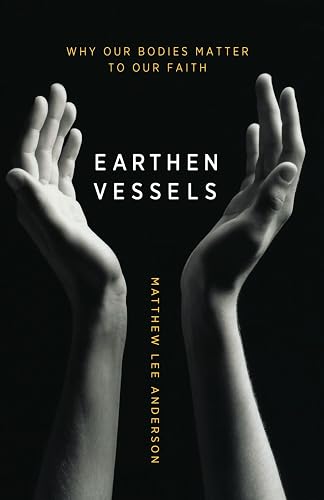
I purchased this about a year ago after I read Matthew Lee Anderson’s very good Earthen Vessels: Why Our Bodies Matter to Our Faith (first review, second review).  I was looking a basic introduction to John Paul II’s Theology of the Body and Christopher West has written several books on it.

The book sat on my bookshelf for a year but I read it very quickly once I picked it up. Overall I this was a good book.  I highlighted and marked up the book quite a bit (and then left it with my Dad while visiting for Thanksgiving, who was also interested in reading it.)

So I don’t have the book notes.  From memory, the strong points are Marriage as a divine gift, the strong idea about how celibacy fits into that sacramental view of marriage, the way that God designed the body and the ways that sin and redemption of have affected our subsequent view of body.  All of that really is good, fits well within the Christian (and Evangelical) theology and I think strengthens our theology.

Many place the book was quite beautiful in its descriptions of the body, marriage, sex, and God’s love for us.  I think that beauty is something that is often missing in our Evangelical descriptions of the body.  We get erotic, physical, dangerous; we miss the beauty.

Read more

More Best of 2012 Books Lists

Slate posted their Best Books of 2012 and then the Most Overlooked Books of 2012.  That along with the New York Times Lists of Best Children’s Books and 100 Notable Books of 2012, The 2012 National Books Award Winners and the Amazon Lists of Best Books of 2012 and Best Children’s Books of 2012.  There are some … Read more

The Knockoff Economy: How Imitation Sparks Innovation

The Knockoff Economy: How Imitation Sparks InnovationSummary: Fascinating look at creative areas of the economy where copyright and patent law do not apply.

According to the common line of thinking, without copyright and/or patent law there would be no incentive to create.  The authors of this books are not completely dismissing this claim.

Instead they are following creative industries where copyright and patent law legally are not applicable.  The areas explored are fashion (you cannot copyright a ‘useful object’), food (you cannot copyright a series of instructions), football (theoretically you can copyright choreography  but no one has tried to do this in football), open-source software, magic and comedy.

All of the areas are very creative, and all are thriving.  The authors look at the way that alternative means are used to reward creativity and limit inappropriate copying.

Read more