There is a report about Laura Anderson’s ethics violations as a therapist that I think is worth paying attention to.
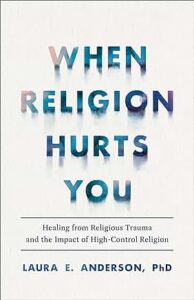 Summary: High-control religious communities can create harm, but there are ways to move toward health
Harm from religious communities and individuals is not a new concept. However, recent increased attention to sexual abuse within the Protestant church and earlier public Catholic cases has drawn attention to the ways that church government and church systems can foster abuse of all sorts. Laura Anderson is primarily writing to help people recover from high-control religious communities, but there are principles here that are broader than that.
Anderson is not avoiding the term trauma (it is in the subtitle), but she is also trying to suggest that there are different levels of harm and that the response to that harm can be different. Two people can grow up and experience the same home, but one can be traumatized by practices that are not traumatizing to the other, even if the practices were applied to both. Part of the difficulty is that the word trauma has shifting meanings, so a more general “harm” can be helpful to apply to more than just legally documented abuse.
One of my takeaways from When Religion Hurts You is that high-control religious communities control as a means of protection and mission. There are evil people who are trying to control people and build their power for their own selfish purposes. But I think more often, people are attempting to help others and fulfill the church’s mission from their perspective. This happens by setting up boundaries to prevent harm, which becomes rigid rules that can themselves become harmful.