All the Devils Are Here by Louise Penny (Inspector Gamache #16)

Summary: As Gamache and his wife visit Paris to await the birth of their grandchild, crime continues to happen.

Louise Penny is one of my favorite fiction authors at this point. I can’t think of another author that has managed to keep my attention 16 books into a series. I am been reading far too few fiction books lately. There are many reasons for that, but I do believe that fiction is essential. It is how we understand parts of the world that are not our own as well, giving words to help us make sense of the elements of the world that are our own. I was thrilled that Netgalley has started offering audiobook to review. I was desperate for a change of pace, and while a crime thriller isn’t what I would call relaxing, it was the change of pace I needed. I finished the 14-hour audiobook in three days. I would not recommend jumping into the 16th book in the series; there are too many details that you will miss.

Armand Gamache and his wife Reine-Marie are visiting their two children and their families, both of whom now live in Paris. Armand inherited a small apartment from the woman that raised him after his parents died when he was 9. And his godfather, recently introduced in the past couple books, also has an apartment here. His godfather is now a mostly retired 95-year-old billionaire who was once an impoverished German teen who reportedly worked with the French underground during WWII. Through his excellent business sense and a sense of justice, Stephen Horowitz brought down companies and became wealthy.

Read more

Sex and the City of God: A Memoir of Love and Longing by Carolyn Weber

Summary: Follow up to the earlier memoir, Suprised by Oxford.

I do not remember why I originally picked up Suprised by Oxford. It was probably a book I chose to review. But in the decade since it came out, I have read it three times, I believe. I have given away several copies, and I have recommended it to many. I think I will read pretty much anything that Carolyn Weber writes. She is a writer of both skill and insight.

Sex and the City of God is a follow up to both the love story with God and TDH (Tall, Dark, and Hansome.) If you are reading this as a follow up to Surprised by Oxford, which I recommend, you know that they are going to get married eventually. That lack of suspense did not impact my reading or my enjoyment of the story.

Like Suprised by Oxford, there are plenty of references and allusions. As you might expect from the title, Augustine is a particular conversation partner. Weber balances the story of her relationship with her now-husband with the relationship with her creator. This is intentional throughout because she wants to parallel how marriage is like our relationship with God. I do like the spiritual exploration in real life metaphors. It is part of how I like to think about both religious life and how I want to ‘seek God in all things.’ Christianity Today had a positive review but had a few reservations because the reviewer thought that at times there was a tension between the story and seeking God in that story.

Read more

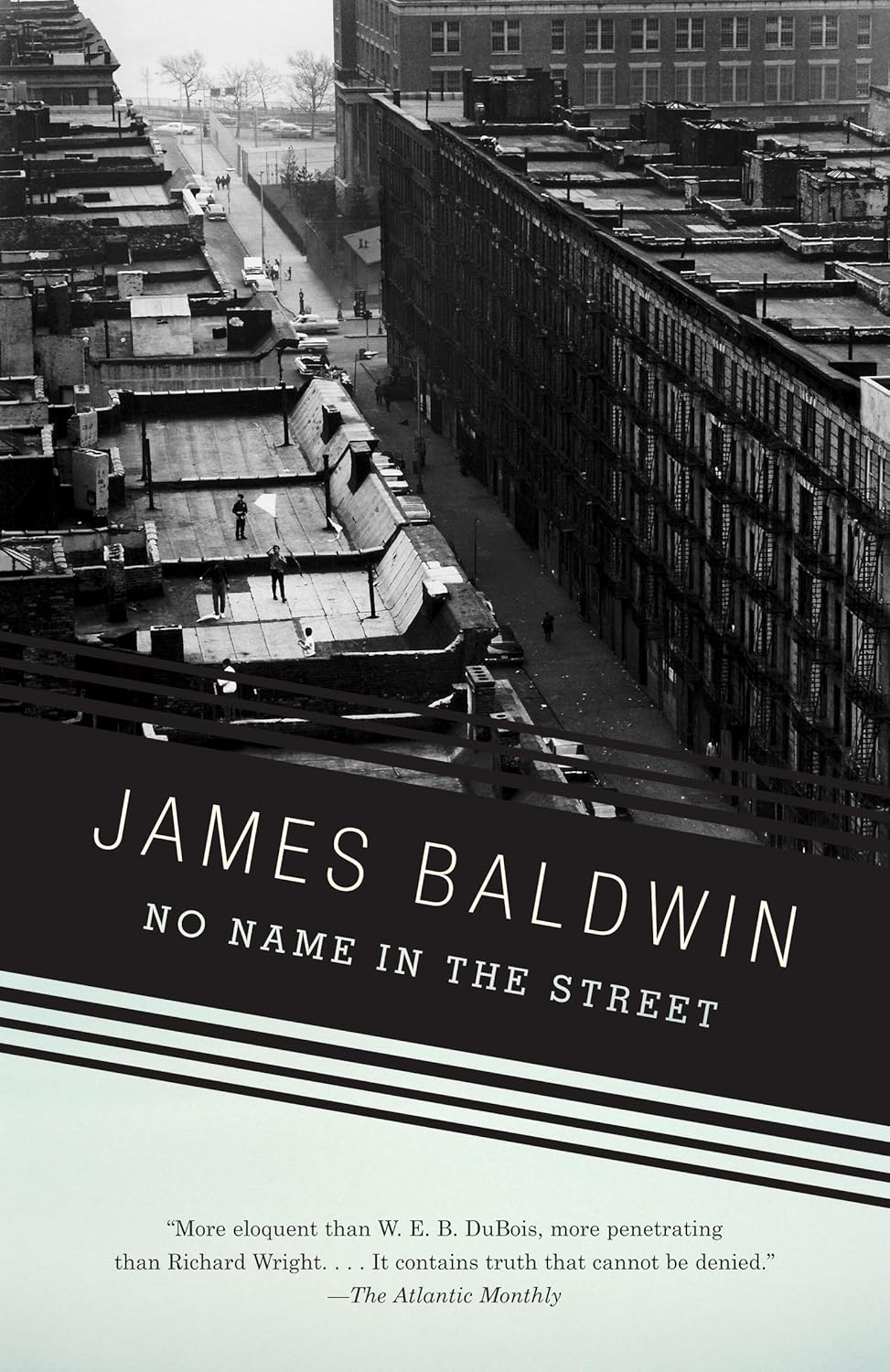
Begin Again: James Baldwin’s America and Its Urgent Lessons for Our Own by Eddie Glaude Jr

Summary: Exploration of why James Baldwin resonates so strongly.

Begin Again is the second of Eddie Glaude’s book that I have read. I appreciate Democracy in Black but thought when I read it that it may have been written a couple of years early because it was writing about how democracy still perpetuates racism during the Obama years. And reading it in the Trump years meant that I thought he was right, but not quite pointed enough.

Because there are few writers that I am fascinated by more than Baldwin (although he is not an easy read), I was interested in a trusted guide. That is what Eddie Glaude was seeking to do. He was both explicating Baldwin, but also placing him in context for a modern reader who is reading Baldwin years after his death and a half-century after he impacted the world.

Read more

Jesus and John Wayne: How White Evangelicals Corrupted a Faith and Fractured a Nation by Kristin DuMez

Summary: American Christianity has slowly adopted a Jesus that looks and acts a lot like John Wayne, and that has distorted Christianity.

When I first heard about Jesus and John Wayne, I had it connected to books on Christian Nationalism, like Taking America Back for God, maybe because that is how Matthew Lee Anderson framed his review in Christianity Today. That isn’t entirely wrong, but I am not sure it gets the main point of the book any more than framing it as an Anti-Trump book as this review does. The book opens with a vignette about Trump’s 2016 statement “I could stand in the middle of Fifth Avenue and shoot somebody, and I wouldn’t lose any voters, OK?”

Jesus and John Wayne isn’t so much about Trump, or John Wayne, as much as it is about how since the 1950s, Evangelicalism in particular, and Christianity more broadly, has culturally embraced a concept of militant masculine Christianity, a ‘bad-ass Jesus’, as a central image for its discipleship and evangelism strategy. The movement to save America (yes Christian Nationalism is a component of the book), has been a reactive one. Whether it is communism (they are atheists, so the US needs to add ‘Under God’ to the pledge), or feminists (so we need to emphasize complementary gender roles and patriarchal authority), or loose sexual morals (so we emphasize purity and ‘kiss dating goodbye’), the point is that the Christian church in the post World War II era has not created a positive message of Christianity so much as looked at culture and done the opposite. Except when it hasn’t.

The ‘when it hasn’t’ is also essential. Because culture has embraced the individual macho man, whether it is John Wayne as the soldier or cowboy or the behind the scenes savior like Jack Bauer or James Bond, or the father with a very particular set of skills that will pursue his daughter’s kidnappers in Taken, the individual who can save us is part of the American mystique.

Jesus and John Wayne is a history book. It is tracing the 75-year history of the development of Evangelical conceptions of gendered leadership, which has resulted in widespread support of a president who does not match Christian theological or virtue ideals but is “somebody who is able to fight back” or phrased differently, ‘the US needs street fighters like @realDonaldTrump.’ The main focus of Jesus and John Wayne is the gendered conception of leadership and the way that the emphasis on exaggerated gender role divisions has distorted Christianity.

I am not going to trace the full history developed in the book. It traces the development of opposition of ERA and abortion, the embrace of Reagan (as an overt parallel to John Wayne) and his manly man soldier doing what needs to be done in Oliver North, the rejection of ‘softer’ parenting styles with James Dobson and the Pearls, Promise Keepers’ focus on men taking back leadership of the family, the later rejection of Promise Keepers as too tender and the embrace of ‘No more Christian nice guys’ and ‘spiritual badasses.’

Read more

Intersectional Theology: An Introductory Guide by Grace Ji-Sun Kim and Susan Shaw

Summary: The how and why of intersectional theology.

There is lots of conversation right now about Critical Theory especially as it is related to the more recent development of Critical Race Theory.  I am far from a scholar about either, but I have done long form reading and a lot of short-form, podcast, and video learning, and to my untrained eye, Intersectionality is the most helpful and arguably the most misunderstood aspect of Critical Race Theory (CRT).

I am not going to fully explicate this book. I would need to read it again to do a better job at that. But I do have 50 highlights or notes that are public from the book.  One of the aspects of discussing Intersectionality that is difficult is that there is a lot of particular languages that have different uses depending on the section. The implication of that is that it is rare for there to be pithy quotes, not just because of the jargon or technical language, but because internally to many quotes, there has to be the nuanced explication of what is and is not being said at any point. I found myself often highlighting not just whole paragraphs, but often whole pages to make sure I had enough to make sense of the idea later when I want to look back.

A good example of this is the following quote that sets up the book:

For most of Christian history, written theology has been the purview of educated, heterosexual, white, Western men. Challenges to the homogeneity of Christian theology arose in the mid-twentieth century through theologies of liberation that gave historical and social context to those doing the theologizing. Latin American, feminist, minjung, womanist, mujerista, and queer theologies emerged to contest the assumed neutrality and objectivity of white, male theologies. Recognizing the importance of social location for how theology is done and its contents, these theologies centered the marginalized and articulated theologies from below. While the center shifted to diverse identities, these theologies still tended to be mono-focused, or what feminist scholar Vivian May “gender first” or “grace first,” an approach that gives priority to one facet of identity as explanatory for experiences of oppression. And so, white feminists often wrote about gender as if it were a monolithic category, overlooking or minimizing the ways race and sexuality shape individuals’ experiences of gender. Latin American liberationists wrote within a context of struggle in Central and South America but did not address the role of gender in the ethnic and class struggles of Latin America…Rather than applying “single-axis” thinking, intersectional analysis relies on “both/and,” an analytical lens that allows for the complexities and contradictions of holding positions of dominance and subordination at the same time and having those concurrent locations mold and fashion experiences that are not race or gender or race plus gender but are rather the confluence of race and gender into something that is both and neither.

Read more

Healing Racial Trauma: The Road to Resilience by Sheila Wise Rowe

Summary: Trauma is real; some of that trauma is based on racism or white supremacy; the hard work of healing is essential, not just for individuals but also for communities and future generations. 

I have recently joined a Be The Bridge group. Part of the method of the group is to acknowledge history and lament that history. I was asked to do a short presentation on lament. Because I had meant to anyway, I started re-reading Soong-Chan Rah’s Prophetic Lament. The opening of Prophetic Lament was helpful, but I was seeking out other resources and saw the chapter on Lament in Healing Racial Trauma. After I finished that chapter, a friend commented about how helpful she found the book as a whole and how she was leading a small group through the book. So I decided to move the book up on my list.

Part of being slow to pick up Healing Racial Trauma is my identification of racial trauma primarily with racial minorities. Most of the examples of this book are of racial minorities, but that does not mean that this book is not for those with less melanin. The strong theme throughout the book is that healing is not only for yourself (although it is that as well) but also for your community and future generations. Breaking cycles is tremendously hard, but if we want healthy communities, churches, institutions, and families, we have to do the work of breaking cycles. That means that we have to do the hard work of internal healing, which is related to communal healing.

Read more

White Christian Privilege: The Illusion of Religious Equality in America by Khyati Joshi

White Christian Privilege: The Illusion of Religious Equality in America by Khyati Joshi cover imageSummary: Discussion of the cultural and real privilege of being a White Christian (or at least conversant in Christianity) in America.

I recently read Taking America Back for God, a book about Christian Nationalism, and when I was writing up my review, one of the books recommended was White Christian Privilege. I did not know anything about the book or author, but it fit in my recent reading, and I picked it up.

The author is a second-generation immigrant from Southeast Asia. She grew up in Atlanta and now is a professor specializing in race and religion. The book’s premise is explained well by the title: religious liberty is illusionary in the US because it is primarily rooted in the freedom to be Christian. White (Protestant) Christians are the default state, and others tend to be religious in relation to Christianity. (Robert Jones’ book The End of White Christian America tells the opposite side of this story.)

White Christian Privilege will not be received well by many who believe that Christianity is under attack or persecuted. And there is some small sense that demographic change is impacting the dominance of White Christians to some extent (the demographic trends are the primary focus of Jones’ book). However, demographics do not show the privilege that Christianity has baked into the United States culture and history.

There are legitimate arguments about whether the US was founded as a ‘Christian country,’ but culturally, Christianity was normative (the default cultural expression.) While there have been Native Americans, Jews, and Muslims from very early in US history, Christianity has been dominant. So, Christian assumptions about how religion works have also been normative. Christian holidays are national holidays (and Hindu holidays are not, and often not even known). A Hindu woman who wants to celebrate Diwali must request time off from work, but Christmas is a national holiday, and the workweek is oriented around the Christian calendar. These assumptions are not consciously chosen or intentionally discriminatory but have an impact. (Similar to how crash test dummies were modeled initially after adult males and only later have changes been made to include women and children when it became clear that the single choice of crash test dummies negatively impacted women and children).

The narration of religious liberty cases from the Supreme Court was particularly striking because I heard several people recently talk about how the Supreme Court has ruled so clearly for religious liberty recently. But the choice of which cases to include as religious liberty cases in those recent articles has been biased toward Christian cases, and religious liberty cases for others were not counted as losses.

Read more

The Way Up Is Down: Becoming Yourself by Forgetting Yourself by Marlena Graves

 Summary: An exploration of Kenosis, voluntary self-emptying, a renunciation of my will in favor of God’s.

Kenosis has a long history. Biblically, it is rooted in Philippians 2 with Jesus ‘giving up’ his divine being and ‘adopting’ a human form. The language has always been challenging because it is inadequate to represent what is going on entirely. Jesus did not cease to be divine when he became human. The adoption metaphor has weaknesses because there is a history of its use as a means of denying that Jesus was entirely God or that he was created, not eternal.  But despite the inadequacy of the language around Kenosis, the concepts underneath it are important. Jesus’ prayer, “not my will, but yours be done,” was not a denial of his divinity but the fulfillment of it. If Jesus could empty himself of his will in a biblically appropriate way, then we, as entirely created, should also think about how we appropriately give up our own will.

Part of the problem of discussing Kenosis isn’t just the inadequacy of the language but the history of abuse. Kenosis has been used to justify abuse and oppression throughout Christian history. It has been used to tell slaves to submit to masters or to perpetuate economic or cultural inequity. It has been used to support gnostic leaning beliefs around the sinfulness of the body or patriarchal attitudes toward women. It has been used to deny people the right to justice in regard to sexual and other forms of abuse inside the church.

It is in part because of this misuse of the concept that I am reluctant to read white males talk about Kenosis and why, despite a bit of reluctance to initially pick up The Way Up Is Down, it is important that a Puerto Rican woman writes this book. As I have said frequently, I am midway through my training to become a Spiritual Director. The literature on spiritual direction and spiritual formation is overwhelmingly from a White male perspective. Most of my non-assigned reading has been an attempt to make up for the weaknesses of my assigned reading. Marlena Graves is a pastor and professor of spiritual formation. As far as I am aware, she is not a spiritual director (it is not explicitly mentioned in the book that I remember), but the type of spiritual wisdom throughout the book is in that vein.

Read more

A Multitude of All Peoples: Engaging Ancient Christianity’s Global Identity by Vince Bantu

Vince Bantu was fired for misconduct by Fuller and had previously been been forced to resign from multiple other jobs for similar types of misconuct. This appears to be a pattern that would make me not recommend his work. You can read more here.

Summary: Exploring early Christianity’s history, beliefs, and geography.

Christianity has always been a global religion, despite many believing that it is only recently that the universal nature of Christianity has learn.  A Multitude of All Peoples is not the first book of this type, but of the couple that I have read, I think it is the most helpful. Philip Jenkins’ Lost History of Christianity looked at the demographic history of Christianity. Still, it did not engage the theological content of Christianity as well as A Multitude of All Peoples does. Thomas Oden’s How Africa Shaped the Christian Mind is a narrower type of book, not just only looking at Africa, but also trying to justify more research into early Christianity in Africa.

The book opens with a discussion of the importance of understanding that Christianity has always been a global religion instead of the misplaced understanding that Christianity only came to Africa and Asia from European missionaries. Christianity misconstrued as only a western religion, is a severe stumbling block to formally colonialized or oppressed people. Also, the long history of Christianity’s relationship to culture needs the history of local adaptation and enculturation, both in positive and negative ways, to give insight into how Christianity works in culture. Bantu ends the book with some of this discussion, and while I read more to understand his result better, his interaction with other perspectives is helpful.

Bantu has a couple of significant strengths. One is that he is concentrating not just on those Christians that spoke Greek or Latin or interacted with European Christians like Augustine or Athanasius, but also those that spoke languages that are relatively new to western study. There was a far more detailed history here than what was in either of the two other books.

Second, A Multitude of All Peoples looks at the theological disagreements, not just as religious, but also linguistic, cultural, and political. This plays out too often when Christians moved into roles of power within a state and then used the power of the state to persecute their political or theological opponents with the same tools of oppression used against them. Egyptian, Shenoute of Atripe, justified violence against non-Christians and even against other Christians as the will of God. (He killed one of his fellow monks during a physical punishment.) Part of this is how Christians viewed the state. Bantu shows that Eusebius identified the Roman Empire, “an eikon of the Kingdom of God.”

The view of the state and the church becomes so entwined that it is difficult to separate one from the other. This happened not just within but also outside, as political enemies saw Christianity (or particular expressions of Christianity) as so connected with the state that it caused  (or justified) Christian persecutions. For instance, the Persian Empire persecuted Christians because of the Christian connection to Rome, or Mongol protection of Christianity resulted in Christianity being wiped out in China after the fall of the Mongol Empire. (Constantine sent a letter to the Persian emperor suggesting that Christians in Persia would be more loyal to Rome than to Persia and suggested at the same time to Christians that it was God’s will that they are politically loyal to him because Rome was a Christian empire.)

Read more