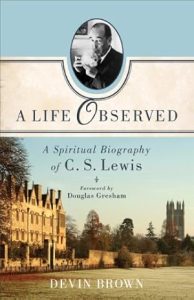
A Life Observed: A Spiritual Biography of C. S. Lewis by Devin Brown

Takeaway: Lewis really was a gift to the church as a whole.

This year is the 50th anniversary of CS Lewis’ death. So there have been several new books on Lewis.  Alister McGrath’s new biography was excellent. But there were two places where I wanted more from McGrath. One was more about Lewis’ relationship with his two stepsons (Douglas Gresham introduces the book). The other was more about Lewis’ spiritual development, the focus of this book.

The format of A Life Observed is to use a rough outline of Lewis’ two most biographical books, Surprised by Joy and A Grief Observed. Lewis wrote Surprised by joy as a spiritual autobiography. But it only goes through Lewis conversion to Christianity. He lived another 32 years after that. And A Grief Observed is his raw journals after the death of his wife near the very end of his life.

The middle of his life, in between his conversion and his marriage to Joy is really what I wanted most. There is the chapter on the Inklings, Lewis and Tolkien’s literary club and circle of friends. Brown talks about Lewis’ commitment to his local church, not the university church. In passing, it is mentioned that Lewis had a single spiritual director throughout his life, but only in passing.

Brown resists moving beyond what Lewis actually says about himself. And mostly I appreciate that. But it leaves large gaps in the story. Because Lewis did not write a lot about his Christian life, Brown does not write a lot about his Christian life.

But what is here, is very good. This is not simply a retelling of Lewis’ own story. It is an explication of Lewis’ story. There are quotes and referenced to one of Lewis’ books or one of his letters on virtually every page. But it does not feel like quote after quote, it feels like Brown is weaving together the fiction and the non-fiction of Lewis into a whole that more completely reveals Lewis.
Read more

Lock In by John Scalzi

I am reposting my 2014 review because the Kindle Edition is on sale for $2.99.
Summary: A flu-like virus (Haden’s Virus) leaves millions without the ability to move. With the assistance of robots and human “˜integrators’, Haden’s sufferers can move around and interact and lead somewhat normal lives. But never with their own bodies.
I am a big fan of John Scalzi. And Lock In lived up to the very high level of promotion that Audible gave it.  Audible made the unusual choice of producing two different editions of the book.  One narrated by Wil Wheaton and one narrated by Amber Benson. If you pre-ordered one of the editions, you would get the other for free.

Scalzi is a talented writer. He has moved around in various subsets of the sci-fi genre, from Military Science Fiction to near term Alien encounters, to rewrites of classic sci-fi.  Lock In is more of a police procedural (or FBI to be more accurate) that happens to have a near term sci-fi setting.

The Hadden’s syndrome has forced the FBI set up a department to deal with crimes that might involve the Hadden’s sufferer using the body of either their robot or a human integrators. Chris Shane (a Hadden’s syndrome sufferer) is a new member of this FBI department.

Shane happens to be the poster child for Hadden’s, literally.  Shane’s father is sort of a cross between Michael Jordan and Donald Trump. A former basketball star, turned billionaire real estate mogel, he was an early proponent of government intervention in Hadden’s and trotted out Chris (in a robot body) throughout childhood.

As an adult, Chris is trying to find his own way in the world.

While this is primarily a mystery/thriller, Scalzi uses the book to bring up a number of issues around medical ethics, medical testing, the role of government and business corruption. None of those issues are really settled, but I think the raising of the issues is done well and in context of the story and not as propaganda.

Read more

Read Again: You Are What You Love by James KA Smith

You Are What You Love by James KA Smith

Takeaway: Expressive Worship and Formative Worship, while both valid, have different purposes.

It is good to re-read books. I can not remember where I read it, but I remember a discussion about the difference in reading habits of people a couple hundred years ago. The short version is that books used to be very expensive. So you would read and re-read a book several times because you only had a few options of what books to read.

Today books are cheap. I routinely pick up books for a couple dollars or even free. So we tend to read a book once and move on to the next idea. I have put a goal on myself to re-read at least one book a month. I rarely re-read books quite that often, but almost every time I re-read a book I am reminded about the importance of re-reading. Maybe others are more careful readers than I am. But I almost always find significant ideas that I either missed on the first reading or I have forgotten.

The most important idea from You are What You Love that I missed on the first reading is the clear understanding of the difference between what Smith calls Expressive and Formative worship. For Smith, expressive worship, the predominate focus of modern evangelicals, is about the importance of bringing praise to God. Smith does not say it is wrong to expressively worship. But he is not sure that expressive worship should be our primary focus and this is for several reasons. 1) Expressive worship is focused on what we do for God instead of what God has done. 2) Because of our age of authenticity, the temptation for expressive worship is to always seek out the new and innovative because repeated expressive worship feels less authentic.  3) Because of point one, the only real place for the congregation to participate in expressive worship is the music portion of worship. So expressive worship ends up minimizing the full range of worship in a service.

Instead Smith believes that we should approach worship as primarily formative. Formative worship is focused on what the activity of worship does to us. Music reminds us of themes of worship, creeds reminds us of the historical and catholic character of Christianity, the eucharist reminds us of the sacrifice of Christ and the power of the Spirit to act in us on a daily basis, the word reminds us of the message of the gospel.

I think that I have been so shaped in my evangelical formation on the importance of expressive worship that I have missed Smith’s distinction between expressive and formative worship in the first reading.

The main focus of the book is that we are shaped by habits that occur in the pre-cognitive portion of our brain. Things that we do without really thinking of them. So we should strive after creating habits that help us move in the direction that we want to go as Christians.

Read more

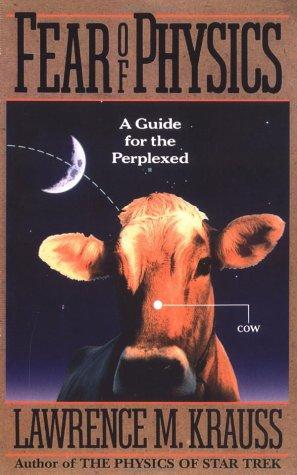
Fear of Physics: A Guide for the Perplexed by Lawrence Krauss

Fear of Physics: A Guide for the Perplexed by Lawrence KraussTakeaway: Even introductions can be difficult

I am fascinated by physics. I don’t understand physics, but I am fascinated by it.  So I tend to pick up at least one introduction to physics book a year and I tend to ultimately realize that I am not designed for high level physics.

Fear of Physics is a well reviewed introduction used in a number of college settings. I listened to the audiobook that I picked up on sale. I am not sure that audiobook was the best format for this book. There was nothing wrong with the narrator, but the content occasionally would have been better in print instead of audio.

The two chapters I enjoyed most (and I think I understood most) were about how physicists understand math differently than mathematicians and how physicists ‘creatively plagiarize’ previous work until it becomes something new. The math chapters basically help describe how physics has understood very large and very small numbers and used approximation as a tentative placeholder until better measurement technology becomes available. Some of the insights into math surprised me as basic math place value discussions that are now taught in early common core math. (This book was originally written in 1993 and updated in 2007).

Read more

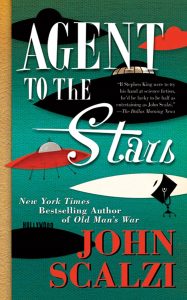
Agent to the Stars by John Scalzi

Agent to the Stars by John Scalzi cover imageSummary: Comedy about an alien race that contacts a Hollywood agent about introducing them to the planet earth.

This was a book I picked up on a whim. I was a bit burned out on my non-fiction books. And I needed to buy four audiobooks at once to get a $10 coupon from Audible. So Agent to the Stars ended up as one of the picks.

Reading the description (The space-faring Yherajk have come to Earth to meet us and to begin humanity’s first interstellar friendship. There’s just one problem: They’re hideously ugly and they smell like rotting fish) reminded me of a Christopher Buckley novel. I love Christopher Buckley’s novels. They are funny, sharply political (against all sides) and almost always pull me out of reading funks. So I picked this up.

John Scalzi is just as funny as Buckley, but instead of the political subtext, this books uses a science fiction/entertainment subtext. You do not need to love science fiction to love this book, but it might help.

Wil Wheaton (Wesley Crusher of Star Trek fame and recently regular cameo on Big Bang Theory), does an excellent job narrating. After listening to Wheaton narrate Ready Player One, he is becoming one of my favorite audiobook narrators.

Read more

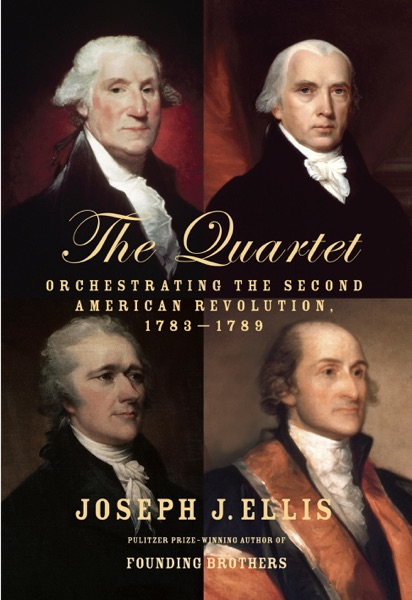
The Quartet: Orchestrating the Second American Revolution, 1783-1789 by Joseph Ellis

The Quartet: Orchestrating the Second American Revolution, 1783-1789 by Joseph EllisSummary: The American Revolutionary War won freedom from Britain. It took another six years to create 13 separate states into a single country.

Since I have been all things Alexander Hamilton lately, a friend suggested that I read The Quartet. Joseph Ellis has written well reviewed biographies of George Washington, Thomas Jefferson, John and Abigail Adams and several other books about the revolutionary period.

The Quartet particularly focuses on the movement from the Articles of Confederation to the Constitution. After winning freedom from Britain, there was little desire for another national government. The Articles of Confederation were an intentionally weak (and ultimately failed) attempt to partner together as states without really becoming a single country. As Ellis suggests several times, the initial understanding of the Confederation was more similar to the European Union than a single country.

Read more

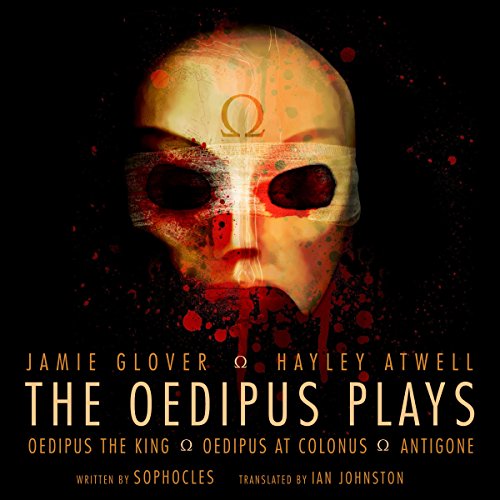
Free Audiobook – The Oedipus Plays

The Oedipus Plays audiobook

No longer free – Sorry

Audible is giving away a free audio drama of The Oedipus Plays. This is a pre-order with a release date of June 14th. It may still be free after the release and/or this may be the free audiobook of the month from Audible.

Description:

The three Theban plays by Sophocles – Oedipus the King, Oedipus at Colonus and Antigone – are one of the great landmarks of Western theatre. They tell the story of Oedipus, King of Thebes, who was destined to suffer a terrible fate – to kill his father, marry his mother, and beget children of the incestuous union. He does this unknowingly but still has to suffer terrible consequences, which also tragically affect the next generation.

These three plays were written around 450 BC, with the playwright following the established convention of presenting the story through main characters but using a chorus – sometimes one voice, sometimes more – as an independent commentator that also occasionally participates in the drama. When the audiences of ancient Athens went to the amphitheatres to see the plays, they would have known the basic story of poor Oedipus.

Read more

Fortress Introduction to Contemporary Theologies

Fortress Introduction to Contemporary TheologiesSummary: Short profiles of 13 theologians from the 20th century.

Last year Fortress Press had a sale and I picked up several books. I started reading the Fortress Introduction to Contemporary Theologies almost immediately. But because it is a book that profiles different theologians and does not need to be read all together (or in order), I have spent more than 6 months dabbling in it. It was originally published in 1998, so it is not a new book, but I do not think it is a dated book either.

Read more

Audible Now Has Book Sharing

One of the best parts of physical books is the ability to share that book with friends. Digital books publishers have attempted to both encourage and limit digital sharing. Amazon allows publishers to choose whether to participate in sharing or not, about 1/3 of Amazon books are ‘lendable’. Now Audible has started allowing their audiobooks … Read more

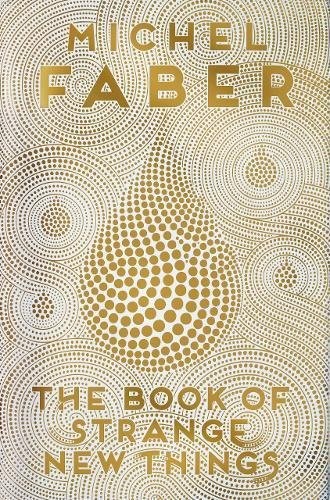
The Book of Strange New Things by Michel Faber

The Book of Strange New Things by Michel FaberSummary: A missionary to aliens has marriage problems.

The concept of The Book of Strange New Things is so simple that it really did not catch my attention when I first heard about it. But it was recommended several times by different people and when it was on sale I decided to pick it up. (Vikki Huisman reviewed it for Bookwi.se when it first came out.)

The story is simple, Peter, pastor with a history of drug abuse and alcoholism prior to becoming a Christian is hired to go to the planet Oasis to minister to the aliens there. A lot has been made of this being a genre defying novel, but I did not think that it was widely outside of either Literary Fiction or Science Fiction and fans of both should consider it part of the genre they prefer most.

The main story of the book is really about the marriage of Peter on Oasis and his wife, Bea, back in England. They can communicate, but only via email like plain text. And then, only when he is at the main human complex and not when he is living with the aliens. The physical distance matters. But the experiential difference matters more. For Peter, he is absorbed in his work and the transition from the alien settlement to the human settlement is always a cultural shock. Add to that the increasing desperation of Bea, and Peter emotionally hides.

Read more