 Summary: When the sociological construct of race was developed, Christianity was the dominant intellectual force. Jennings traces how theology impacted and influenced the development of racism and how theology was used to justify racist acts.
 In the past eight years since The Christian Imagination was released, I have seen a diverse group of Christians say that this is the most influential theology book of the last decade. I am not going to disagree, although I do not have the depth of theology to make that type of statement.
I do not usually quote the book description when I write, but I will here because I cannot think of a better way to describe the book.
Why has Christianity, a religion premised upon neighborly love, failed in its attempts to heal social divisions? In this ambitious and wide-ranging work, Willie James Jennings delves deep into the late medieval soil in which the modern Christian imagination grew to reveal how Christianity’s highly refined process of socialization has inadvertently created and maintained segregated societies. A probing study of the cultural fragmentation “social, spatial, and racial” that took root in the Western mind, this book shows how Christianity has consistently forged Christian nations rather than encouraging genuine communion between disparate groups and individuals.
Weaving together the stories of Zurara, the royal chronicler of Prince Henry, the Jesuit theologian Jose de Acosta, the famed Anglican Bishop John William Colenso, and the former slave writer Olaudah Equiano, Jennings narrates a tale of loss, forgetfulness, and missed opportunities for the transformation of Christian communities. Touching on issues of slavery, geography, Native American history, Jewish-Christian relations, literacy, and translation, he brilliantly exposes how the loss of land and the supersessionist ideas behind the Christian missionary movement are both deeply implicated in the invention of race.
Before this book, I was aware of the concept of supersessionism (the idea that Christianity superseded Judaism and replaced God’s covenant with Israel with a new covenant with the church.) But it is just not something I have thought much about. Christianity has failed to reject supersessionism clearly, and there has always been a stain of supersessionism, from the overt Marcionism and Manichaeism that were both rejected as heresy to the much more subtle replacement theology that arose later. It has only been since World War II and the Holocaust that Christianity has widely started seeing supersessionism as a theological problem. Jennings makes the case that the ethnic prejudice against Jews that was rooted in supersessionism and was strongly present throughout the middle ages gave theological cover for a different type of ethnic superiority that gradually developed into the concept of race and the racial hierarchies that undergirded colonialism, race-based slavery, and White supremacy.
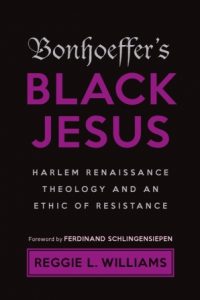 Summary: An excellent book about the missing part of Bonhoeffer’s story within many of his biographies.
 Summary: A retelling of Pride and Prejudice set in modern Brooklyn.



 Summary: I am not sure how to summarize this book.