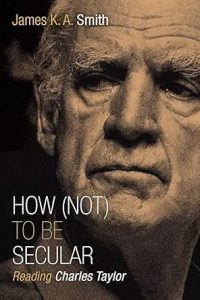
 Summary: The traditional story of how to the world came to be secular (a subtraction of belief) is not the real story.
Starting last year I have been paying a lot of attention to James KA Smith (Jamie). The first book of his that came across my radar screen was Desiring the Kingdom: Worship, Worldview and Cultural Formation. (I still haven’t actually read that one, it is on my list for this summer.)
But I did read Imagining the Kingdom: How Worship Works. And it really did fundamentally change my perspective on liturgy and worship. Since then I regularly read Smith’s editorials (he is the editor of Comment magazine) and I have slowly been reading some of his other books.
How (Not) to Be Secular is the type of book I wish were more popular. For important ideas to really take hold, we need good authors to popularize those important ideas into formats that a general public can understand. Charles Taylor’s A Secular age is a massive and important book, but at 900 pages it is too long (and too dense) for most readers. (And more than a few people have suggested Taylor is not the most readable author.) So Jamie Smith has put together a 148 page companion that covers the basics of the argument and includes relevant contemporary examples.
The basic idea of A Secular Age is to explain what it means to live in a secular age and how we have come to this place in culture.
“We are all skeptics now, believer and unbeliever alike. There is no one true faith, evident at all times and places. Every religion is one among many. The clear lines of any orthodoxy are made crooked by our experience, are complicated by our lives. Believer and unbeliever are in the same predicament, thrown back onto themselves in complex circumstances, looking for a sign. As ever, religious belief makes its claim somewhere between revelation and projection, between holiness and human frailty; but the burden of proof, indeed the burden of belief, for so long upheld by society, is now back on the believer, where it belongs.”
Taylor’s innovation is how he reframes discussion about secularization from what it has lost (belief in God) to how the very nature of belief claims have changed.
Read more
 Takeaway: On today’s after school special, Polly has to deal with serious things.
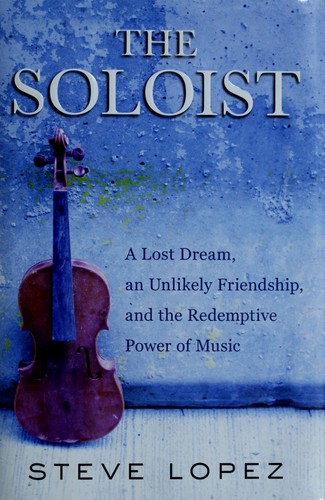 The Soloist is the retelling of Steve Lopez’ relationship with Nathaniel Anthony Ayers, a homeless musical prodigy whom Lopez meets while out riding his bike in Los Angeles. Lopez is immediately amazed by Ayers abilities, especially seeing that he is playing well on a two-string violin. He begins to write about Ayers in his column at the L.A. Times. Through his columns, readers send him instruments for Ayers to play.
 Summary: Lord Peter Wimsey overhears a doctor talking about a case and is convinced it is the perfect crime.
 For years many of us have struggled with trying to measure up to others standards for us and for our own. We walk around calling ourselves failures. We tell ourselves we are not smart enough, good enough, nice enough, and on and on. After spending years telling himself similar things, Michael Perkins discovered that none of those things were what God had to say about him.
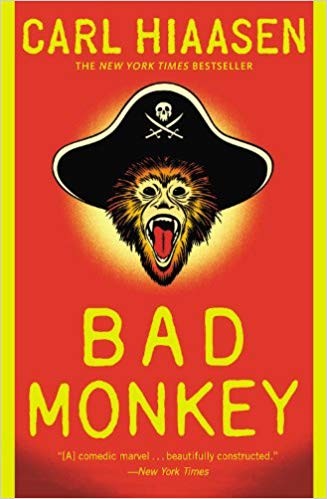 Bad Monkey is Carl Hiaasen’s latest novel that came out at the beginning of the summer of 2013. Similarly to many of Hiaasen’s novels, the book is about a rough around the edges detective who desperately wants his job back. He sets out to solve a murder that he really has no business solving. While tracking down the murderer, he observes and is a part of a number of humorous hijinks, and his life and the lives of those around him are put in danger.