A full-throated moral, philosophical, and practical defense of capitalism. Rather than advocate with reluctance for capitalism, granting critics’ charges of its excesses and a supposed foundation of greed, Gilder shows that only a capitalist system will bring true prosperity and growth to all levels of a society.
Gilder argues that the most important element of capitalistic growth and success is the entrepreneur, the person who puts up capital in risky ventures in the hope of a payout. These risks fail more often than they succeed, but in all cases knowledge is learned–knowledge upon which new ventures build.
Simply scanning topics he covers and the conclusions he draws, one might think Gilder is just pitching conservative Republican ideology warmed over. But his arguments eschew partisanship in favor of a philosophical, principled, and utterly researched approach. Gilder’s breadth of knowledge and understanding of economics and sociology is stimulating to encounter; having read his more recent (and even more theoretical) Knowledge & Power, I can see he is truly a polymath.
 The Giver by Lois Lowry (1993) is a children’s book that is about a seemingly utopian society where “œsameness” is what provides the people with stability. As the story progresses, we learn that the sameness has created a lack of emotion to the point where even the people do not experience color. Jonas, the main character and young teenager, learns the truth about his community as he is chosen to be the receiver of memories, which have been eradicated in order for sameness to be achieved. The giver is an old man who gives him these memories and with them comes the truth and many other revelations.
 Takeaway: Another short story collection I didn’t like, surprise!
 John Allison was the CEO of one of the only large banks that stayed profitable during the financial upheaval that came to a head in 2008. During his 20 year tenure at BB&T, during which he lead based on the principles of Ayn Rand, the bank grew exponentially in its success (from assets of $4.5 billion to $152 billion). During the crisis, the federal government in essence forced BB&T to take bailout money, even though they didn’t want it or need it, and they were literally the very first bank to pay back the money once it was legal to do so.
 Summary: A collection of 8 short stories (mysteries) centered around the character Horne Fisher, someone that knows everyone and know why the system usually frames the wrong person.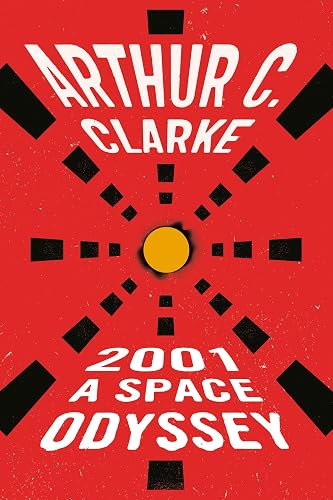
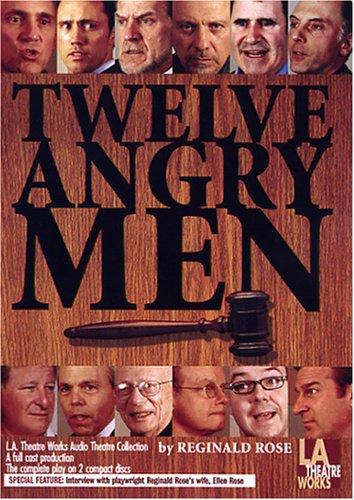 Twelve Angry Men by Reginald Rose is a play that recounts the deliberation of a jury in the murder trial. The jury is tasked to determine the future of an 18-year-old boy who is accused of killing his own father. At first, the case seems pretty obvious, but as the details of the case are discussed we discover that everything is not as open-and-shut as it seemed. The jury learns that biases and prior experiences play a role, unwittingly at times, in how facts are perceived and how events are interpreted. Tempers flare as the innocence and guilt of the defendant is discussed and a unanimous verdict must be found.
 Summary: A suburban housewife and her two friends find out that their neighborhood struggles (PTA, school year books, crazy neighbors, etc) all might be connected to a much deeper problem than they could have expected.