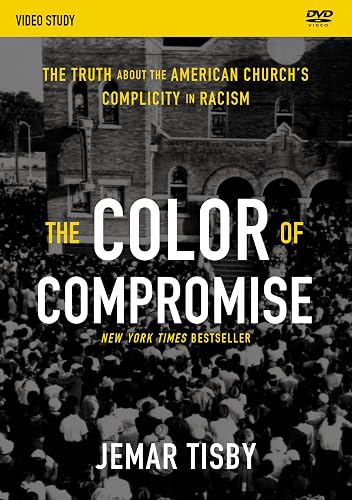
 Summary: A 12 part video study based on the original book.
I continue to think that The Color of Compromise is an excellent short introduction to the role of the church in historic racism in the US. I read the book originally last year.
I am not going to address the content here but only talk about the format. There are now several options. The book has paper, kindle (ebook) and audiobook versions. There is also an audio-only version of the video study and the video study on either DVD or digital format.
The video study is excellent. There are 12 sessions of approximately 20 minutes each. That is a large number of sessions for a normal small group (I think that 4 to 6 is usually ideal if meeting weekly or else people get distracted.) Because the sessions are about 20 minutes, you can watch more than one in a session. But to give adequate discussion time, you will probably want to schedule at least an equal amount of discussion as watching.
I have not gone back to re-read the book, but it felt to me like there were a few sections of the video study were explanations were tightened up just a bit or were a little clearer than in the book. That may have been the nature of watching a video, or just part of the editing process. There is detail that is not explored in the video that is in the book, but I do think that you can watch the video without reading the book and get the main points without any difficulty.