
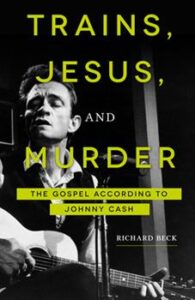
 Summary: Pop culture connections to the gospel and biography the way it is supposed to be done.
I have long been a subscriber to Christ and Pop Culture Magazine. Seeing glimpses of God in art is one of the best ways I know of to communicate about Christ to people who are not Christians. But what I am interested in the pop culture connection is the way that we can understand Christian imagery through art. Unfortunately, in my mind, books that have the subtitle “Gospel According to…” tend to be more focused on evangelism and twisting art to fit a message. Trains, Jesus and Murder is an exceptional example of the ‘Gospel According to…’ type of book.
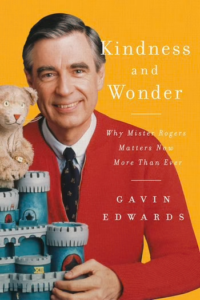
There are a few that are similar: Rowan Williams’ book on CS Lewis’ Narnia, the recent book about Mister Rogers, and even, in a way, James KA Smith’s latest book on Augustine are all examples of seeking out God in a persons art or work without distorting the work. One of the aspects that is essential in doing this style of book well is being honest about weaknesses. Johnny Cash was far from perfect. His less-than-ideal image has made his legacy enduring; he made outlaw country a thing. His struggle with addiction is well known, and like Brennan Manning, it was a life long struggle.
Johnny Cash was also a saint, or at least he tried to be. He wrote multiple books on Christianity, made movies about his faith, and was generous to many around him. Part of what Beck is communicating is that Cash was impacted by his older brother’s death when Johnny was young. His older brother wanted to be a preacher, and Johnny Cash, despite his outlaw image, wanted to share the gospel widely in his way.
Beck’s central theme is that the gospel is about solidarity for the Man in Black.
The gospel according to the Man in Black is a gospel rooted in solidarity. The cross of Christ, in this view, is an act of divine identification with the oppressed. On the cross, God is found with and among the victims of the world. More, given that crucified persons were considered to be cursed by God “Cursed is anyone who is hung upon a tree (Deuteronomy 21:23).” God is found in Jesus among the cursed and godforsaken. Again, the first place to look for Jesus is in hell. By standing with the poor and beaten down, the music of Johnny Cash shows us how a gospel of solidarity begins as an interpretative activity: the cross is a way of seeing and reading the world. Specifically, the cross helps us answer this most important question: Where is God?
…That is the gospel according to the Man in Black: drawing near to and loving the lost, unnoticed, unremarkable, excluded, powerless, broken, condemned, and despicable. Solidarity is a love that grows warmest in the coldest places. That vision prompts us to take the second step in the dance of divine solidarity. After we read the world to locate God among the victims and the oppressed, we are called to action, to move ourselves to stand with those who are suffering. As Bonheoffer said, God “goes right into the middle of it.” God draws near.

 Summary: A collection of portions of Howard Thurman’s sermons, prayers, talks, and teaching.
 Summary: A mix of Latasha Morrison’s personal story as well as the story of Be the Bridge.